Selasa, 02 Juli 2019

NASA's Orion Crew Capsule Aces Big Safety Test - Space.com

NASA's next crew-carrying spaceship just took a big step toward operational flight.

The Orion capsule aced a critical launch-abort test this morning (July 2), showing that it can indeed get astronauts out of harm's way during a liftoff emergency and keeping the craft on target for a first crewed flight in 2022.

"It looked beautiful from here," Ashley Tarpley, NASA's range flight safety lead for today's test, said during a NASA broadcast of the procedure. "I think that was excellent, we could not have hoped for a better kind of day. It's just wonderful."

A test version of Orion launched at 7 a.m. EDT (1100 GMT) from Florida's Cape Canaveral Air Force Station, taking to the skies atop the refurbished first-stage motor of a Peacekeeper intercontinental ballistic missile. Fifty-two seconds later, at an altitude of about 31,000 feet (9,450 meters), the launch abort system (LAS) attached to the top of the capsule kicked into gear. 

Related: Orion Explained: NASA's Multi-Purpose Crew Vehicle (Infographic)

The LAS' abort motor fired, its 400,000 lbs. of thrust pulling Orion up and away from the booster and imparting about 7 Gs of force in the process. (We feel 1 G continuously on Earth's surface, thanks to our planet's gravitational pull.) At the time, Orion was projected to be moving at about 800 mph (1,300 km/h) and experiencing extreme temperatures and pressures, NASA officials said.

Just over 80 seconds into flight, at an altitude of about 44,000 feet (13,400 m), the LAS tower separated and Orion began flying freely — and soon began descending.

Everything was over by about 3 minutes after liftoff, when the capsule slammed hard into the Atlantic at roughly 300 mph (500 km/h), 7 miles (11 km) off the Florida coast. Orion likely broke apart upon impact and sank to the ocean floor, NASA officials said.

This fate was expected, because the capsule flew today without parachutes or an attitude-control system (which it will have during crew-carrying flights). 

The project team went with this stripped-down approach "in order to perform this test as early as possible, because we want to get the data," Orion program manager Mark Kirasich said during a prelaunch press conference on Monday (July 1), referring to measurements of temperature, pressure and other variables made by 900 sensors flying aboard the capsule today. 

"We want to inform the missions going forward," he added.

Those future missions include Artemis 1, the first flight of Orion and its partner rocket, NASA's huge Space Launch System (SLS), which is still in development. Artemis 1, targeted for launch next summer, will send an uncrewed Orion on a journey around the moon. That will be the first mission for the powerful and long-awaited SLS.

Artemis 2, the first crewed flight of the system, will follow in 2022, if all goes according to plan. This lunar flyby mission will mark the first trip astronauts have made beyond Earth orbit since the Apollo moon program ended in 1972.

Artemis is NASA's ambitious lunar-exploration program, which aims to land astronauts near the moon's south pole by 2024 and build up a long-term, sustainable presence on and around Earth's nearest neighbor in the ensuing years. Such work is envisioned to help prepare humanity to make the next giant leap — a crewed mission to Mars, which NASA aims to achieve in the 2030s.

Today's test flight is officially known as Ascent Abort-2. As that name suggests, it was the second trial for Orion's launch-escape system. The first one occurred in May 2010, when Orion's LAS lifted a test capsule off the ground in a pad abort test.

The scene at Port Canaveral in Florida after NASA's test of the Orion capsule's launch abort system.

(Image credit: NASA TV)

Escape systems are common safety features of crew-carrying spaceships. For example, Russia's Soyuz spacecraft is topped with a similar "puller" tower. This emergency equipment was pressed into service last October during a crewed launch to the International Space Station — the first time an LAS had been employed during an operational mission since another Soyuz launch in 1983. (NASA's now-retired space shuttle orbiter did not have an LAS, so the crew of the Challenger had no way to get clear of their malfunctioning solid rocket booster shortly after launch in January 1986.) 

The two crew capsules in development by American companies, Boeing's CST-100 Starliner and SpaceX's Crew Dragon, have abort thrusters built into their bodies. Such a design is known as a "pusher" system, because the craft pushes itself to safety rather than being pulled by tower-mounted motors.

Mike Wall's book about the search for alien life, "Out There" (Grand Central Publishing, 2018; illustrated by Karl Tate), is out now. Follow him on Twitter @michaeldwall. Follow us on Twitter @Spacedotcom or Facebook. 

Let's block ads! (Why?)


https://www.space.com/nasa-orion-capsule-abort-test-flight.html

2019-07-02 11:18:00Z
52780324298005

NASA Orion launch: Watch live as moon capsule undergoes critical safety test - CNET

aa-2-artists-impression

Rockets, man, burning up their fuse out there alone.

NASA

NASA will test a critical safety element of the Orion spacecraft on Tuesday July 2, launching the module into the atmosphere on the back of a Northrop Grumman booster. The Ascent Abort-2 test (AA-2) is an important step in NASA's plan to return to the moon by 2024 and is designed to validate Orion's emergency abort system under high-stress aerodynamic conditions.

The Orion crew module -- which is actually a stand-in shaped and weighted like the real thing -- will undergo a full-stress test of its "launch abort system," or LAS, a series of three motors designed to carry the module to safety should something go awry during a real rocket launch with astronauts aboard. It will be an uncrewed test designed to replicate a real launch, but it won't be launched on top of the Space Launch System (SLS), NASA's next-gen rocket, as is currently planned for lunar missions.

Now playing: Watch this: Everything we know about NASA's Space Launch System

4:19

Instead, a Northrop Grumman-provided booster will be strapped to the bottom of the payload fairing shaped like an upside-down golf tee. The crew module rests inside the tee and once the fairing is jettisoned, it rapidly accelerates away from the rocket booster, powering to 31,000 feet at around 1,000 mph. When it gets safely away from the rocket, the golf tee capsule ejects the crew module and the test is over. All in all, the test should take approximately 3 minutes, beginning just 55 seconds after launching. 

NASA says this is "the only opportunity to test a fully active LAS during ascent before flying crew," highlighting the importance of the mission for future deep space exploration.

The launch will take place at Cape Canaveral Air Force Station in Florida, with a launch window opening at 4 a.m. PT on July 2 and remaining open for four hours. The test itself will only last for about three minutes, with coverage set to start approximately 20 minutes prior to launch.

NASA's official livestream is available at the agency's website and via YouTube, below:

Orion passed a pad abort test in 2010 and its first flight in December 2014, when it launched on the back of a Delta IV Heavy rocket. The second test, which lasted four hours, tested the spacecraft's heat shield and reentry, validating the module for spaceflight. Parachute testing, required to land back on Earth, was completed in September 2018 and NASA also staged a recovery mission in December last year, testing its capabilities to nab the capsule after it reenters the atmosphere and glides into the ocean.

NASA is aiming to launch both the Space Launch System and Orion, together, on Artemis 1. Currently, the mission is planned to last three weeks, travelling beyond the moon and returning home faster and hotter than any spacecraft before it. It's scheduled for a June 2020 liftoff and although NASA administrator Jim Bridenstine stressed in March that the SLS is struggling to meet its schedule, he has ruled out Orion launching on the back of commercial rockets like SpaceX's Falcon Heavy.

Updated 2:50 p.m. PT: Test video added
Updated 11:30 p.m. PT: Clarifies capsule being used.

Let's block ads! (Why?)


https://www.cnet.com/news/nasa-orion-launch-watch-live-as-moon-capsule-undergoes-critical-safety-test/

2019-07-02 06:39:00Z
52780324298005

Senin, 01 Juli 2019

Floating Antarctic ice goes from record high to record lows - The Associated Press

WASHINGTON (AP) — The amount of ice circling Antarctica is suddenly plunging from a record high to record lows, baffling scientists.

Floating ice off the southern continent steadily increased from 1979 and hit a record high in 2014. But three years later, the annual average extent of Antarctic sea ice hit its lowest mark, wiping out three-and-a-half decades of gains — and then some, a NASA study of satellite data shows.

In recent years, “things have been crazy,” said Mark Serreze, director of the National Snow and Ice Data Center. In an email, he called the plummeting ice levels “a white-knuckle ride.”

Serreze and other outside experts said they don’t know if this is a natural blip that will go away or more long-term global warming that is finally catching up with the South Pole. Antarctica hasn’t showed as much consistent warming as its northern Arctic cousin.

“But the fact that a change this big can happen in such a short time should be viewed as an indication that the Earth has the potential for significant and rapid change,” University of Colorado ice scientist Waleed Abdalati said in an email.

At the polar regions, ice levels grow during the winter and shrink in the summer. Around Antarctica, sea ice averaged 4.9 million square miles (12.8 million square kilometers) in 2014. By 2017, it was a record low of 4.1 million square miles (10.7 million square kilometers, according to the study in Monday’s Proceedings of the National Academy of Sciences.

The difference covers an area bigger than the size of Mexico. Losing that much in just three years “is pretty incredible” and faster than anything scientists have seen before, said study author Claire Parkinson, a NASA climate scientist. Antarctic sea ice increased slightly in 2018, but still was the second lowest since 1979. Even though ice is growing this time of year in Antarctica, levels in May and June this year were the lowest on record, eclipsing 2017, according to the ice data center.

Ice melting on the ocean surface doesn’t change sea level. Non-scientists who reject mainstream climate science often had pointed at increasing Antarctic sea ice to deny or downplay the loss of Arctic sea ice.

While the Arctic has shown consistent and generally steady warming and ice melt — with some slight year to year variation — Antarctica has had more ups and downs while generally trending upward. That is probably in part due to geography, Parkinson and Serreze said.

The Arctic is a floating ice cap on an ocean penned in by continents. Antarctica is just the opposite, with land surrounded by open ocean. That allows the ice to grow much farther out, Parkinson said.

When Antarctic sea ice was steadily rising, scientists pointed to shifts in wind and pressure patterns, ocean circulation changes or natural but regular climate changes like El Nino and its southern cousins. Now, some of those explanations may not quite fit, making what happens next still a mystery, Parkinson said.

___

Follow Seth Borenstein on Twitter: @borenbears .

___

The Associated Press Health and Science Department receives support from the Howard Hughes Medical Institute’s Department of Science Education. The AP is solely responsible for all content.

Let's block ads! (Why?)


https://www.apnews.com/d449b411a3db4d8b8564b7f6d8968f2d

2019-07-01 19:18:45Z
52780324639844

Wired Bacteria Form Nature’s Power Grid: ‘We Have an Electric Planet’ - The New York Times

At three o’clock in the afternoon on September 4, 1882, the electrical age began. The Edison Illuminating Company switched on its Pearl Street power plant, and a network of copper wires came alive, delivering current to a few dozen buildings in the surrounding neighborhood.

One of those buildings housed this newspaper. As night fell, reporters at The New York Times gloried in the steady illumination thrown off by Thomas Edison’s electric lamps. “The light was soft, mellow, and grateful to the eye, and it seemed almost like writing by daylight,” they reported in an article the following day.

But nature invented the electrical grid first, it turns out. Even in 1882, thousands of miles of wires were already installed in the ground in the New York region — in meadows, in salt marshes, in muddy river bottoms. They were built by microbes, which used them to shuttle electricity.

Electroactive bacteria were unknown to science until a couple of decades ago. But now that scientists know what to look for, they’re finding this natural electricity across much of the world, even on the ocean floor. It alters entire ecosystems, and may help control the chemistry of the Earth.

“Not to sound too crazy, but we have an electric planet,” said John Stolz, a microbiologist at Duquesne University in Pittsburgh.

In the mid-1980s, Dr. Stolz was helping to study a baffling microbe fished out of the Potomac River by his colleague Derek Lovley. The microbe, Geobacter metallireducens, had a bizarre metabolism. “It took me six months to figure out how to grow it in the lab,” said Dr. Lovley, now a microbiologist at the University of Massachusetts at Amherst.

[Like the Science Times page on Facebook. | Sign up for the Science Times newsletter.]

Like us, Geobacter feed on carbon compounds. As our cells break down these compounds to generate energy, they strip off free electrons and transfer them to oxygen atoms, producing water molecules. Geobacter couldn’t use oxygen, however, because it lived at the bottom of the Potomac, where the element was in short supply.

Instead, Geobacter transfers its electrons to iron oxide, or rust, Dr. Lovley and his colleagues discovered. The process helps turn rust into another iron compound, called magnetite.

The finding left the scientists with a puzzle. We humans draw oxygen into our cells to utilize it, but Geobacter does not import rust. So the microbe must somehow get the electrons out of its cell body and attach them to rust particles. How?

The researchers struggled for years to find the answer. Dr. Stolz eventually turned to other microbes to study. But Dr. Lovely soldiered on. Over the years, he and his colleagues have come across Geobacter in many places far beyond the Potomac. They’ve even encountered the bacteria in oil drilled from deep underground. “It’s basically found everywhere,” Dr. Lovley said.

In the early 2000s, Dr. Lovely’s team discovered that Geobacter could sense rust in its neighborhood. The microbe responded by sprouting hairlike growths.

Maybe each of those growths, known as a pilus, was actually a wire that latched onto the rust, Dr. Lovley thought. Electrons could flow from the bacterium down the wire to the receptive rust. “It seemed like a wild idea at the time,” Dr. Lovley said.

But he and his team found several clues suggesting that the pilus is indeed a living wire. In one experiment, when Geobacter was prevented from making pili, the bacteria couldn’t turn rust to magnetite. In another, Dr. Lovely and his colleagues plucked pili from the bacteria and touched them with an electrified probe. The current swiftly shot down the length of the hairs.

Subsequent research revealed that Geobacter can deploy its wires in different ways to make a living. Not only can it plug directly into rust, it can also plug into other species of microbes.

The partners of Geobacter welcome the incoming flow of electrons. They use the current to power their own chemical reactions, which convert carbon dioxide into methane.

Image
CreditGordon Studer

Discoveries like these raised the possibility that other bacteria might be dabbling in electricity. And in recent years, microbiologists have discovered a number of species that do.

“When people are able to dig down at the molecular level, we’re finding major differences in strategy,” said Jeff Gralnick of the University of Minnesota. “Microbes have solved this issue in several different ways.”

In the early 2000s, a Danish microbiologist named Lars Peter Nielsen discovered a very different way to build a microbial wire. He dug up some mud from the Bay of Aarhus and brought it to his lab. Putting probes in the mud, he observed the chemical reactions carried out by its microbes.

“It developed in a very weird direction,” Dr. Nielsen recalled.

At the base of the mud, Dr. Nielsen observed a buildup of a foul-smelling gas called hydrogen sulfide. That alone was not surprising — microbes in oxygen-free depths can produce huge amounts of hydrogen sulfide. Normally, the gas rises the surface, where oxygen-breathing bacteria can break most of it down.

But the hydrogen sulfide in the Aarhus mud never made it to the surface. About an inch below the top of the mud, it disappeared; something was destroying it along the way.

After weeks of perplexity, Dr. Nielsen woke up one night with an idea. If the bacteria at the bottom of the mud broke hydrogen sulfide without oxygen, they would build up extra electrons. This reaction could only take place if they could get rid of the electrons. Maybe they were delivering them to bacteria at the surface.

“I imagined it could be electric wires, and I could explain all of this,” he said.

So Dr. Nielsen and his colleagues looked for wires, and they found them. But the wires in the Aarhus mud were unlike anything previously discovered.

Each wire runs vertically up through the mud, measuring up to two inches in length. And each one is made up of thousands of cells stacked on top of each other like a tower of coins. The cells build a protein sleeve around themselves that conducts electricity.

As the bacteria at the bottom break down hydrogen sulfide, they release electrons, which flow upward along the “cable bacteria” to the surface. There, other bacteria — the same kind as on the bottom, but employing a different metabolic reaction — use the electrons to combine oxygen and hydrogen and make water.

Cable bacteria are not unique to Aarhus, it turns out. Dr. Nielsen and other researchers have found them — at least six species so far — in many places around the world, including tidal pools, mud flats, fjords, salt marshes, mangroves and sea grass beds.

And cable bacteria grow to astonishing densities. One square inch of sediment may contain as much as eight miles of cables. Dr. Nielsen eventually learned to spot cable bacteria with the naked eye. Their wires look like spider silk reflecting the sun.

Electroactive microbes are so abundant, in fact, that researchers now suspect that they have a profound impact on the planet. The bioelectric currents may convert minerals from one form to another, for instance, fostering the growth of a diversity of other species. Some researchers have speculated that electroactive microbes may help regulate the chemistry of both the oceans and the atmosphere.

“To me, it’s a strong reminder of how ready we are to ignore things we cannot imagine,” Dr. Nielsen said.

Much about these microbes remains murky, and subject to debate. In April, Nikhil S. Malvankar, a physicist at Yale University, and his colleagues challenged Dr. Lovely’s finding that Geobacter use pili as wires.

Their research indicates that bacteria use a different structure to pump electrons. It’s a wire built from building blocks called cytochromes. Individual cytochromes are important for moving electrons around inside cells. But until now no one knew they could be stacked into a conductive wire.

“There never had been a material like this before,” Dr. Malvankar said.

Sarah Glaven, a research biologist at the United States Naval Research Laboratory who was not involved in the new study, said she found it compelling. “Totally believe it,” she said. “The question is, is it just part of the puzzle?”

It’s possible that Geobacter uses both structures to move electrons, Dr. Glaven said. Or maybe one serves a different function, and just happens to conduct electricity in the hands of a scientist.

The answers to such questions matter deeply to scientists, who are tinkering with electroactive bacteria to develop new kinds of technology.

At Cornell University, Buz Barstow and his colleagues are investigating the possibility of wiring bacteria to solar panels. The panels would capture sunlight and generate a stream of electrons. The electrons would stream down microbial wires to a species of bacteria called Shewanella, which would use the energy to convert sugar into fuel.

It’s still a distant dream. For now, Dr. Barstow is trying to work out the basic biology by which Shewanella moves electrons from its wires to the molecules it uses for its metabolism. But he is so taken with the elegance of electroactive bacteria that he figures it’s worth a shot. “You’re talking to someone who has drunk the Kool-Aid,” he said.

Other researchers are looking into using these filaments as sensors. For instance, a wristband with embedded wires might monitor people’s health by delivering electric current when it detects chemical changes in sweat. Dr. Lovley and his colleagues are genetically engineering Geobacter to add molecular hooks to their pili, so that they snag certain molecules.

Among the many advantages that living wires may have is that they’d be easier on the environment than the man-made kind. “It takes a lot of energy and nasty chemicals to make a lot of those electronic materials, and then none of them are biodegradable,” Dr. Lovley said.

Bacteria, by contrast, can build wires from little more than sugar. And when it comes time to throw wires away, they become food for other microbes.

Dr. Nielsen, who now directs the Center for Electromicrobiology at the University of Aarhus in Denmark, said that he is avoiding the technology rush for now. There is still too much to learn about the microbes themselves. “Once we find out what these wires are made from and how they work, a lot of potential applications may show up,” he said.

Let's block ads! (Why?)


https://www.nytimes.com/2019/07/01/science/bacteria-microbes-electricity.html

2019-07-01 15:49:57Z
CBMiTWh0dHBzOi8vd3d3Lm55dGltZXMuY29tLzIwMTkvMDcvMDEvc2NpZW5jZS9iYWN0ZXJpYS1taWNyb2Jlcy1lbGVjdHJpY2l0eS5odG1s0gFRaHR0cHM6Ly93d3cubnl0aW1lcy5jb20vMjAxOS8wNy8wMS9zY2llbmNlL2JhY3RlcmlhLW1pY3JvYmVzLWVsZWN0cmljaXR5LmFtcC5odG1s

Mysterious interstellar object Oumuamua is not an alien spaceship but scientists are still baffled - Fox News

The first interstellar object to enter the solar system is not an alien spaceship but is still 'weird' and remains a mystery, astronomers said in a new study.

It is the first known object to pass through the solar system from outside, but experts have failed to explain where the object, called 'Oumuamua' came from.

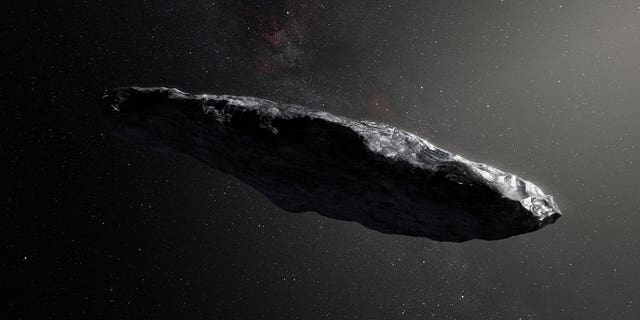
The mysterious cigar-shaped projectile - formally named the object 1I/2017 U1 - defies description with characteristics resembling both a comet and an asteroid.

Oumuamua, Hawaiian for Scout’, spins like a coke bottle and accelerates like a comet, but without the gas jets often seen trailing them.

Its movements have puzzled experts leading some to suggest it is an alien spacecraft sent to examine our solar system.

Artist's illustration of Oumuamua, the first interstellar object ever spotted in our solar system.

Artist's illustration of Oumuamua, the first interstellar object ever spotted in our solar system. (M. Kornmesser/ESO)

The study’s co-author, Dr. Matthew Knight, an associate research scientist in the University of Maryland Department of Astronomy, said: “The alien spacecraft hypothesis is a fun idea, but our analysis suggests there is a whole host of natural phenomena that could explain it.

"We have never seen anything like Oumuamua in our solar system. It's really a mystery still.

"But our preference is to stick with analogs we know, unless or until we find something unique."

Professional stargazer, Dr. Robert Weryk, first spotted the interstellar traveler in October 2017 at the University of Hawaii's Haleakala Observatory.

Researchers had just weeks to collect as much data as possible before the strange visitor traveled beyond the reach of Earth's telescopes.

The object is now out of sight but could take up to 20,000 years before it leaves our solar system onto its next destination.

Dr. Knight worked with astronomer Dr. Alan Fitzsimmons from Queen's University Belfast and 14 experts from the US and Europe.

They analyzed data from the Discovery Channel Telescope (DCT) at the Lowell Observatory in Arizona from their base at the International Space Science Institute in Bern, Switzerland.

Dr. Knight added: "We tend to assume that the physical processes we observe here, close to home, are universal.

"And we haven't yet seen anything like Oumuamua in our solar system. This thing is weird and admittedly hard to explain, but that doesn't exclude other natural phenomena that could explain it."

Scientists think it could have entered our solar system after being ejected by a gas giant planet orbiting another star.

And researchers said Jupiter may have created some of its own interstellar travelers by sneaking some of its icy objects through the sun’s gravity field and into foreign solar systems.

They suspect Oumuamua could be the first of many visitors from distant solar systems.

They are awaiting fresh data from the Large Synoptic Survey Telescope (LSST) in 2022 which could reveal more.

Dr. Knight said: "In the next 10 years, we expect to begin seeing more objects like Oumuamua.

“The LSST will be leaps and bounds beyond any other survey we have in terms of capability to find small interstellar visitors.

"We may start seeing a new object every year. That's when we'll start to know whether Oumuamua is weird, or common.

“If we find 10-20 of these things and Oumuamua still looks unusual, we'll have to reexamine our explanations."

The study was published in The Astrophysical Journal.

Let's block ads! (Why?)


https://www.foxnews.com/science/mysterious-interstellar-object-oumuamua-is-not-an-alien-spaceship-but-scientists-are-still-baffled

2019-07-01 14:54:27Z
52780324463182

AI Created a 3D Replica of Our Universe. We Have No Idea How It Works. - Live Science

[unable to retrieve full-text content]

AI Created a 3D Replica of Our Universe. We Have No Idea How It Works.  Live Science

Researchers have modeled the universe for the first time using artificial intelligence.


https://www.livescience.com/65832-ai-creates-model-universe-mysteriously.html

2019-07-01 11:14:00Z
CBMiTWh0dHBzOi8vd3d3LmxpdmVzY2llbmNlLmNvbS82NTgzMi1haS1jcmVhdGVzLW1vZGVsLXVuaXZlcnNlLW15c3RlcmlvdXNseS5odG1s0gFNaHR0cHM6Ly9hbXAubGl2ZXNjaWVuY2UuY29tLzY1ODMyLWFpLWNyZWF0ZXMtbW9kZWwtdW5pdmVyc2UtbXlzdGVyaW91c2x5Lmh0bWw

Fake Smiles Don't Always Improve Mood : Shots - Health News - NPR

Paige Vickers for NPR

The notion that you can smile your way to happiness is an enduring one.

Back in the 1800s, Charles Darwin was among the first to come up with what modern scientists further developed into the "facial feedback hypothesis." That's the idea that smiling can make you happier and frowning can make you sadder or angrier — that changing your facial expression can intensify or even transform your mood.

Dick Van Dyke sang about the phenomenon — and so did Nat King Cole. And it is still taught in psychology classes today.

But researchers are now finding that this phenomenon may be more complicated than they once thought. A recent study that reviewed around 50 years of data, including the results of nearly 300 experiments testing the facial feedback theory, has found that if smiling boosts happiness, it's only by a tiny bit.

After crunching all the numbers, the researchers say their results suggest that if 100 people smiled — all else equal among them — only about seven might expect to feel happier than if they hadn't smiled.

The study also looked at the effects of a number of other facial expressions, including scowling and frowning, and tried to more generally understand the extent to which positive facial expressions create positive emotions and negative facial expressions create negative emotions.

In each case, "the effects were extremely tiny," says Nick Coles, a social psychology Ph.D. candidate at the University of Tennessee, Knoxville, who led the study. The results, published in the June issue of Psychological Bulletin, add to a debate that has been ongoing "for at least 100 years — since the dawn of psychology," Coles says.

That debate over whether the simple act of moving one's facial muscles into the shape of a smile can make one feel happier has grown especially heated in the past few years. In another study, published in 2016, 17 labs around the globe failed to replicate a seminal piece of research that had originally demonstrated a link between smiling and emotion.

That original study, published in 1988, found that people who were told to hold a pen between their teeth — forcing their faces into the shape of a smile — rated cartoons as funnier than did those who held a pen between their lips to make a pouty face. The participants didn't realize they were smiling or pouting — they believed they were testing out methods that disabled people could use to write.

"It was the first study that demonstrated that smiling could influence emotions even if the participants were not aware that they were actually smiling," Coles explains.

So it was a big blow when so many labs failed to reproduce the results. Still, in 2018, when researchers in Israel reran the experiment once more, they were able to replicate the results — as long as the participants weren't being observed or filmed.

"It gets complicated," says Paula Niedenthal, a psychologist at the University of Wisconsin–Madison who was not involved in the recent research.

Part of the reason for the disparate findings may be that there are lots of different kinds of smiles, Niedenthal says. "Not all smiles are genuine smiles of joy."

Some smiles are sarcastic — more like smirks. Some smiles beam. Others simper. There are subtle differences in the dynamics of each expression, and they're hard to re-create in a lab — with or without the aid of a pen.

Moreover, though most lab studies have found that there's no harm in smiling, recent research has found that, over time, habitually forcing your expression into the shape of a smile can have a negative effect.

For example, still another study published this year found that service workers who felt compelled to slap on a smile for customers all day had a higher risk of heavy drinking after work. That may be because disgruntled employees forced to provide service with a smile are unlikely to be wearing genuine, joyful grins, the researchers say.

"We should continue to look into this area, at the very least," Niedenthal says. All told, the cumulative research does seem to show that facial expressions have some effect on emotions. What's left to do now, she says, is to tease out the mechanisms and subtleties.

In the meantime, maybe hold back on telling people to turn their frowns upside down, Coles advises.

"Because, I know when I'm sad and people tell me to smile, it just makes me more angry," he says. And as far as the research indicates, "smiling is not going to make any important difference in your life."

Let's block ads! (Why?)


https://www.npr.org/sections/health-shots/2019/07/01/735822187/the-science-of-smiles-real-and-fake

2019-07-01 09:00:00Z
CAIiEPbeeBPeUfjPKzCxKYPLrkIqFggEKg4IACoGCAow9vBNMK3UCDDq0Rc