Many respondents indicated that they would be gardening because it gave them something creative to do while stuck at home during the pandemic. They appreciated that it also provided them with a source of exercise and helped them cope with stress.
Over 80 per cent surveyed felt they had been very successful in their gardening activities this year. Nearly 86 per cent of homeowners, many of them new gardeners, planned to continue gardening and about half of them said they would be expanding their garden space.
Surprisingly, growing flowers, either annuals or perennials, was, by far, the most popular activity. Planting shrubs and trees was next, and growing vegetables rounded out the top-three garden priorities. About one-third of the folks interviewed ranked container gardening high on their list, and about half said indoor gardening was very important to them. When asked, “Why garden?” the most frequent responses were to add beauty to their lives or to beautify an outdoor space.
We, in Canada, are seeing the same trends. More people are beginning to realize the important connection between growing plants and better health. Starting plants from seed, nurturing seedlings, learning to deal with the challenges of weather and pests, and recognizing the need to provide good organic nutrition are all things that connect us to nature, which in turn leads to a more positive state of mental and physical health.
As we strive to eat a healthier diet, there has been a huge growth in windowsill gardening. Growing micro-greens and herb gardening are now significant year-round activities, resulting in these natural herbs and spices adding nutrition and unique flavours to our foods. Today, folks are growing a wide range of herbs from around the world, particularly those from Asia and South America. Herbs also add new fragrances to our containers and attract bees and other pollinators to our gardens.
One new themes for planters is growing food anywhere, mixing flowers and edibles to maximize space and feed a crowd with plants that provide huge yields in small spaces, such as tomatoes on balconies, or cucumbers growing vertically. The only limit is your imagination.
Another fun trend takes a bit of planning: choosing one colour and going for it. I have been part of an all-white garden, either flowering a shade of white or cream or showing a variegation of cream and white in the leaves. What is so cool about this is it actually glows at dusk. I have seen all pink gardens and others that are all about the colour of the foliage, not the blooms. In some cases, blooms are cut off to keep the integrity of the foliage.
The bottom line is, it doesn’t matter what this year’s trends are. It will be all about getting outdoors, enjoying your yard, balcony or deck, and decorating them to become an extension of your home and an outdoor living space. Dream big and don’t be afraid to ask for help from local landscape designers or the staff at your favourite garden centre.
Growing Concerns is produced by Parkway Gardens. Send your gardening questions to Homes, c/o The London Free Press, 210 Dundas St., Suite 201, London, Ont., N6A 5J3.
TORONTO --
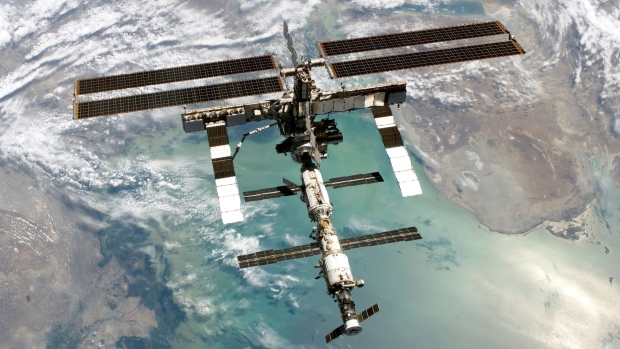
With dozens of experiments being conducted at any given time on the International Space Station (ISS), much was learned high above a planet in the grips of a pandemic.
NASA reports that between Oct. 1, 2019 and Oct. 1, 2020, research performed on the ISS appeared in more than 300 scientific publications.
Here are some of the results of research conducted by astronauts and published in 2020.
Canadian contributions to anemia research
The Canadian Space Agency's research on the ISS studied the effects of space anemia, a condition astronauts often develop, on the human body.
Called the MARROW investigation, researchers looked at microgravity and its effects on bone marrow. Research shows that microgravity has similar effects on the body as long-term bed rest on Earth, with nearly half of astronauts (48 per cent) developing anemia after long-duration missions.
Blood-producing cells and fat cells share space within the bone marrow. When fat cells grow, it reduces the amount of space left for blood-producing cells, a process seen in both astronauts and bed-ridden patients.
The study suggests recovery can take between one and three months depending on the length of the space mission.
A better understanding of the effects of microgravity and space travel on the body is needed, researchers write, for "space travel to other planets, space tourism and for the care of bedridden patients who present similar changes as astronauts."
Possible treatment for bone density problems
An Italian Space Agency study found that a specific kind of nanoparticle could be used as a countermeasure to the osteoporosis problems astronauts often face after prolonged periods in space.
Five years after Italian scientists sent the experiment to an all-woman team to perform, their results have been published in the research journal Scientific Reports.
The study suggests that nanoparticles made of similar minerals to those found in bones and teeth can promote stem cells to become osteoblasts, or cells that form new bone.
According to the Canadian Space Agency, because of the microgravity environment of space, astronauts lose on average 1 to 2 per cent of their bone mineral density each month, making this research promising for preventing bone health problems in astronauts on longer space missions, as well as for use in osteoporosis treatments here on Earth.
Joystick feedback works in video games and space
Video game enthusiasts may be familiar with the sensation of force feedback on joysticks, but a new study shows that similar haptic technology is beneficial in space.
For the uninitiated, some joysticks and other video game devices vibrate or jolt when certain actions are performed, and the feedback brings in yet another one of the five senses into the gameplay.
Researchers on the ISS tested similar force feedback on the mechanisms that astronauts use to control teleoperated robots. Because research shows that microgravity has an effect on motion control after six weeks, haptic feedback can be helpful for those on teleoperated missions to feel more in tune with the robot or rover they are trying to operate.
Parkinson's, Alzheimer's research may be easier in microgravity
Amyloid beta fibrils, protein aggregations found in the brains of people with some neurodegenerative diseases like Alzheimer's, were studied under conditions on Earth and in space by the Japan Aerospace Exploration Agency.
The fibrils grown on Earth and in space were "practically indistinguishable" from each other, but the fibrils in space grew much slower, making them much easier to use for detailed investigations.
This development could aid in future studies of treatments for Alzheimer's and Parkinson's.
How microbes spread, even in space
While not all microbes are bad – some are even beneficial for human health – it is important to keep track of how they spread.
Bacteria and fungi from Earth hitchhike to the ISS on the astronauts headed there, and results published from the NASA Microbial Tracking-2 study found that microbes are even left behind in the fingerprints found around the station.
Not only that, but the microorganisms living in the fingerprints on the station's surfaces could be traced back to an individual astronaut's skin and used to determine when they arrived.
This research can not only be used to protect the health of astronauts as they work and live in an enclosed space, but also to help workers at hospital and other health-care settings here on Earth understand the presence of microbes in their environments.
The coronavirus pandemic has been the focal point for almost everyone on the planet in 2020, but there have been a number of achievements this year for those looking beyond Earth.
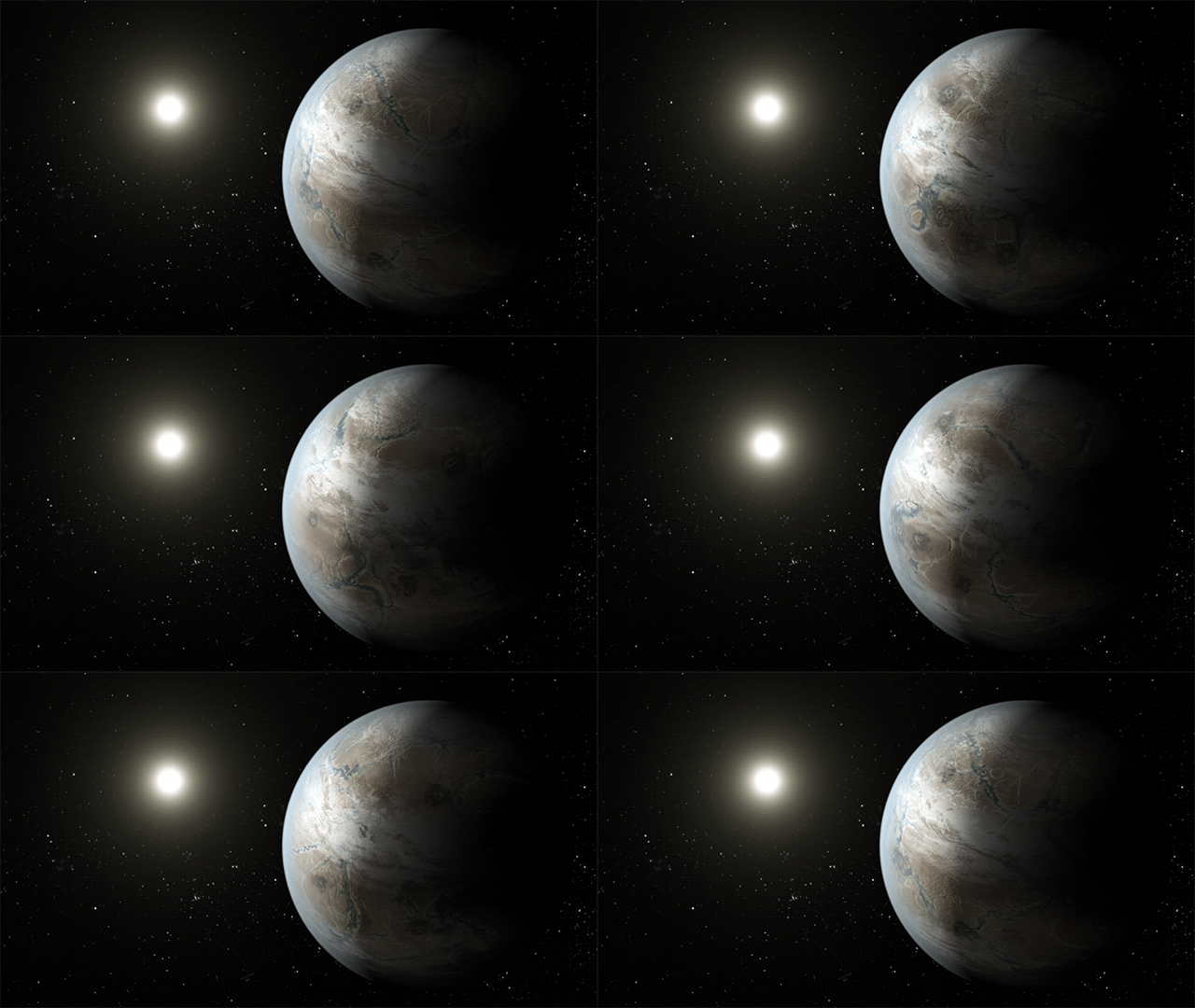
This illustration depicts one possible appearance of the planet Kepler-452b, the first near-Earth-size world to be found in the habitable zone of a star similar to our Sun. Credits: NASA Ames/JPL-Caltech/T. Pyle
JANUARY
In January, NASA's Transiting Exoplanet Survey Satellite (TESS) discovered its first Earth-sized planet in a star's "habitable zone," an area that could allow for liquid water to be on the surface.
Later that month, the space agency's $2.5 billion Curiosity rover became frozen on Mars. The rover, which has since started moving again, celebrated its eighth anniversary on Mars in August 2020 and has made several remarkable discoveries, including detecting an "unusually high" level of methane on the Red Planet.
In February, researchers discovered molecular oxygen in another galaxy for the first time, located in the Markarian 231 galaxy, 561 million light-years from Earth.
Just a few days later, scientists confirmed the presence of Marsquakes, trembles on the Red Planet that are similar to earthquakes.
MARCH
March saw scientists announce the discovery of the first known protein originated in space, located in a meteorite that fell to Earth 30 years ago.
Separately in March, astronomers discovered 139 "minor planets" past Neptune's orbit. The research prompted talk that the discovery of the elusive and mysterious Planet Nine could be getting closer.
Astronomers also said they may have discovered the edge of the Milky Way galaxy in March.
The comet NEOWISE, also known as C/2020 F3, was discovered on March 27 by NASA’s Near-Earth Object Wide-field Infrared Survey Explorer space telescope.
APRIL
In April, NASA laid out its plans for putting a base on the moon in conjunction with its eventual return to the lunar surface.
Scientists said they may have discovered the "smoking gun" that changed the orbit of Uranus, "a small icy planet - roughly 1-3 times the mass of the Earth."
In May, researchers found a Super-Earth exoplanet they described as "one in a million" in deep space.
Although 2019 LD2 was first identified in June 2019, it was not until May 2020 that it was confirmed to be a "trojan asteroid" in Jupiter's orbit, making it the first known object of its type.
May also saw the launch of astronauts Doug Hurley and Bob Behnken to the International Space Station atop a SpaceX rocket, the first time that U.S. astronauts had launched from American soil since 2011. It was also the first time a private company, rather than a national government, has sent astronauts into orbit.
In June, researchers discovered a green glow in the Martian atmosphere, the first time that's ever been seen on another planet besides Earth.
NASA said in June that there could be 'ocean worlds' all over the Milky Way Galaxy in the search for life.
JULY
NASA confirmed that the comet NEOWISE survived its encounter with the sun in early July.
Following a slight delay, NASA's Perseverance rover officially launched on July 30, heading to Mars, where it will search for evidence of ancient life.
August was a monumental month, as NASA announced that Jeanette Epps, who joined the astronaut corps in 2009, would become the first Black female astronaut on the International Space Station in 2021.
SEPTEMBER
In September, researchers discovered that the moon was "rusting," perhaps a result of the water discovered on the celestial satellite.
Later in the month, NASA found there were parts of another asteroid on the asteroid Bennu, an asteroid that may hold clues to life in the universe.
In September, a group of researchers discovered a rare molecule, phosphine, in the clouds of Venus. The gas is only made industrially or by microbes that thrive in oxygen-free environments.
Following the announcement, NASA Administrator Jim Bridenstine said Venus was “one stop in our search for life.”
In October, NASA's OSIRIS-ReX spacecraft finally touched down on the asteroid Bennu in the agency's first mission to retrieve a sample from the surface of an asteroid.
NASA made a major announcement about the moon in October, confirming that water had been spotted on the sunlit portion of the celestial satellite.
Additionally in October, the Perseverance rover reached the halfway point of its journey to Mars.
November was a particularly busy month for space news, with NASA certifying SpaceX to carry astronauts to space, officially ending its reliance on Russia.
Just days later, NASA sent the Crew-1 mission into space onboard a SpaceX Dragon rocket, becoming the first crew rotation flight on a U.S. commercial spacecraft.
Experts said in November that they discovered the presence of water on Mars before there was life on Earth.
Despite the Trump administration's plan to return astronauts to the moon in 2024, a report issued in November said that was an overly ambitious timeline and could be pushed back.
DECEMBER
Japan’s Hayabusa2 spacecraft returned at least 100 milligrams of the near-Earth asteroid, Ryugu, on Dec. 6., after successfully "bombing" it earlier in the year.
Additionally, in December, NASA confirmed that a mysterious object that has been orbiting Earth is indeed a 1960s-era rocket from a failed mission to the moon.
The coming year is shaping up to be just as interesting. Here are some of the missions to keep an eye out for.
Artemis 1
Artemis 1 is the first flight of the Nasa-led, international Artemis program to return astronauts to the Moon by 2024. This will consist of an uncrewed Orion spacecraft which will be sent on a three-week flight around the Moon. IT will reach a maximum distance from Earth of 450,000km – the farthest into space that any spacecraft that can transport humans will have ever flown.
Artemis 1 will be launched into Earth orbit on the first Nasa Space Launch System, which will be the most powerful rocket in operation. From Earth orbit, the Orion will be propelled onto a different path towards the Moon by the rocket’s interim cryogenic propulsion stage. The Orion capsule will then travel to the Moon under the power provided by a service module supplied by the European Space Agency (Esa).
The mission will provide engineers back on Earth with a chance to evaluate how the spacecraft performs in deep space and serve as a prelude to later crewed lunar missions. The launch of Artemis 1 is currently scheduled for late in 2021.
Mars missions
In February, Mars will receive a flotilla of terrestrial robotic guests from several countries. The United Arab Emirates’ Al Amal (Hope) spacecraft is the Arab world’s first interplanetary mission. It is scheduled to arrive in Mars orbit on February 9, where it will spend two years monitoring the Martian weather and disappearing atmosphere.
Arriving within a couple of weeks after Al Amal will be the China National Space Administration’s Tianwen-1, consisting of an orbiter and a surface rover. The spacecraft will enter Martian orbit for several months before deploying the rover to the surface. If it succeeds, China will become the third country to land anything on Mars. The mission has several objectives including mapping the mineral composition of the surface and searching for sub-surface water deposits.
Nasa’s Perseverance rover will land at Jezero Crater on February 18 and search for any signs of ancient life which may have been preserved in the clay deposits there. Critically, it will also store a cache of Martian surface samples on board as the first part in a highly ambitious international program to return samples of Mars to Earth.
Chandrayaan-3
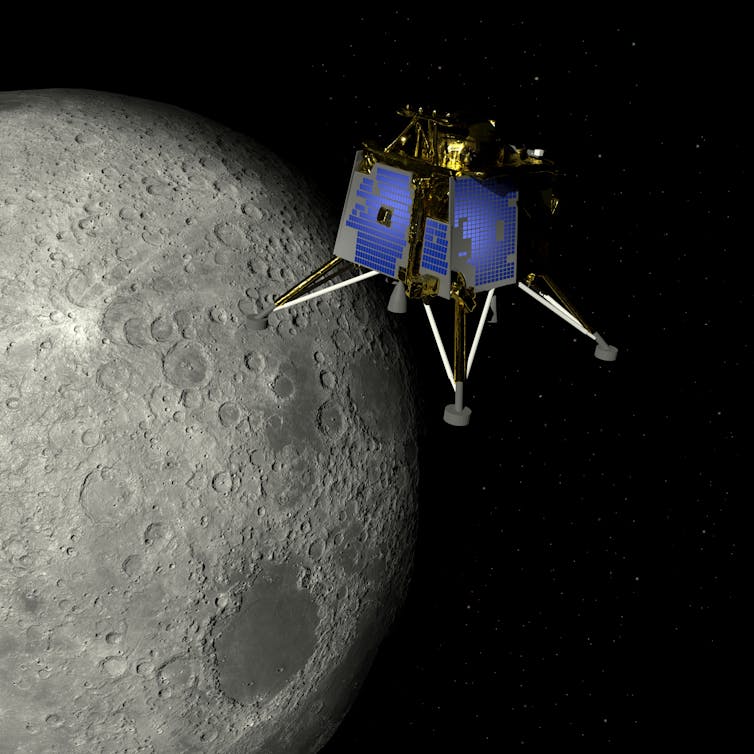
In March 2021, the Indian Space Research Organisation (ISRO) is planning to launch its third lunar mission: Chandrayaan-3. Chandrayaan-1 launched in 2008 and was one of the first major missions in the Indian space programme. Comprising an orbiter and a surface penetrator probe, the mission was one of the first to confirm evidence of lunar water.
Unfortunately, contact with the satellite was lost less than a year later. Sadly, there was a similar mishap with its successor, Chandrayaan-2, which consisted of an orbiter, a lander (Vikram) and a lunar rover (Pragyan).
If all goes well the Chandrayaan-3 rover will touch down in the lunar south pole’s Aitken basin. It’s of particular interest as it is thought to host numerous deposits of subsurface water ice – a vital component for any future sustainable lunar habitation.
James Webb Space Telescope
The James Webb Space Telescope is the successor to the Hubble Space Telescope, but has had a rocky path to being launched. Initially planned for a 2007 launch, the Webb telescope is almost 14 years late and has cost roughly US$10 billion (£7.4 billion) after apparent underestimates and overruns similar to those experienced by Hubble.
Whereas Hubble has provided some amazing views of the universe in visible and ultraviolet region of light, Webb is planning to focus observations in the infrared wavelength band. The reason for this is that when observing really distant objects there will probably be gas clouds in the way.
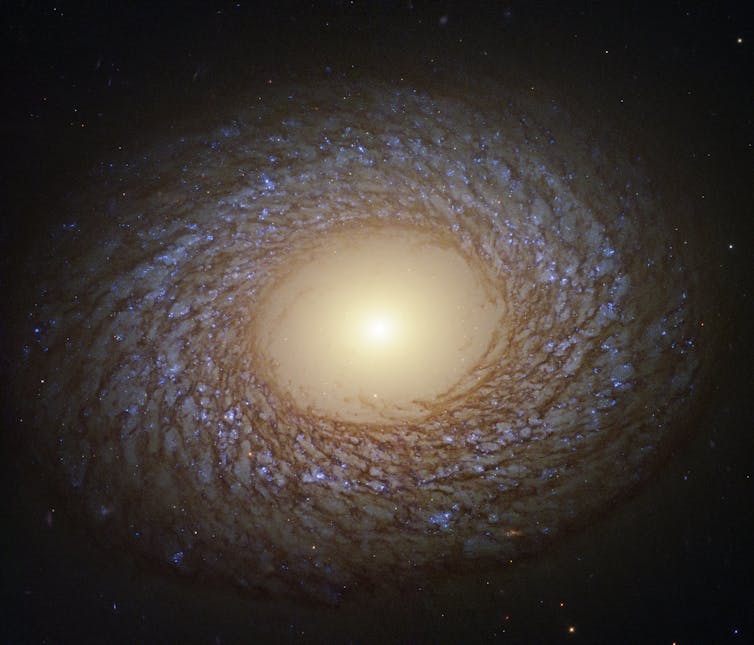
The galaxy NGC 2275 seen by Hubble.Esa/Hubble & Nasa, J. Lee and the PHANGS-HST Team;, CC BY-SA
These gas clouds block really small wavelengths of light, such as X-rays and ultra violet light, while longer wavelengths like infra-red, microwave and radio can get through more easily. So by observing in these longer wavelengths we should see more of the universe.
Webb also has a much bigger mirror of 6.5-metre diameter compared to Hubble’s 2.4-metre diameter mirror – essential for improving image resolution and seeing finer detail.
The primary mission of Webb is look at light from galaxies at the edge of the universe which can tell us about how the first stars, galaxies and planetary systems formed. Potentially this could include some information about the origin of life as well, as Webb is planning on imaging exoplanet atmospheres in high detail, searching for the building blocks of life. Do they exist on other planets, and if so, how did they get there?
We are also likely to be treated to some stunning images similar to those produced by Hubble. Webb is currently scheduled to launch on an Ariane 5 rocket on October 31.
Looking back at 2020, it was a pretty good year for not only space exploration, but also some wonderful astronomical treats: Mars Perseverance blasted off toward the red planet, Americans launched from U.S. soil for the first time since 2011 and we even had a surprise bright comet.
While we can't predict everything that will happen in 2021, there will be a lot going on in the sky — and some historic missions to look forward to.
Here are just a few space-related events to expect:
January meteor shower
Who doesn't love a good meteor show? The Quadrantid meteor shower is expected to be the first one of the year and also one of the most active. Under peak conditions — with dark, clear skies — the shower can produce up to 120 meteors an hour.
There are a few downsides to the timing of this shower. One is that the peak falls within a narrow window: just about six hours. The second is that January tends to be one of the cloudiest months of the year. And also, this year the moon will be up and roughly 85 per cent full, which means only the brightest meteors will be visible.
While the shower runs from December 27 to January 10, the peak night is expected to be overnight from January 2 to 3.
Visitors arrive on Mars
There are a couple of highly anticipated missions to Mars planned for this year.
On February 18, NASA's Mars Perseverance rover is scheduled to land at Jezero Crater. The rover — similar in size to Curiosity, which has been on Mar's surface since 2012 — is also the first equipped with a helicopter, named Inigenuity.
This illustration made available by NASA depicts the Ingenuity Mars Helicopter on the red planet's surface near the Perseverance rover, left. (NASA/JPL-Caltech/The Associated Press)
The location is an important one, as it's the first rover that is specifically designed to look for signs of past life on Mars. Jezero Crater is considered to be a promising place to find those signs, as it's the home of an ancient lake bed that planetary scientists believe could have preserved any organic matter.
And in a historic first, China is expected to become the third country to land on the red planet. It's Tianwen-1 rover launched last July and is scheduled to arrive some time in February. Though unconfirmed, it's believed to be landing in Utopia Planitia, near where NASA's Viking 2 landed in 1976. (As an aside, Star Trek fans might recognize the name as the location of the Starfleet shipyards.)
Planets in the morning sky
If you're an early riser, you won't want to miss out on a beautiful planetary grouping in the dawn sky on March 9.
Just before sunrise, Mercury, Jupiter and Saturn should be low on the eastern horizon together with a crescent moon.
On March 9, 2021, just before sunrise, Mercury, Jupiter and Saturn should be low on the eastern horizon together with a crescent moon. (CBC News)
While Jupiter and Saturn should be fairly easy to spot, Mercury will likely be more challenging. But you can use Jupiter to help locate it, as dim Mercury will be slightly to the lower left of the second-brightest planet in our sky.
If you have a pair of binoculars, you can use them to look at Ganymede and Europa, two moons of Jupiter that will be on either side of the planet. They will also help you locate Mercury.
Space launches
After a successful first flight to the International Space Station (ISS), SpaceX looks for a repeat performance on March 30 in the Crew 2 launch.
On board will be NASA astronauts Megan McArthur and Shane Kimbrough, Japanese astronaut Akihiko Hoshide and European Space Agency's Thomas Pesquet.
The launch will mark the third time astronauts have been sent to the ISS on board SpaceX's Crew Dragon spacecraft. The first was a demonstration mission, the second — launched in November — was the first official return of launches of astronauts from U.S. soil since 2011.
Part of what makes the SpaceX launches so exciting, isn't just the ride up, but also the return of the first stage — or booster — of its Falcon 9 rocket. To date SpaceX has a first stage seven times
NASA astronauts, from left, Shannon Walker, Victor Glover, and Michael Hopkins and Japan Aerospace Exploration Agency astronaut Soichi Noguchi leave the Operations and Checkout Building on their way to launch pad 39A for the SpaceX Crew-1 mission to the International Space Station at the Kennedy Space Center in Cape Canaveral, Fla., Sunday, Nov. 15, 2020. (John Raoux/The Associated Press)
NASA has awarded both SpaceX and Boeing contracts to send astronauts to the ISS, however, Boeing's first uncrewed demonstration launch in December 2019 failed to dock with the station. So now it's playing a game of catch-up. It plans to conduct a second uncrewed test flight of its CST-100 spacecraft some time in the first quarter of 2021. Its first crewed test will follow, perhaps some time in June.
Eclipses
Unfortunately, there won't be many eclipses in 2021, just two lunar and two solar.
On May 26, expect a total lunar eclipse. However, it will only be visible across western Canada at moonset, so it will look like a partial lunar eclipse. However, there are always ways to enjoy the show online, through the Virtual Telescope Projector other online sites.
A combination photo shows the moon during a total lunar eclipse, known as the "Super Blood Wolf Moon," in Brussels, Belgium January 21, 2019. (Yves Herman/Reuters)
However, on November 19, most of Canada should be able to see a partial lunar eclipse. The eclipse should look like a total eclipse, however, as only a small fraction of the moon will remain in the penumbra, the fainter outer shadow.
Potential for northern lights
The sun, which goes through an 11-year solar cycle with a solar minimum and maximum, is coming out of a very quiet minimum. That means activity on the sun is already increasing as it makes its way toward the maximum.
With the sun now moving towards a solar maximum, there may be increased northern lights activity. (Submitted by Stefanie Harron)
During the solar max, the sun becomes more active, with more sunspots. These can result in solar flares, which are sudden releases in energy. These are often followed by a coronal mass ejection, where fast-moving charged particles travel along the solar wind outward. If Earth happens to be in the path, the particles can disrupt our magnetic field, and the particles interact with molecules in the atmosphere.
There were already more sunspots in December, with some reports of northern lights across Canada. It's still unclear if this maximum will be quieter, as the last few have been. However, a recent paper suggests that there's a possibility that this solar cycle may be more active than those before.
Perseid meteor shower
Due to the favourable weather conditions and the number of meteors at its peak, the Persieds are the most anticipated meteor shower of the year.
In 2021, the shower is expected to run from July 17 to August 26, but peak on the night of August 11–12.
A composite of the Perseid meteor shower, on the peak night, Aug 11-12, 2016 from the Dark Sky Preserve of Grasslands National Park, Sask. (Submitted by Alan Dyer/AmazingSky.co)
The shower rarely disappoints, though in 2020, the shower seemed to produce fewer meteors than normal.
At its peak, under ideal conditions — meaning cloud-free and in a dark-sky location — the shower can produce close to 100 meteors an hour.
Tips for catching it: get to as dark a location as you can, and just look up. No binoculars or telescopes needed.
Hubble's successor finally to launch
After years of delay, NASA's James Webb telescope — the successor to the Hubble Space Telescope — is set to launch.
The telescope, which will be more powerful than Hubble, is scheduled to launch on board a European Space Agency Ariane 5 rocket on October 31 from French Guiana.
This illustration shows the size difference between the mirror on the Hubble Space Telescope and the James Webb one. (NASA)
Webb is far larger than Hubble and will view the sky primarily in the infrared spectrum rather than in visible light. This allows it to see things that are invisible to the unaided eye. It also allows it to look at the atmospheres of potentially habitable planets, distant worlds orbiting distant stars.
The trusty Geminids
A final treat for the end of the year should be the Geminid meteor shower. This is the most active shower of the year, with up to 150 meteors an hour at its peak under ideal conditions.
A single bright meteor from the Geminid meteor shower on Dec. 12, 2017, shot from southeastern Arizona. (Submitted by Alan Dyer/AmazingSky.co)
The 2021 Geminid shower runs from Dec. 4–17 but peaks on the night of Dec. 13–14.
Viewing this shower can be challenging due to the time of year. December tends to be one of the cloudiest months. However, you can try catching a few meteors in the nights ahead and after the peak.
The shower rarely disappoints, with bright fireballs shooting across the sky.