Rabu, 29 Juni 2022

Facial Recognition—Now for Seals - Hakai Magazine

Article body copy

Have you ever looked at a seal and thought, Is that the same seal I saw yesterday? Well, there could soon be an app for that based on new seal facial recognition technology. Known as SealNet, this seal face-finding system was developed by a team of undergraduate students from Colgate University in New York.

Taking inspiration from other technology adapted for recognizing primates and bears, Krista Ingram, a biologist at Colgate University, led the students in developing software that uses deep learning and a convolutional neural network to tell one seal face from another. SealNet is tailored to identify the harbor seal, a species with a penchant for posing on coasts in haulouts.

The team had to train their software to identify seal faces. “I give it a photograph, it finds the face, [and] clips it to a standard size,” says Ingram. But then she and her students would manually identify the nose, the mouth, and the center of the eyes.

For the project, team members snapped more than 2,000 pictures of seals around Casco Bay, Maine, during a two-year period. They tested the software using 406 different seals and found that SealNet could correctly identify the seals’ faces 85 percent of the time. The team has since expanded its database to include around 1,500 seal faces. As the number of seals logged in the database goes up, so too should the accuracy of the identification, Ingram says.

The developers of SealNet trained a neural network to tell harbor seals apart using photos of 406 different seals. Photo courtesy of Birenbaum et al.

As with all tech, however, SealNet is not infallible. The software saw seal faces in other body parts, vegetation, and even rocks. In one case, Ingram and her students did a double take at the uncanny resemblance between a rock and a seal face. “[The rock] did look like a seal face,” Ingram says. “The darker parts were about the same distance as the eyes … so you can understand why the software found a face.” Consequently, she says it’s always best to manually check that seal faces identified by the software belong to a real seal.

Like a weary seal hauling itself onto a beach for an involuntary photo shoot, the question of why this is all necessary raises itself. Ingram believes SealNet could be a useful, noninvasive tool for researchers.

Of the world’s pinnipeds—a group that includes seals, walruses, and sea lions—harbor seals are considered the most widely dispersed. Yet knowledge gaps do exist. Other techniques to track seals, such as tagging and aerial monitoring, have their limitations and can be highly invasive or expensive.

Ingram points to site fidelity as an aspect of seal behavior that SealNet could shed more light on. The team’s trials indicated that some harbor seals return to the same haulout sites year after year. Other seals, however, such as two animals the team nicknamed Clove and Petal, appeared at two different sites together. Increasing scientists’ understanding of how seals move around could strengthen arguments for protecting specific areas, says Anders Galatius, an ecologist at Aarhus University in Denmark who was not involved in the project.

Galatius, who is responsible for monitoring Denmark’s seal populations, says the software “shows a lot of promise.” If the identification rates are improved, it could be paired with another photo identification method that identifies seals by distinctive markings on their pelage, he says.

In the future, after further testing, Ingram hopes to develop an app based on SealNet. The app, she says, could possibly allow citizen scientists to contribute to logging seal faces. The program could also be adapted for other pinnipeds and possibly even for cetaceans.

Adblock test (Why?)


https://news.google.com/__i/rss/rd/articles/CBMiQGh0dHBzOi8vaGFrYWltYWdhemluZS5jb20vbmV3cy9mYWNpYWwtcmVjb2duaXRpb24tbm93LWZvci1zZWFscy_SAQA?oc=5

2022-06-29 07:01:44Z
CBMiQGh0dHBzOi8vaGFrYWltYWdhemluZS5jb20vbmV3cy9mYWNpYWwtcmVjb2duaXRpb24tbm93LWZvci1zZWFscy_SAQA

Selasa, 28 Juni 2022

Rocket Lab launches NASA’s CAPSTONE satellite on its scouting mission for a lunar space station - Yahoo Movies Canada

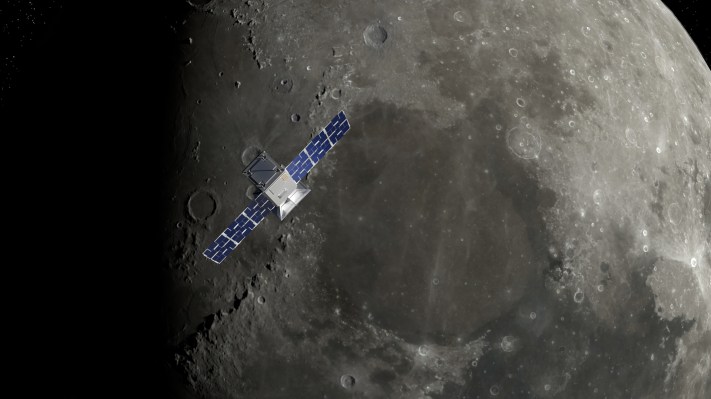
NASA's CAPSTONE mission, which will chart a new orbit around the Moon which will hopefully be used for a future crewed lunar space station, is underway after a successful launch on Tuesday morning. Rocket Lab's Electron launch vehicle delivered the CAPSTONE satellite, which is roughly the size of a large microwave oven, to Earth orbit for step one of its lunar journey.

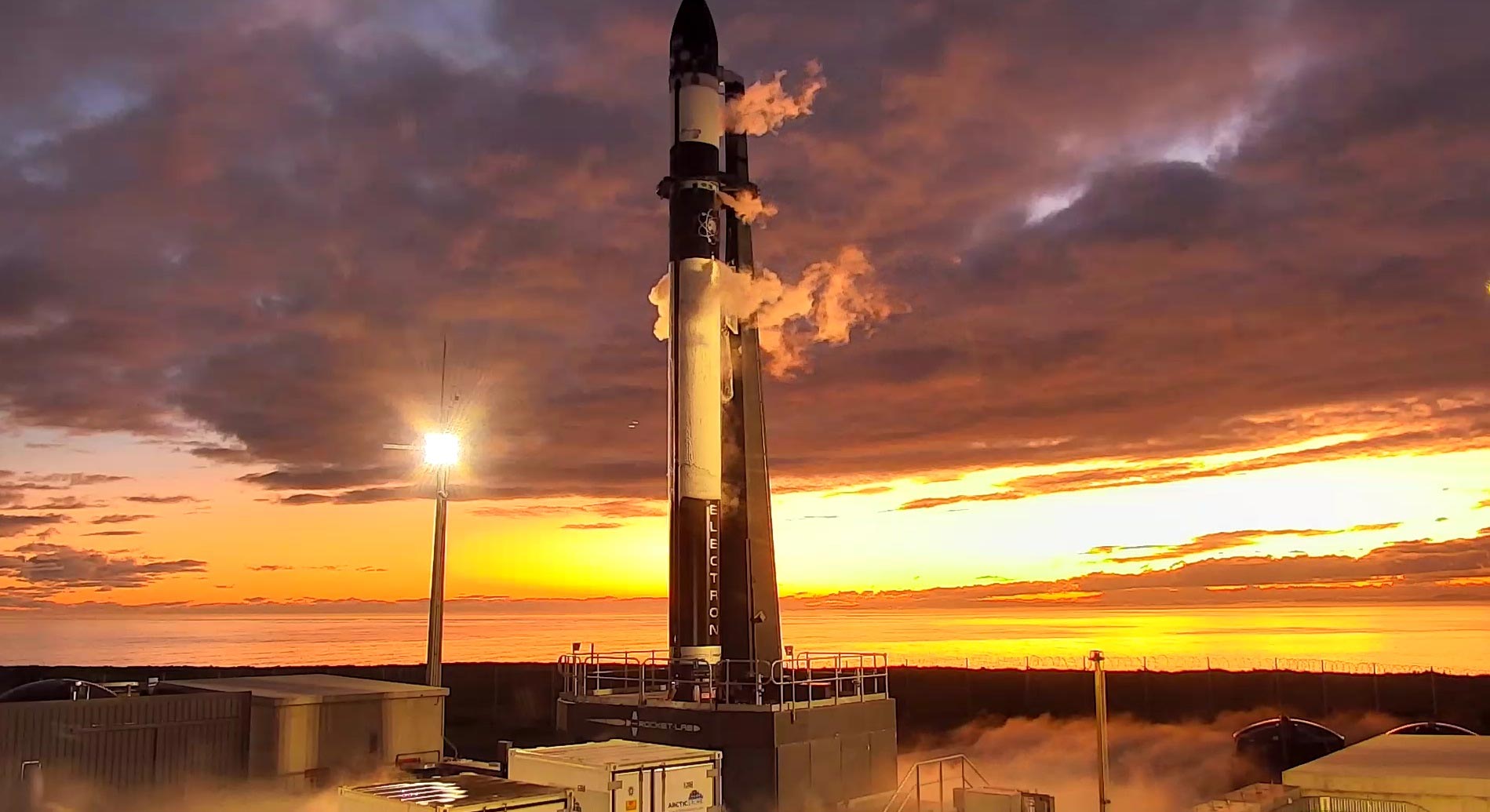
The Electron rocket took off from Rocket Lab's launch facility in New Zealand at 5:55 AM ET, marking Rocket Lab's 27th flight for its launch vehicle, and its first ever with the Moon as an intended destination. The satellite will remain in low-Earth orbit for around six days, attached to a custom designed Photon upper stage created by Rocket Lab for this mission, after which Photon will ignite its engines a final time to leave Earth's orbit on a path towards deep space, subsequently releasing CAPSTONE to continue on for arrival at the Moon roughly three months from now.

The goal of the CAPSTONE mission is to use the small satellite to test out a new orbit around the Moon — an elliptical path that will provide a stable enough orbit to maintain a permanent base of operations for excursions to the lunar surface in Gateway, NASA's planned Moon space station, but also offer a good launch point for deeper space exploration at its furthest point. The lunar Gateway is a key ingredient for NASA's Artemis program, which will return human astronauts to the surface of the Moon.

This is Rocket Lab's first deep space mission, but it won't be its last — the company is aiming to deliver two orbital spacecraft to Mars as well for a science mission also on behalf of NASA.

Adblock test (Why?)


https://news.google.com/__i/rss/rd/articles/CBMiTGh0dHBzOi8vY2EubW92aWVzLnlhaG9vLmNvbS9yb2NrZXQtbGFiLWxhdW5jaGVzLW5hc2EtY2Fwc3RvbmUtMTAzODUzODQ0Lmh0bWzSAVRodHRwczovL2NhLm1vdmllcy55YWhvby5jb20vYW1waHRtbC9yb2NrZXQtbGFiLWxhdW5jaGVzLW5hc2EtY2Fwc3RvbmUtMTAzODUzODQ0Lmh0bWw?oc=5

2022-06-28 10:38:53Z
1482777447

NASA takes a step towards putting humans back to the Moon with CAPSTONE launch - Yahoo Movies Canada

Rocket Lab has successfully launched NASA's 55-pound CAPSTONE cubesat that will eventually orbit the Moon if all goes to plan. It's a small but important step in NASA's Artemis mission that aims to send humans to the Moon for the first time since 1972.

The launch proceeded nominally according to NASA's broadcast, reaching low-Earth orbit at about 'T' plus 10 minutes. An Electron launch is much like any other, except that it's the first rocket to be electrically powered by batteries rather than a gas turbine. As such, there's a phase called "battery ejection" which happens near the end of the launch cycle.

Rocket Lab used an Electron rocket with a special addition called the Lunar Photon upper stage with enough power to send it into deep space. It's one of the smallest rockets to attempt to launch a payload to lunar orbit, the company said. It launched from Rocket Lab's site on New Zealand's Mahia Peninsula, and is "the highest mass and the highest performance Electron has ever had to fly by quite some margin," the company told TechCrunch earlier.

CAPSTONE will orbit Earth for nine days to build up enough speed for a trans lunar injection (TLI) that will allow it to eventually orbit the Moon. The primary objective is to verify a type of highly elliptical lunar orbit called "near rectilinear halo" that's planned for the Gateway space station. Gateway will eventually be delivered to lunar orbit by SpaceX with a science lab and living quarters for astronauts, along with ports for future spacecraft.

Rocket Lab was supposed to launch CAPSTONE yesterday but delayed it until today "to perform final system checks," NASA tweeted. Regardless of the launch date, it's scheduled to arrive at the moon on November 13th. To see a replay of the livecast, check here.

Adblock test (Why?)


https://news.google.com/__i/rss/rd/articles/CBMieWh0dHBzOi8vY2EubW92aWVzLnlhaG9vLmNvbS9uYXNhLXRha2VzLWZpcnN0LXN0ZXAtYmFjay10by10aGUtbW9vbi13aXRoLXJvY2tldC1sYWItY2Fwc3RvbmUtY3ViZXNhdC1sYXVuY2gtMTAxMjQzNTUyLmh0bWzSAQA?oc=5

2022-06-28 10:12:43Z
1482777447

Watch Rocket Lab launch NASA’s CAPSTONE mission to the moon live - TechCrunch

After repeated delays, the microwaved oven-sized CubeSat known as CAPSTONE may finally start its long journey to the moon. With this launch, NASA aims to begin the first chapter of its ambitious Artemis program, and lay the groundwork for what would be a first in human history: an orbiting crewed platform around the moon.

Before the crewed platform, which the agency is calling “Gateway,” can launch, NASA is first testing a unique, highly elliptical orbit around the moon. That’s where CAPSTONE, or Cislunar Autonomous Positioning System Technology Operations and Navigation Experiment, comes in. The CubeSat will travel along that exact orbit (called a near-rectilinear halo orbit) for six months, gathering important data for NASA scientists.

To get there, CAPSTONE will launch aboard a Rocket Lab Electron rocket from the company’s site on New Zealand’s remote Māhia Peninsula. It’s “the highest mass and the highest performance Electron has ever had to fly by quite some margin,” Rocket Lab CEO Peter Beck told TechCrunch earlier this week.

Rocket Lab developed a variant of its Photon spacecraft called “Lunar Photon” specifically for this mission. That spacecraft will conduct a series of maneuvers to get CubeSat on the right trajectory to the moon.

CAPSTONE is also the result of major contributions from other industry players. Notably, Advanced Space developed, owns and is operating CAPS; Tyvak International built the CubeSat platform; Stellar Exploration provided the spacecraft’s propulsion system; and Tethers Unlimited provided the radio comms system.

The space agency was originally targeting Monday for the launch but had to push it by one day to “allow Rocket Lab to perform final systems checks,” NASA said in a blog post. If the mission is delayed yet again, there’s no reason to fret: Rocket Lab has launch opportunities every single day through July 27, and the design of CAPSTONE’s trajectory means it’ll arrive at the moon by November 13 regardless of when in the launch window it departs from Earth.

NASA’s YouTube channel is showing a live launch webcast starting from 5:00 AM EST, with the launch targeted for 5:55 AM EST.

Adblock test (Why?)


https://news.google.com/__i/rss/rd/articles/CBMiYmh0dHBzOi8vdGVjaGNydW5jaC5jb20vMjAyMi8wNi8yNy93YXRjaC1yb2NrZXQtbGFiLWxhdW5jaC1uYXNhcy1jYXBzdG9uZS1taXNzaW9uLXRvLXRoZS1tb29uLWxpdmUv0gEA?oc=5

2022-06-28 06:00:45Z
1482777447

Senin, 27 Juni 2022

NASA’s CAPSTONE Launch to Moon Delayed – Spacecraft Will Be First To Fly Unique Lunar Orbit - SciTechDaily

Rocket Lab’s Electron Rocket

Rocket Lab’s Electron rocket sits on the pad at the company’s Launch Complex 1 in New Zealand for wet dress rehearsal ahead of the CAPSTONE launch. Credit: Rocket Lab

NASA, Rocket Lab, and Advanced Space are standing down from the June 27 launch attempt for the CAPSTONE mission to the Moon to allow Rocket Lab to perform final systems checks. The mission was slated to launch on Monday, June 27, aboard a Rocket Lab Electron rocket from the company’s Launch Complex 1 in Mahia, New Zealand.

Teams are evaluating weather and other factors to determine the date of the next launch attempt. The next launch opportunity within the current period is on June 28. CAPSTONE’s trajectory design means that the spacecraft will arrive at its lunar orbit on November 13 regardless of launch date within the current period, which offers launch opportunities every day through July 27.

NASA C.APSTONE Mission

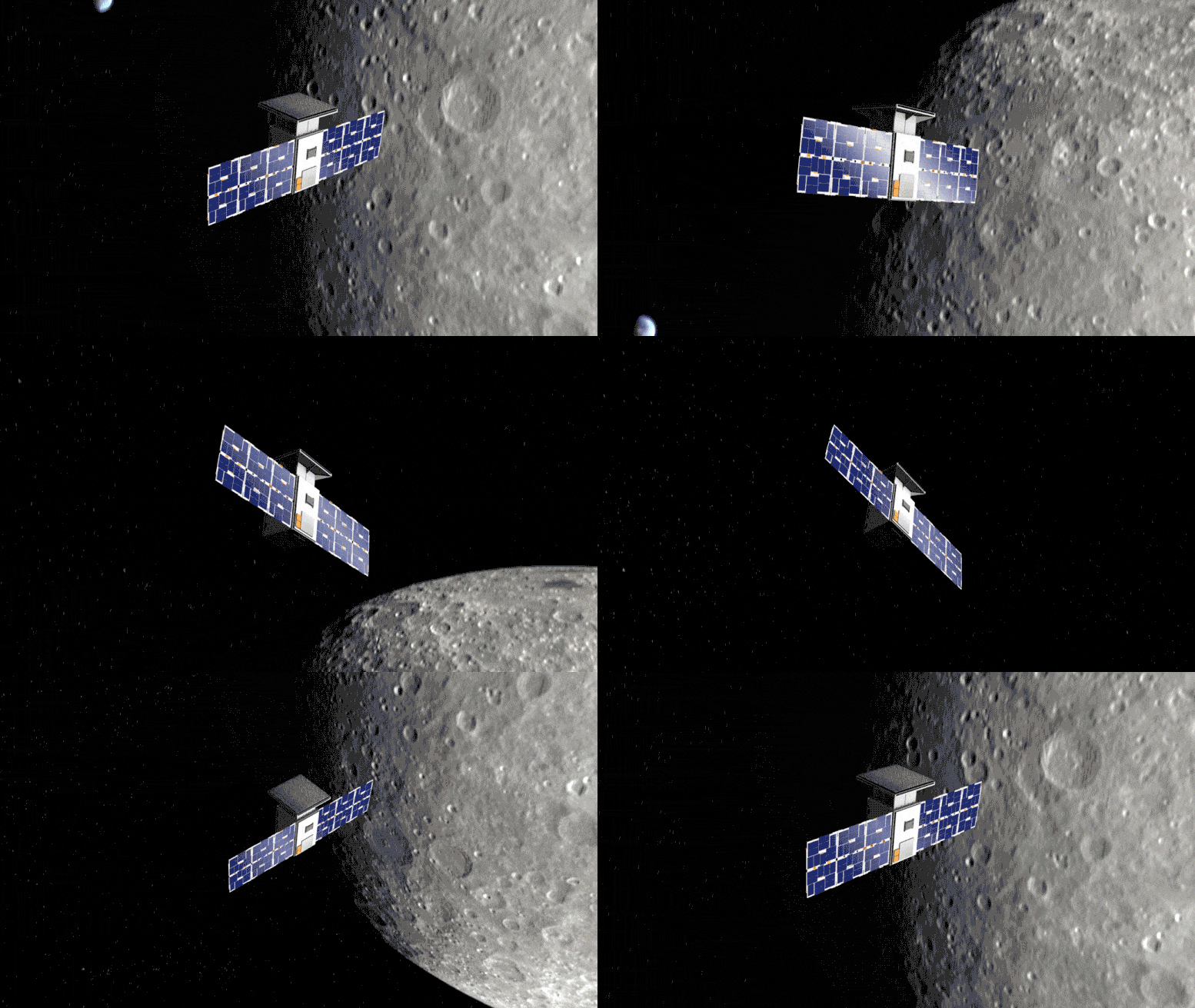
Rocket Lab’s Photon satellite bus will deliver CAPSTONE into a trajectory toward the Moon. Credit: Illustration by NASA/Daniel Rutter

CAPSTONE, which stands for Cislunar Autonomous Positioning System Technology Operations and Navigation Experiment, will be the first spacecraft to fly a specific unique lunar orbit ahead of future missions with crew.

The destination for this microwave oven-size CubeSat is a near rectilinear halo orbit (NRHO). That same orbit is planned for Gateway, a multipurpose outpost for long-term lunar missions as part of the agency’s Artemis program.

Installing Solar Panels Onto CAPSTONE Spacecraft

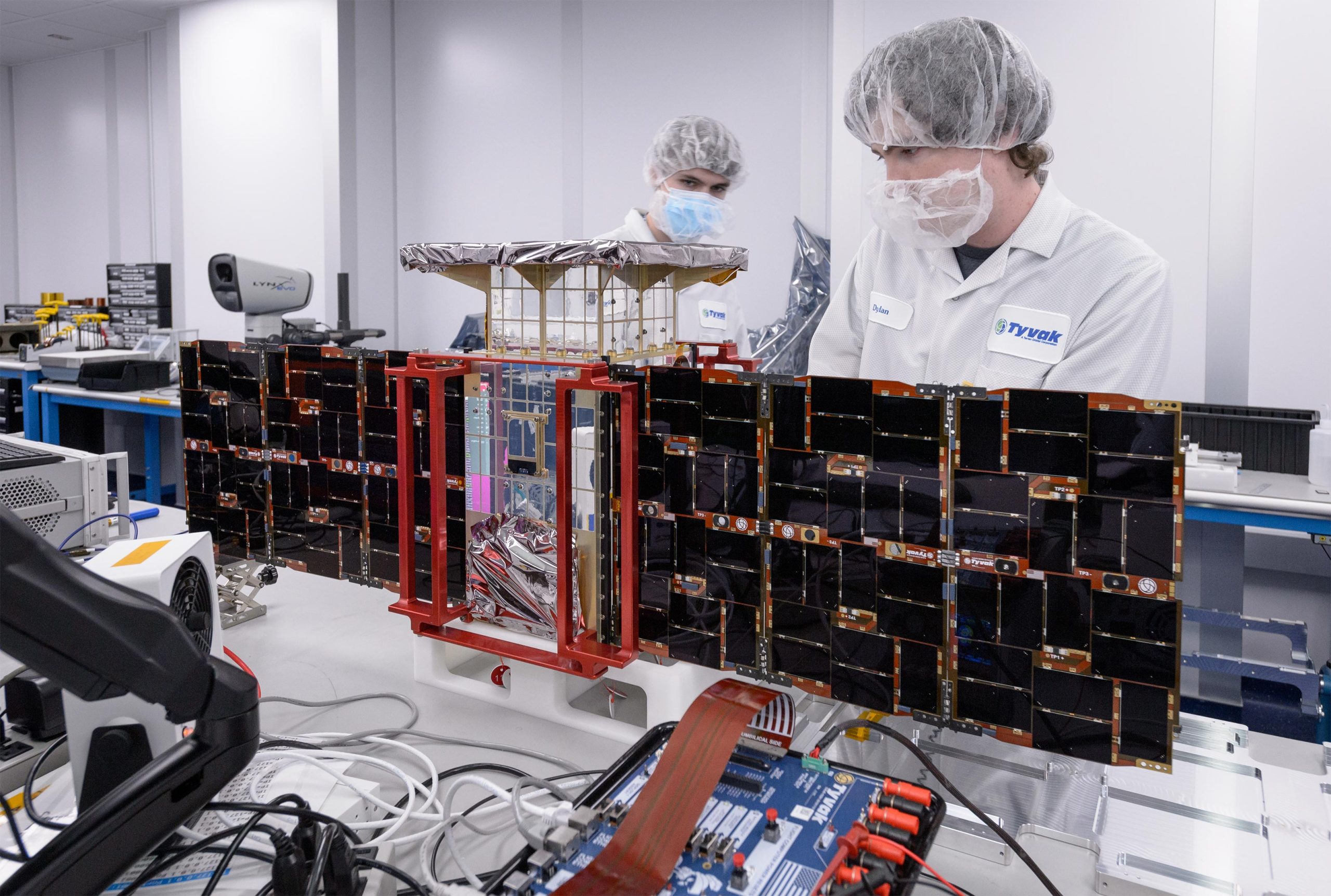
Team members install solar panels onto the CAPSTONE spacecraft – short for Cislunar Autonomous Positioning System Technology Operations and Navigation Experiment – at Tyvak Nano-Satellite Systems Inc., in Irvine, California. Credit: NASA/Dominic Hart

Six days after launch, the Photon upper stage will release CAPSTONE into space for the first portion of the spacecraft’s solo flight. After a four-month journey to the Moon, CAPSTONE will test the dynamics of the NRHO for at least six months, helping reduce risk for future spacecraft. CAPSTONE will also demonstrate innovative spacecraft-to-spacecraft navigation technology and one-way ranging capabilities that could help future spacecraft fly near the Moon with reduced need for communication with Earth.

CAPSTONE is commercially owned and operated by Advanced Space in Westminster, Colorado, on behalf of NASA. It represents an innovative collaboration between NASA and industry to provide rapid results and feedback to inform future exploration and science missions. Tyvak Nano-Satellite Systems, a Terran Orbital Corporation, of Irvine, California, built the spacecraft. The mission also includes contributions from Stellar Exploration Inc., Space Dynamics Lab, Tethers Unlimited Inc., and Orion Space Systems.

Adblock test (Why?)


https://news.google.com/__i/rss/rd/articles/CBMicmh0dHBzOi8vc2NpdGVjaGRhaWx5LmNvbS9uYXNhcy1jYXBzdG9uZS1sYXVuY2gtdG8tbW9vbi1kZWxheWVkLXNwYWNlY3JhZnQtd2lsbC1iZS1maXJzdC10by1mbHktdW5pcXVlLWx1bmFyLW9yYml0L9IBdmh0dHBzOi8vc2NpdGVjaGRhaWx5LmNvbS9uYXNhcy1jYXBzdG9uZS1sYXVuY2gtdG8tbW9vbi1kZWxheWVkLXNwYWNlY3JhZnQtd2lsbC1iZS1maXJzdC10by1mbHktdW5pcXVlLWx1bmFyLW9yYml0L2FtcC8?oc=5

2022-06-27 08:41:02Z
1482777447

Minggu, 26 Juni 2022

See the moon shine near Mercury before dawn on Monday as it concludes its planet tour - Space.com

Look to the east-northeastern horizon before dawn on Monday (June 27) to see the moon wrap up its monthly tour of the morning plants with Mercury. 

"The silver sliver of the old moon's crescent will shine several finger widths to the upper left (or 3.5 degrees to the celestial north) of the bright dot of Mercury," writes Chris Vaughan, amateur astronomer with SkySafari Software who oversees Space.com's Night Sky calendar.

The pair will be close enough to share the view of a pair of binoculars (represented by the green circle in the image). But Vaughan warns observers to turn optics away from the eastern horizon before the sun rises. 

Related: The brightest planets in June's night sky: How to see them (and when)

The moon may be rather tricky to spot at first glance as it will be a very thin crescent, only 3% illuminated, according to Space.com's skywatching columnist Joe Rao. 

If you're after an extra skywatching challenge, look out for Aldebaran. The orange first-magnitude star will be shining about 7 degrees to the left of Mercury according to Rao. 

Monday morning is also your last good chance to catch a glimpse of the moon joining in with the rare planetary alignment that has been present this month. Throughout June left to right Mercury, Venus, Mars, Jupiter and Saturn have lined up in their orbital order from left to right in the southeastern sky. 

Hoping to capture a good photo of the moon and mercury? Our guide on how to photograph the moon has some helpful tips. If you're looking for a camera, here's our overview of the best cameras for astrophotography and best lenses for astrophotography. As always, our guides for the best telescopes and best binoculars can help you prepare for the next great skywatching event.

Editor's note: If you take a photograph of the moon near Mercury, let us know! You can send images and comments in to spacephotos@space.com.

Follow us on Twitter @Spacedotcom (opens in new tab) and on Facebook. 

Adblock test (Why?)


https://news.google.com/__i/rss/rd/articles/CBMiMmh0dHBzOi8vd3d3LnNwYWNlLmNvbS9tb29uLW1lZXRzLW1lcmN1cnktanVuZS0yMDIy0gEA?oc=5

2022-06-26 10:38:59Z
1480649022

Sabtu, 25 Juni 2022

Artemis 1 moon mission could launch as soon as late August - Space.com

NASA officials have declared the Artemis 1 moon rocket's most recent "wet dress rehearsal" a success and are hopeful the mission can get off the ground as soon as late August.

The Artemis 1 stack — a Space Launch System (SLS) rocket topped by an Orion capsule — is scheduled to roll back to the Vehicle Assembly Building (VAB) at NASA's Kennedy Space Center (KSC) in Florida on July 1, where the massive vehicle will undergo repairs and preparations for its coming launch. 

Artemis 1, the first launch for the SLS, will send an uncrewed Orion on a roughly month-long mission around the moon. The mission has experienced several delays, and most recently the rocket's certification to fly has been held up by incomplete fueling tests — a key part of the wet dress rehearsal, a three-day series of trials designed to gauge a new vehicle's readiness for flight. 

Related: NASA's Artemis 1 moon mission explained in photos 

The Artemis 1 stack first rolled from the VAB to KSC's Pad 39B in mid-March, to prep for a wet dress rehearsal that began on April 1. But three separate attempts to fill the SLS with cryogenic propellants during that effort failed, sending the stack back to the VAB for repairs on April 25. The most recent wet dress try, which wrapped up on Monday (June 20), didn't go perfectly, but NASA has deemed it good enough to proceed with preparations for launch.

Operators were able to fully fuel SLS for the first time, bringing the launch simulation much further along than any of the attempts in April. A leak from the core stage's engine cooling system "umbilical" line was detected during Monday's fueling test, but mission managers determined that the deviation didn't pose a safety risk and continued with the simulation's terminal count. That ended up being the right decision, Artemis 1 team members said.  

Mission operators were able to run a "mask" for the leak in the ground launch sequencer software, which permitted computers in mission control to acknowledge the malfunction without flagging it as a reason to halt the countdown, according to Phil Weber, senior technical integration manager at KSC. Weber joined other agency officials on a press call Friday (June 24) to discuss the plans for Artemis 1 now that the wet dress is in the rear view mirror.

The software mask allowed the count to continue through to the handoff from the mission control computers to the automated launch sequencer (ALS) aboard the SLS at T-33 seconds, which ultimately terminated the count at T-29 seconds. 

"[ALS] was really the prize for us for the day," Weber said during Friday's call. "We expected … it was going to break us out [of the countdown] because the ALS looks for that same measurement, and we don't have the capability to mask it onboard." 

It was unclear immediately following the recent wet dress if another one would be required, but mission team members later put that question to rest.

"At this point, we've determined that we have successfully completed the evaluations and required work we intended to complete for the dress rehearsal," Tom Whitmeyer, deputy associate administrator for Common Exploration Systems at NASA headquarters, said on Friday's call. He added that NASA teams now have the "go ahead to proceed" with preparations for Artemis 1's launch.

Before it can be rolled back to the VAB, however, the stack will undergo further maintenance at Pad 39B, including repairs to the quick-disconnect component on the aft SLS umbilical, which was responsible for Monday's hydrogen leak. 

There's also one more test technicians need to perform at the pad. Hot-firing the hydraulic power units (HBUs), part of the SLS' solid rocket boosters, was originally part of the wet dress countdown but was omitted when the countdown was aborted. Those tests will be completed by Saturday (June 25), according to Lanham. Following the hot-fire tests, operators will then spend the weekend offloading the HBUs' hydrazine fuel.

Once back in the VAB, NASA officials estimate it'll take six to eight weeks of work to get Artemis 1 ready to roll back to Pad 39B for an actual liftoff. Cliff Lanham, senior vehicle operations manager at KSC, outlined some of the planned maintenance on Friday's call. 

Related: NASA's Artemis program of lunar exploration

Related stories:

Among other tasks, technicians will perform standard vehicle inspections, hydrogen leak repairs, "late-stow" for the payloads flying on Orion, and software loads to the SLS core stage and upper stage. They will also install flight batteries.

"Ultimately, we want to get to our flight termination system testing," Lanham said. "Once that's complete, we'll be able to perform our final inspections in all the volumes of the vehicle and do our closeouts."

After that work is complete, the Artemis 1 stack will roll out from the VAB once again, making the eight to 11-hour crawl back to Pad 39B on July 1. Whitmeyer said on Friday that the late-August launch window for Artemis 1, which opens on Aug. 23 and lasts for one week, is "still on the table."

Follow us on Twitter @Spacedotcom (opens in new tab) or on Facebook (opens in new tab).  

Adblock test (Why?)


https://news.google.com/__i/rss/rd/articles/CBMiP2h0dHBzOi8vd3d3LnNwYWNlLmNvbS9hcnRlbWlzLTEtbW9vbi1taXNzaW9uLWxhdGUtYXVndXN0LWxhdW5jaNIBAA?oc=5

2022-06-25 10:00:12Z
1470325919