Minggu, 08 Januari 2023

Fiery Destruction Expected: NASA Earth Radiation Budget Satellite To Reenter Atmosphere Today - SciTechDaily

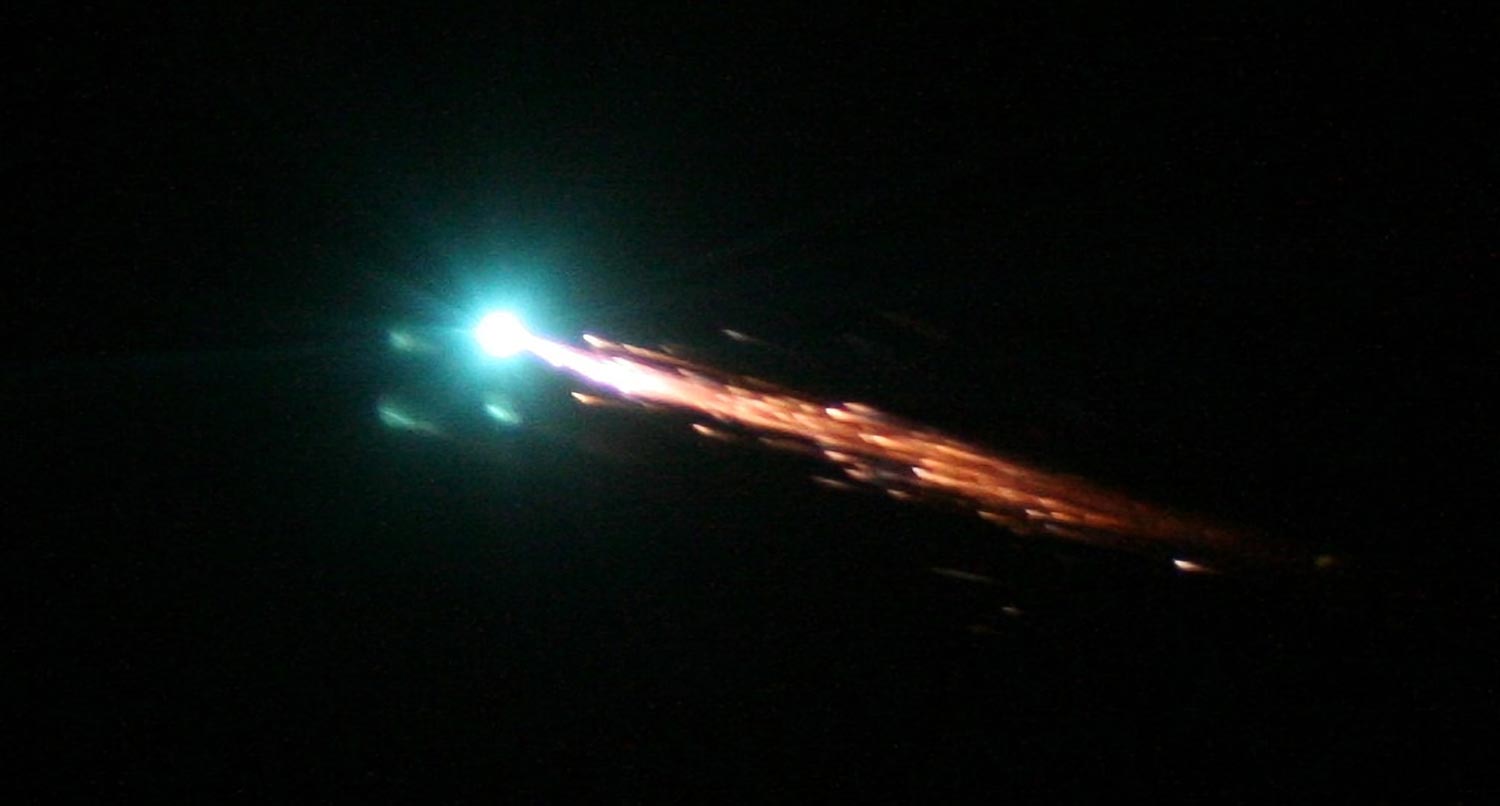
ATV-1 Reentry

NASA’s Earth Radiation Budget Satellite is expected to burn up in the atmosphere. Here we see the ATV Jules Verne spacecraft on destructive reentry in 2008 taken from the DC-8 aircraft which observed the reentry over the Pacific Ocean. Credit: ESA

In early January NASA’s retired Earth Radiation Budget Satellite (ERBS) is expected to reenter Earth’s atmosphere after almost four decades in space. For 21 of those years, the ERBS actively investigated how the Earth absorbed and radiated energy from the Sun, and made measurements of stratospheric ozone, water vapor, nitrogen dioxide, and aerosols.  

As of Thursday, January 5, the Department of Defense predicted that the 5,400-pound satellite will reenter the atmosphere at approximately 6:40 p.m. EST on Sunday, January 8 with an uncertainty of +/- 17 hours. NASA and the Defense Department will continue to monitor the reentry and update the predictions. 

NASA expects most of the satellite to burn up as it travels through the atmosphere, but some components are expected to survive the reentry. The risk of harm coming to anyone on Earth is very low – approximately 1 in 9,400. 
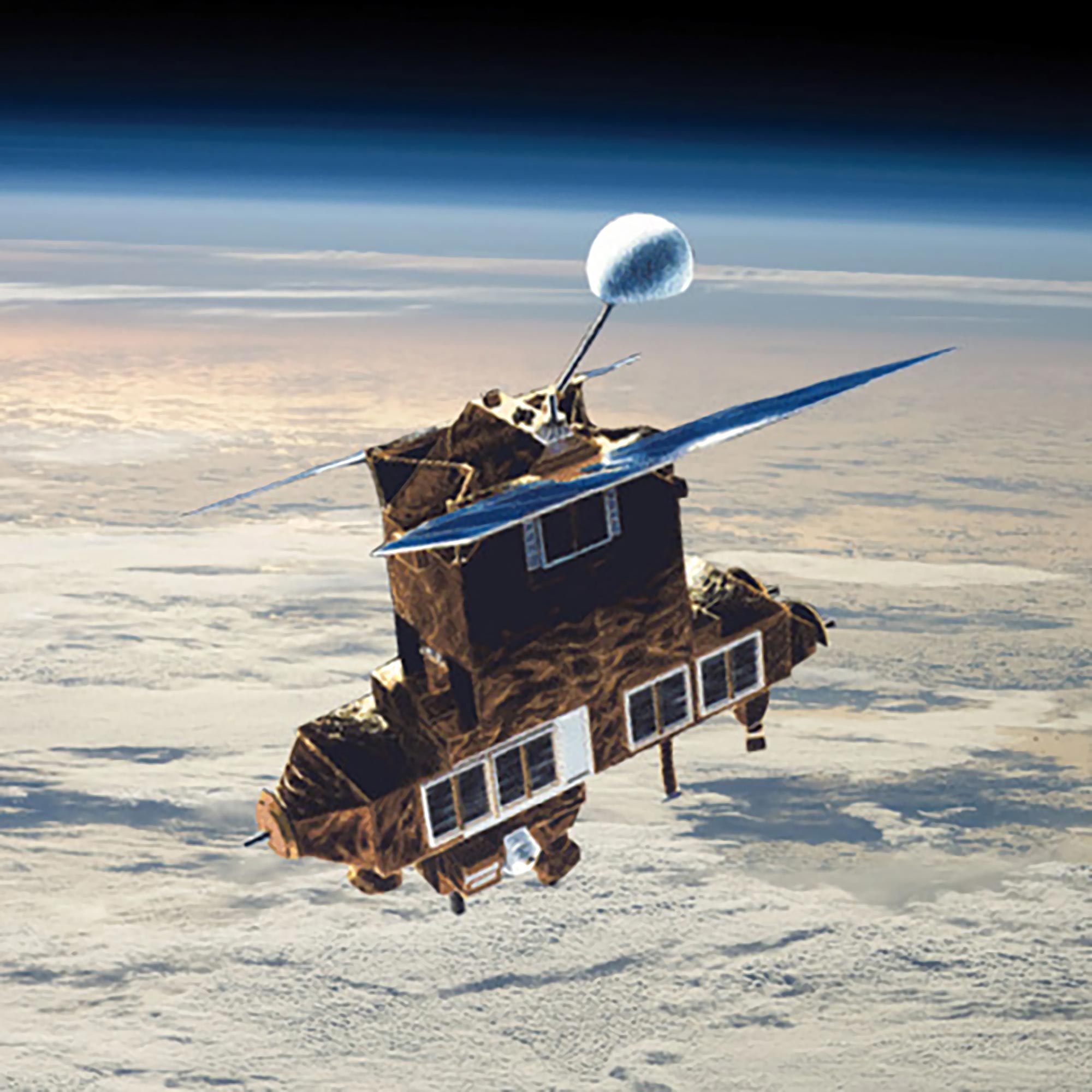
NASA Earth Radiation Budget Satellite (ERBS)

NASA’s Earth Radiation Budget Satellite (ERBS) was designed to examine how energy from the Sun is absorbed and re-emitted by the Earth. By understanding this process, researchers can learn more about patterns in Earth’s weather. ERBS was launched on October 5, 1984, on the Space Shuttle Challenger and retired on October 14, 2005, making it one of the longest-running spacecraft missions. Although the spacecraft was only expected to operate for two years, it actually provided scientists with data on the Earth’s ozone layer for over 20 years. Credit: NASA

Launched from the Space Shuttle Challenger on October 5, 1984, the ERBS spacecraft was part of NASA’s three-satellite Earth Radiation Budget Experiment (ERBE) mission. It carried three instruments, two to measure the Earth’s radiative energy budget, and one to measure stratospheric constituents, including ozone.  

The energy budget, the balance between the amount of energy from the Sun that Earth absorbs or radiates, is an important indicator of climate health, and understanding it can also help reveal weather patterns. Ozone concentrations in the stratosphere play an important role in protecting life on Earth from damaging ultraviolet radiation. 

ERBS far exceeded its expected two-year service life, operating until its retirement in 2005. Its observations helped researchers measure the effects of human activities on Earth’s radiation balance. NASA has continued to build on the success of the ERBE mission with projects including the current Clouds and the Earth’s Radiant Energy System (CERES) suite of satellite instruments.  

The Stratospheric Aerosol and Gas Experiment II (SAGE II) on the ERBS made stratospheric measurements. SAGE II collected important data that confirmed the ozone layer was declining on a global scale. That data helped shape the international Montreal Protocol Agreement, resulting in a dramatic decrease around the globe in the use of ozone-destroying chlorofluorocarbons. Today, SAGE III on the International Space Station collects data on the health of the ozone layer. 

Adblock test (Why?)


https://news.google.com/__i/rss/rd/articles/CBMidmh0dHBzOi8vc2NpdGVjaGRhaWx5LmNvbS9maWVyeS1kZXN0cnVjdGlvbi1leHBlY3RlZC1uYXNhLWVhcnRoLXJhZGlhdGlvbi1idWRnZXQtc2F0ZWxsaXRlLXRvLXJlZW50ZXItYXRtb3NwaGVyZS10b2RheS_SAQA?oc=5

2023-01-08 11:43:17Z
1730736989

Jumat, 06 Januari 2023

Employing an Electrochemical Strategy for the Direct Carboxylation of Pyridines - AZoM

A chemistry partnership resulted in a novel approach to deploying carbon dioxide to good—and even healthy—use: by electrosynthesizing it into a series of organic molecules critical to pharmaceutical research.

Image Credit: Zita/Shutterstock.com

During the approach, the team made a novel finding. They could make two completely distinct products, both of which are valuable in medicinal chemistry, by altering the type of electrochemical reactor.

The study was published in the journal Nature on January 5th, 2023. Postdoctoral researchers Peng Yu and Wen Zhang, as well as Guo-Quan Sun of Sichuan University in China, are the paper’s co-lead authors.

The Cornell group, headed by Song Lin, a Professor of chemistry and chemical biology in the College of Arts and Sciences, has earlier combined simple carbon molecules to create complex compounds using the electrochemical process, doing away with the need for precious metals or other catalysts to speed up the chemical reaction.

Researchers narrowed their focus for the new initiative to pyridine, the second-most common heterocycle among FDA-approved drugs. Heterocycles are organic compounds in which the atoms of the molecules are connected into ring structures, one of which is not carbon. These structural units are known as “pharmacophores” because they are frequently found in medicinally active substances. They are also widely found in agrochemicals.

The researchers wanted to create carboxylated pyridines, which are pyridines with carbon dioxide attached to them. The addition of carbon dioxide to a pyridine ring has the advantage of changing the functioning of the molecule and ultimately assisting it in binding to certain targets like proteins. The two molecules, however, are not natural companions. Pyridine is a reactive molecule, whereas carbon dioxide is an inert gas.

“There are very few ways of directly introducing carbon dioxide to a pyridine. The current methods have very severe limitations,” added said Lin, the co-senior author of the paper, along with Da-Gang Yu of Sichuan University.

Lin's laboratory successfully synthesized carboxylated pyridines by combining its electrochemistry skills with Yu’s group’s experience in using carbon dioxide in organic synthesis.

Electrochemistry gives you that leverage to dial in the potential that is sufficient to activate even some of the most inert molecules. That’s how we were able to achieve this reaction.

Song Lin, Professor, Chemistry and Chemical Biology, College of Arts and Sciences, Cornell University

While performing the electrosynthesis, the researchers made a coincidental finding. An electrochemical reaction is normally carried out in one of two ways by chemists: either in an undivided electrochemical cell (where the anode and cathode that supply the electric current are in the same solution) or in a divided electrochemical cell (where the cathode and anode are separated by a porous divider that blocks huge organic molecules but allows ions to pass through). Although one strategy is more efficient than the other, they both generate the same product.

Lin's group discovered that transitioning from a divided to an undivided cell allowed them to selectively attach the carbon dioxide molecule to different places of the pyridine ring, resulting in two distinct products: C4-carboxylation in the undivided cell and C5-carboxylation in the divided cell.

This is the first time we discovered that by just simply changing the cell, what we call the electrochemical reactor, you completely change the product. I think that mechanistic understanding of why it happened will allow us to continue to apply the same strategy to other molecules, not just pyridines, and maybe make other molecules in this selective but controlled fashion. I think that’s a general principle that can be generalized to other systems.

Song Lin, Professor, Chemistry and Chemical Biology, College of Arts and Sciences, Cornell University

While the project's method of utilizing carbon dioxide will not solve the world-wide problem of climate change, Lin stated, “it’s a small step towards using excessive carbon dioxide in a useful way.”

The study co-authors included postdoctoral researcher Yi Wang and doctoral student Zhipeng Lu; and researchers from Sichuan University.

National Institute of General Medical Sciences, Eli Lilly, Cornell, and the Sloan Foundation funded the research.

Journal Reference

Sun, G.-Q., et al. (2023) Electrochemical reactor dictates site selectivity in N-heteroarene carboxylations. Nature. doi.org/10.1038/s41586-022-05667-0.

Source: https://www.cornell.edu/

Adblock test (Why?)


https://news.google.com/__i/rss/rd/articles/CBMiK2h0dHBzOi8vd3d3LmF6b20uY29tL25ld3MuYXNweD9uZXdzSUQ9NjA2NDnSAS9odHRwczovL3d3dy5hem9tLmNvbS9hbXAvbmV3cy5hc3B4P25ld3NJRD02MDY0OQ?oc=5

2023-01-06 16:32:00Z
1730470358

Scoping the future of observation | Life | pentictonherald.ca - pentictonherald.ca

An optical telescope with a mirror thirty metres in diameter is being built. Also under construction is the largest radio telescope in history.

This need for increasing size comes from our desire to study the very earliest observable history of the universe. This means observing objects more than 13 billion light years away. Objects lying at such distances are extremely faint and any radio emissions reaching us from them very weak.

Until recently, the optical telescope with the largest mirror was the Hale Telescope on Mount Palomar, which has a mirror 200 inches (over 5 metres) in diameter. This was about the biggest mirror achievable at the time with available technologies and materials.

As the telescope changes position, the mirror sags and flops. This was minimized by making the mirror very thick. However, this makes it heavier, making the flopping and sagging forces larger.

Eventually a point is reached where adding more material makes the situation worse. About 5 metres seems to be the largest we can make mirrors in single pieces that will stay in shape.

The great leap forward that makes it possible to build telescopes with bigger mirrors came about due to advances in computer control technology. Today we can make mirrors thinner, which makes them lighter and easier to mount. This means they will be very floppy.

However, in the new telescopes, behind the mirror is a large number of computer-controlled actuators. If the mirror flops or sags, the actuators push or pull it back into shape again.

As the telescope looks around the sky, the changing sags and flops are continually corrected.

Thanks to this technology, if a mirror is too big to make in one piece, we can make it in sections, all individually controlled with clusters of actuators. These developments have made it possible to start construction of a really large optical telescope, one with a mirror thirty metres in diameter.

Most of the older radio telescopes are large, single dishes. The bigger the dish, the greater the sensitivity and the more detail it can map.

Those instruments just told us the strength of the radio emissions from a particular point in the sky; we made images by scanning the antenna around the region of interest. It is hard to build a single dish bigger than about 300 metres.

However, we can make larger radio telescopes out of lots of smaller ones. The ability to sense detail depends on the size of the cluster of antennas, and the sensitivity is set by the total signal collecting area of all the antennas.

These array radio telescopes can be used to make images using a process called “aperture synthesis”, a process pioneered in the United Kingdom and Australia. The main instrument at our observatory is a seven-antenna radio telescope, which uses this technique.

An array of 512 tightly clustered 6m radio dishes is under development at our observatory, it will resemble the eye of a giant fly.

An international project is under way build a radio telescope comprising thousands of small dishes, with a total signal collecting area of about a square kilometre.

In principle the maximum size we can now achieve with a radio telescope is the amount of the Earth's surface where we can see the same cosmic objects at the same time.

Actually, recent experiments showed that we can add spaceborne antennas to ground-based arrays of telescopes, giving us radio telescopes bigger than the Earth!

We will be depending on these technologies to deal with the tsusami of data these new instruments will raise: how can we archive, process, access and search it?

—————

After sunset, Saturn lies low in the southwest, Jupiter higher in the south and even higher in the southeast. Venus lies very low in the sunset glow. The Moon will reach First Quarter on the 14th.

Ken Tapping is an astronomer with the National Research Council’s Dominion Radio Astrophysical Observatory in Penticton.

Adblock test (Why?)


https://news.google.com/__i/rss/rd/articles/CBMiVWh0dHBzOi8vd3d3LnBlbnRpY3RvbmhlcmFsZC5jYS9saWZlL2FydGljbGVfMDM5N2RmZDgtOGQ1OC0xMWVkLTg0MTYtMGZjMjRiNjc1M2E0Lmh0bWzSAQA?oc=5

2023-01-06 14:30:00Z
CBMiVWh0dHBzOi8vd3d3LnBlbnRpY3RvbmhlcmFsZC5jYS9saWZlL2FydGljbGVfMDM5N2RmZDgtOGQ1OC0xMWVkLTg0MTYtMGZjMjRiNjc1M2E0Lmh0bWzSAQA

Kamis, 05 Januari 2023

Invasive rats are changing how reef fish behave. It's because there's not enough bird poop. - Livescience.com

Jewel damselfish are becoming less territorial and less aggressive due to the presence of invasive rats on nearby islands. (Image credit: Shutterstock)
(opens in new tab)

It's no secret that invasive rats can cause widespread and long-lasting damage to tropical island ecosystems, but now, a new finding reveals that the invasive rodents' impacts may extend even further than the land on which they scamper; these ravenous critters can also disrupt the surrounding marine ecosystem. 

In the Indian Ocean, invasive island rats have altered the behavior of tiny farming fish known as jewel damselfish (Microspathodon chrysurus) that live on coral reefs located miles offshore, a new study shows. Affected damselfish have become much more docile than normal due to a weird link between the fish and the rats: bird poop. 

Jewel damselfish are normally highly territorial fish that aggressively defend and cultivate small patches of algae that grow on corals surrounding tropical islands. The plant patches are greatly desired by the damselfish because the algae are highly nutritious, thanks largely to the nutrients that run off from the islands. One main source of island-derived nutrients is the poop, or guano, excreted by seabirds that nest on the islands, which then gets washed into the ocean. 

However, invasive rats, which were historically introduced to islands after stowing away on ships, are known to decimate bird populations on their new homes by sneaking into nests and feeding on unhatched eggs. This can cause seabird densities to decrease by up to 720 times on rat-infested islands, which can decrease the nutrients in surrounding waters by up to 251 times, the study authors explained in a statement (opens in new tab). As a result, the damselfish's algal patches have become less nutritious, which means the feisty farmers are less inclined to defend them.

Related: Glowing, red-eyed rat fetus is global photo contest's gorgeously creepy winner

Invasive rats decimate bird populations by eating their eggs. (Image credit: Shutterstock)
(opens in new tab)

In the new study, published Jan. 5 in the journal Nature Ecology & Evolution (opens in new tab), researchers compared the damselfish behavior on coral reefs surrounding five rat-free islands and five rat-infested islands in a remote archipelago in the Indian Ocean. 

The team found that damselfish surrounding rat-infested islands had larger territories, measuring an average of 6.7 square feet (0.62 square meter), compared with an average of 5.2 square feet (0.48 square meter) on rat-free islands. The larger territories are a sign that the fish have become less territorial over specific patches, the researchers said.

The team also observed that the fish were up to five times less likely to act aggressively toward one another.

Jewel damselfish around rat-free islands fiercely defend their patch of algal turf because it is packed with  nutrition, which means the fish get "more for their money," by using energy to defend it, said study co-author Rachel Gunn (opens in new tab), a behavioral ecologist at Tübingen University in Germany and a former doctoral student at Lancaster University in the U.K. at the time of the study. "We believe that the presence of rats is lowering the nutritional benefit of the turf to the extent that it is almost not worth fighting for, which is what we are observing with these behavior changes." 

Without seabirds less nutrients are ending up in the seas surrounding the rat-infested islands. (Image credit: Shutterstock)
(opens in new tab)

The researchers think the change in the damselfish's behavior is likely to have further knock-on effects on their coral reef ecosystems, which have not yet been properly studied.

"The algal farming of damselfish affects the balance of corals and algae on the reef," Gunn said. "Their aggression towards other fish can [also] influence the way those fish move around and use the reef."

The decrease in the available nutrients in the water could also have implications for other algae eaters, as well as for filter-feeding organisms such as sponges, which could, in turn, affect food chains across the reefs, the researchers warned. "Ecosystems evolve a delicate balance over long time scales, so any disruption could have knock-on consequences for the wider ecosystem," Gunn said.

The team believes the new findings show how important it is to control or completely kill off invasive rat populations where possible.

"Rat eradication has the potential to have multiple, cross-ecosystem benefits," Gunn said. The removal of rats from tropical islands would likely restore the territorial behavior of jewel damselfish and provide other benefits to the rest of the coral reef ecosystem, she added.

Adblock test (Why?)


https://news.google.com/__i/rss/rd/articles/CBMiQmh0dHBzOi8vd3d3LmxpdmVzY2llbmNlLmNvbS9pbnZhc2l2ZS1yYXRzLWFsdGVyLXJlZWYtZmlzaC1iZWhhdmlvctIBAA?oc=5

2023-01-05 16:00:06Z
CBMiQmh0dHBzOi8vd3d3LmxpdmVzY2llbmNlLmNvbS9pbnZhc2l2ZS1yYXRzLWFsdGVyLXJlZWYtZmlzaC1iZWhhdmlvctIBAA

Ghost light among galaxies stretches far back in time - Tech Explorist

Diffuse light from stars gravitationally connected to the halo of galaxy clusters rather than to specific member galaxies is known as intracluster light (ICL). The ICL fraction, determined by the ratio of the ICL to the total light, is expected to rapidly decline with increasing redshift until it reaches a level of a few percent, according to leading theories. Because just two clusters have been studied in this redshift domain, observational investigations have yet to determine the proportion beyond redshift unity.

The nagging question for astronomers has been: how did the stars get so scattered throughout the cluster in the first place?

A recent infrared survey from NASA‘s Hubble Space Telescope, which looked for this so-called “intracluster light,” sheds new light on the mystery. According to the latest Hubble findings, these stars are not the result of more recent dynamical activity within a galaxy cluster, which would have stripped them out of typical galaxies but have been wandering about for billions of years.

Ten galaxy clusters nearly 10 billion light-years distant were included in the survey. The faint intracluster light is 10,000 times fainter than the night sky as seen from the ground. Therefore these measurements must be taken from space.

It was found that the fraction of the intracluster light relative to the total light in the cluster remains constant, looking over billions of years back into time. It suggests that these stars were already homeless in the early stages of the cluster’s formation.

James Jee of Yonsei University in Seoul, South Korea, said, “Stars can be scattered outside of their galactic birthplace when a galaxy moves through gaseous material in the space between galaxies, as it orbits the center of the cluster. In the process, drag pushes gas and dust out of the galaxy. However, based on the new Hubble survey, we rule out this mechanism as the primary cause for the intracluster star production. That’s because the intracluster light fraction would increase over time if stripping is the main player. But that is not the case in the new Hubble data, which show a constant fraction over billions of years.”

“We don’t exactly know what made them homeless. Current theories cannot explain our results, but they were produced in large quantities in the early universe. In their early formative years, galaxies might have been small, and they bled stars easily because of a weaker gravitational grasp.”

Hyungjin Joo of Yonsei University, the paper’s first author, said, “If we figure out the origin of intracluster stars, it will help us understand the assembly history of an entire galaxy cluster, and they can serve as visible tracers of dark matter enveloping the cluster.”

The wandering stars would be unable to trace the distribution of the cluster’s dark matter if they were created by a very recent pinball game between galaxies because they did not have enough time to distribute over the whole gravitational field of the cluster. The stars will, however, have entirely spread throughout the cluster if they were born in the early years of the cluster. This would enable astronomers to map out the distribution of dark matter throughout the cluster using the errant stars.

By observing how the entire cluster warps light from background objects due to a phenomenon known as gravitational lensing, this method is novel and adds to the conventional way of dark matter mapping.

Journal Reference:

  1. Joo, H., Jee, M.J. Intracluster light is already abundant at redshift beyond unity. Nature 613, 37–41 (2023). DOI: 10.1038/s41586-022-05396-4

Adblock test (Why?)


https://news.google.com/__i/rss/rd/articles/CBMiUmh0dHBzOi8vd3d3LnRlY2hleHBsb3Jpc3QuY29tL2dob3N0LWxpZ2h0LWFtb25nLWdhbGF4aWVzLXN0cmV0Y2hlcy1mYXItdGltZS81NTgwOC_SAVhodHRwczovL3d3dy50ZWNoZXhwbG9yaXN0LmNvbS9naG9zdC1saWdodC1hbW9uZy1nYWxheGllcy1zdHJldGNoZXMtZmFyLXRpbWUvNTU4MDgvP2FtcD0x?oc=5

2023-01-05 05:54:36Z
CBMiUmh0dHBzOi8vd3d3LnRlY2hleHBsb3Jpc3QuY29tL2dob3N0LWxpZ2h0LWFtb25nLWdhbGF4aWVzLXN0cmV0Y2hlcy1mYXItdGltZS81NTgwOC_SAVhodHRwczovL3d3dy50ZWNoZXhwbG9yaXN0LmNvbS9naG9zdC1saWdodC1hbW9uZy1nYWxheGllcy1zdHJldGNoZXMtZmFyLXRpbWUvNTU4MDgvP2FtcD0x

Rabu, 04 Januari 2023

NASA's cubesats to shed light on space weather disturbances - SatelliteProME.com

The two cubesats will use complementary scientific instruments to investigate the conditions that cause these disruptive features to form.

Photo credits: NASA/Christina Koch

Two CubeSats, the Plasma Enhancements in the Ionosphere-Thermosphere Satellite (petitSat) and Scintillation Prediction Observations Research Task (SPORT), arrived at the International Space Station as part of SpaceX’s 26th commercial resupply mission for NASA.

Scientists on both missions are most interested in studying a layer in Earth’s upper atmosphere known as the ionosphere. The ionosphere is where the impacts of space weather on our technology are felt most strongly. It’s home to many satellites, including the International Space Station. Radio waves and GPS signals travel through the ionosphere, and variations there can interfere with, or even disrupt, our communication signals. Space weather can also create electric currents that can induce electrical charge in orbiting satellites, and, in extreme cases, cause power outages on the ground.

Day in and day out, the ionosphere is cooked by the Sun’s radiation into a soup of positively charged ions and negatively charged electrons, called plasma. Fluctuations in the ionosphere cause low-density and high-density regions – bubbles and blobs – to form in the plasma. These bubbles and blobs can scatter radio signals, sometimes sending them crashing into each other in a phenomenon called scintillation. The result is noisy radio signals, which can reduce the reliability of communication and navigation systems, or even disrupt signals completely.

Linda Habash Krause, the project scientist for SPORT at NASA’s Marshall Space Flight Center in Huntsville, Alabama, said: “If you put a pencil into a glass of water that’s half full, the pencil appears broken. What happens when you have bubbles? Similar to the pencil in the water, the signals go through ample bends.”

Unfortunately, scientists do not understand exactly how plasma bubbles and blobs arise. Once petitSat and SPORT are launched from the space station, the two CubeSats will use complementary scientific instruments to investigate the conditions that cause these disruptive features to form.

“The idea is that the science teams will work together and cross-compare,” added Jeff Klenzing, the principal investigator of petitSat at NASA’s Goddard Space Flight Center in Greenbelt, Maryland.

SPORT is equipped with six instruments to make measurements throughout the ionosphere. It will help determine the conditions that exist just before plasma bubbles form and, ultimately, how their evolution impacts ground-based communications signals. SPORT will transmit data back to the Brazilian National Institute for Space Research (INPE), where the data will be distributed to researchers at INPE, NASA, and other US partners.

In a complementary fashion, petitSat will work to determine what triggers plasma blobs, when they appear, or even how large a region they occupy.

Both petitSat and SPORT will provide improved observations and insights into space weather phenomena which impact communications. These missions will collectively enhance our understanding of our ever-changing space environment and amplify the current capabilities of small satellites to directly benefit our society.

Adblock test (Why?)


https://news.google.com/__i/rss/rd/articles/CBMiW2h0dHBzOi8vc2F0ZWxsaXRlcHJvbWUuY29tL25ld3MvbmFzYXMtY3ViZXNhdHMtdG8tc2hlZC1saWdodC1vbi1zcGFjZS13ZWF0aGVyLWRpc3R1cmJhbmNlcy_SAQA?oc=5

2023-01-04 06:41:21Z
CBMiW2h0dHBzOi8vc2F0ZWxsaXRlcHJvbWUuY29tL25ld3MvbmFzYXMtY3ViZXNhdHMtdG8tc2hlZC1saWdodC1vbi1zcGFjZS13ZWF0aGVyLWRpc3R1cmJhbmNlcy_SAQA

Minggu, 01 Januari 2023

NASA’s Artemis 1 Orion spacecraft returns to Kennedy Space Center - Yahoo Movies Canada

After completing its 1.4 million mile trip to the Moon and back at the start of last month, NASA’s Artemis 1 Orion spacecraft has returned to the Kennedy Space Center. The homecoming occurred on December 30th. Artemis 1 splashed down in the Pacific Ocean on December 11th. After the USS Portland recovered the unmanned crew vehicle and brought it to Naval Base San Diego on December 13th, the capsule embarked on an overland trek to Florida the next day. Artemis 1’s record-breaking journey began on November 16th with a memorable nighttime launch atop NASA’s next-generation Space Launch System heavy-lift rocket.

Now that Orion is back at Kennedy Space Center, NASA will remove the spacecraft’s heat shield so that it can conduct an “extensive analysis” of the component and determine exactly how it fared during atmospheric reentry. The agency will also remove Moonikin Campos, the test dummy NASA sent aboard Orion to collect data on how travel to the Moon might affect humans. “Artemis I was a major step forward as part of NASA’s lunar exploration efforts and sets the stage for the next mission of the Space Launch System rocket and Orion to fly crew around the Moon on Artemis II,” NASA said.

While Artemis II won’t launch until 2024 at the earliest, there’s still a lot to look forward to between now and next year. NASA promised to announce the mission’s four-person crew sometime in “early 2023.” Artemis II will set the stage for the first human lunar landing since the end of the Apollo program in 1972, and eventually a permanent NASA presence on the Moon.

Adblock test (Why?)


https://news.google.com/__i/rss/rd/articles/CBMiZ2h0dHBzOi8vY2EubW92aWVzLnlhaG9vLmNvbS9uYXNhLWFydGVtaXMtMS1vcmlvbi1zcGFjZWNyYWZ0LXJldHVybnMta2VubmVkeS1zcGFjZS1jZW50ZXItMjIwOTA1NjAwLmh0bWzSAW9odHRwczovL2NhLm1vdmllcy55YWhvby5jb20vYW1waHRtbC9uYXNhLWFydGVtaXMtMS1vcmlvbi1zcGFjZWNyYWZ0LXJldHVybnMta2VubmVkeS1zcGFjZS1jZW50ZXItMjIwOTA1NjAwLmh0bWw?oc=5

2023-01-01 22:09:05Z
CBMiZ2h0dHBzOi8vY2EubW92aWVzLnlhaG9vLmNvbS9uYXNhLWFydGVtaXMtMS1vcmlvbi1zcGFjZWNyYWZ0LXJldHVybnMta2VubmVkeS1zcGFjZS1jZW50ZXItMjIwOTA1NjAwLmh0bWzSAW9odHRwczovL2NhLm1vdmllcy55YWhvby5jb20vYW1waHRtbC9uYXNhLWFydGVtaXMtMS1vcmlvbi1zcGFjZWNyYWZ0LXJldHVybnMta2VubmVkeS1zcGFjZS1jZW50ZXItMjIwOTA1NjAwLmh0bWw