Senin, 24 Januari 2022

The ‘Doomsday’ glacier may soon trigger a dramatic sea-level rise - Science News for Students

Antarctica: A continent mostly covered in ice, which sits in the southernmost part of the world.

behavior: The way something, often a person or other organism, acts towards others, or conducts itself.

carbon: A chemical element that is the physical basis of all life on Earth. (in climate studies) The term carbon sometimes will be used almost interchangeably with carbon dioxide to connote the potential impacts that some action, product, policy or process may have on long-term atmospheric warming.

carbon dioxide: (or CO2) A colorless, odorless gas produced by all animals when the oxygen they inhale reacts with the carbon-rich foods that they’ve eaten. Carbon dioxide also is released when organic matter burns (including fossil fuels like oil or gas). Carbon dioxide acts as a greenhouse gas, trapping heat in Earth’s atmosphere. Plants convert carbon dioxide into oxygen during photosynthesis, the process they use to make their own food.

climate: The weather conditions that typically exist in one area, in general, or over a long period.

colleague: Someone who works with another; a co-worker or team member.

crevasse: (in Earth sciences) A large, deep crack in a glacier, whose surface may or may not be masked by a thin layer of snow.

dynamic: An adjective that signifies something is active, changing or moving. (noun) The change or range of variability seen or measured within something.

environmental science: The study of ecosystems to help identify environmental problems and possible solutions. Environmental science can bring together many fields including physics, chemistry, biology and oceanography to understand how ecosystems function and how humans can coexist with them in harmony. People who work in this field are known as environmental scientists.

fracture: (noun) A break. (verb) To break something and induce cracks or a splitting apart of something.

glacier: A slow-moving river of ice hundreds or thousands of meters deep. Glaciers are found in mountain valleys and also form parts of ice sheets.

hypothesis: (v. hypothesize) A proposed explanation for a phenomenon. In science, a hypothesis is an idea that must be rigorously tested before it is accepted or rejected.

marine: Having to do with the ocean world or environment.

mass: A number that indicates how much an object resists speeding up and slowing down — basically a measure of how much matter that object is made from.

physics: The scientific study of the nature and properties of matter and energy. Classical physics is an explanation of the nature and properties of matter and energy that relies on descriptions such as Newton’s laws of motion. Quantum physics, a field of study that emerged later, is a more accurate way of explaining the motions and behavior of matter. A scientist who works in such areas is known as a physicist.

satellite: A moon orbiting a planet or a vehicle or other manufactured object that orbits some celestial body in space.

sea: An ocean (or region that is part of an ocean). Unlike lakes and streams, seawater — or ocean water — is salty.

sea level: The overall level of the ocean over the entire globe when all tides and other short-term changes are averaged out.

simulation: (v. simulate) An analysis, often made using a computer, of some conditions, functions or appearance of a physical system. A computer program would do this by using mathematical operations that can describe the system and how it might change over time or in response to different anticipated situations.

tides: (adj. tidal) The alternate rising and falling of the sea, usually twice in each lunar day at a particular place, due to the attraction of the moon and sun.

United Kingdom: Land encompassing the four “countries” of England, Scotland, Wales and Northern Ireland. More than 80 percent of the United Kingdom’s inhabitants live in England. Many people — including U.K. residents — argue whether the United Kingdom is a country or instead a confederation of four separate countries. The United Nations and most foreign governments treat the United Kingdom as a single nation.

Adblock test (Why?)


https://news.google.com/__i/rss/rd/articles/CBMibWh0dHBzOi8vd3d3LnNjaWVuY2VuZXdzZm9yc3R1ZGVudHMub3JnL2FydGljbGUvYW50YXJjdGljYS10aHdhaXRlcy1nbGFjaWVyLWljZS1zaGVsZi1jb2xsYXBzZS1jbGltYXRlLTUteWVhcnPSAQA?oc=5

2022-01-24 11:30:00Z
CAIiEKUifzv09PG5D6U3LDyVg5AqMwgEKioIACIQiXZTvXHuvqOjiXBpj5Na8SoUCAoiEIl2U71x7r6jo4lwaY-TWvEwxP-zBw

'If we can make a space station fly, we can save the planet': An astronaut's view on protecting the Earth - CNN

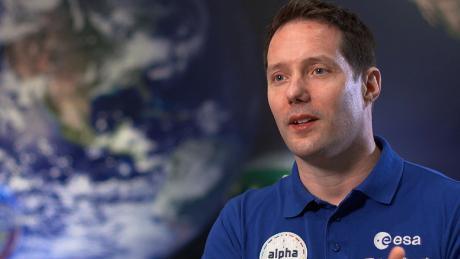
(CNN)French astronaut Thomas Pesquet spent six months aboard the International Space Station last year, and his view of the Earth was as alarming as it was breathtaking.

Long periods with his feet off solid ground gave him a unique and privileged perspective on our planet. His Instagram account is bursting with beautiful images of "the blue ball we call home." But the beauty is tainted. Pesquet says that even from space the effects of climate change are visible.
He says that since his previous visit to space, in 2016, the consequences of human activity have become even more apparent, with glaciers visibly retreating, and a rise in extreme weather events.
Environmental concern motivated him to become a UN Food and Agricultural Organization (FAO) Goodwill Ambassador. As an astronaut on board the ISS he supported the FAO's research into agricultural innovation and methods of food production. Limited resources in space provide an opportunity to model human behavior on a planet with dwindling resources, and Pesquet wants to highlight the parallels between life on a spacecraft and life on Earth.
CNN spoke to Pesquet at the Houston Museum of Natural Science. This interview has been edited for clarity and brevity.
The astronaut caring for 'spaceship Earth'

    JUST WATCHED

    The astronaut caring for 'spaceship Earth'

MUST WATCH

The astronaut caring for 'spaceship Earth' 04:04
CNN: What does the Earth look like from "out there?"
Pesquet: When you look at the Earth from the space station, it's absolutely magical. You're not that far away, so you still have a relatively close-up view. But you can see the curvature and you see the atmosphere. It glows in blue. It is absolutely breathtaking the first time you see it. It's the most beautiful scenery you could possibly imagine.
When you're on the Earth, you feel that everything is so vast, everything is endless. You have a hard time understanding how limited we are. Then, when you take a step back and you see the Earth in its entirety, you suddenly understand that we live in an oasis in the cosmos. All around us is nothing, no life, blackness, emptiness, absolutely nothing -- apart from this blue ball with everything we need to sustain human life, and life in general, which is absolutely fragile.
It makes you want to cherish the Earth and protect it, the more you see it from space.

CNN: What are the real effects of climate change that are visible from space?
Pesquet: You can see a lot of the consequences of human activities from space. Some of them are from climate change, and some of it is just plain old pollution, e.g. river pollution, air pollution.
The most visual visible effect is glaciers retreating year after year and mission after mission.
But what you can see as well is extreme weather phenomena. They're getting stronger and stronger year after year. My first mission was 2016-2017, and my second mission was five years later in 2021. I could see a net increase in the frequency and the strength of extreme weather phenomena like hurricanes, like wildfires.
CNN: What contribution can an astronaut make?
Pesquet: There's a ton that you can do from space to help out on the planet. First of all, as a space agency, we have satellites that can observe the Earth and measure variables such as the heights of waves, the temperature of the sea, ice on the polar caps retreating.
But we can also go a little bit deeper. We have experiments that are geared towards protecting the planet -- for example, experiments on fluids. Fluids in orbit behave differently, so our research is trying to understand the motion of the magma and lava inside the planet, and the movement of waves in the ocean. This can help us predict some of the extreme weather events that affect our environment.
Crucially, we have to manage our limited resources onboard the space station. We have limited atmosphere, limited water, limited food. And so the way we deal with everything on board the space station gives us techniques that we can apply on Earth because the situation is parallel. I think the people on Earth can learn a great deal about how space technology deals with water, how we recycle water, how we recycle air oxygen.
CNN: Does it take its toll on family life when you're away in space for several months?
Pesquet: It's not easy for us being up there, and it's not easy for the people we leave behind. The toughest thing is being deprived of your loved ones, and also being constantly worried that if something happens to them, you cannot help them. I think it's the nightmare of all the astronauts, that something happens to their families on Earth while they're away.
I believe there's an element of selfishness in me going to space because it's a fantastic magical experience. But I also firmly believe that there's a hugely positive impact on society in general because of what we do; because of the research, because of the international cooperation. So I think we have to do it even if there's a price to pay. It's not easy, but I think it's a good thing to do.
CNN: As a climate advocate, do you think about the environmental cost of space travel?
Pesquet: As an astronaut, you witness the fragility of planet Earth, while simultaneously thinking, "wait a minute, what is my impact on all this? I'm going to space in a rocket, how does that impact the environment?"
Yes, space travel produces some CO2, and it is not entirely environmentally friendly. But I think you have to take into account the positives with the negatives. There are so few rocket launches that compared to aviation, cars or other industries, our impact is negligible. We need activity in space to get satellite research done. This benefits the planet a lot. So space travel is a necessary evil.
CNN: Since you have returned from the ISS, what are your hopes for the future protection of our planet?
Pesquet: If we set ourselves on the right path, there's nothing we cannot do. We built this unbelievable facility in space for good reasons. We're using it every day, in peaceful cooperation between countries that were not always friends. So if we can transfer that model to the way we deal with the environment on Earth, I think we'll get there.
We're creative enough, we have the technology and we have the will. So I'm optimistic for the future. If we can make a space station fly, then we can save the planet.

Adblock test (Why?)


https://news.google.com/__i/rss/rd/articles/CBMiY2h0dHBzOi8vd3d3LmNubi5jb20vMjAyMi8wMS8yNC9ldXJvcGUvdGhvbWFzLXBlc3F1ZXQtaXNzLWNsaW1hdGUtY2hhbmdlLWMyZS1zY24tc3BjLWludGwvaW5kZXguaHRtbNIBAA?oc=5

2022-01-24 08:48:00Z
1267065088

Minggu, 23 Januari 2022

Ancient DNA suggests woolly mammoths roamed Canada more recently than previously thought - The Conversation CA

In 2010, small cores of permafrost sediments were collected by a team at the University of Alberta from gold mines in the Klondike region of central Yukon. They had remained in cold storage until paleogeneticists at the McMaster Ancient DNA Centre applied new genomics techniques to better understand the global extinction of megafauna that had culminated in North America some 12,700 years ago.

These tiny sediment samples contain an immense wealth of ancient environmental DNA from innumerable plants and animals that lived in those environments over millennia. These genetic microfossils originate from all components of an ecosystem — including bacteria, fungi, plants and animals — and serve as a time capsule of long-lost ecosystems, such as the mammoth-steppe, which disappeared around 13,000 years ago.

How exactly these ecosystems restructured so significantly, and why large animals seem to have been the most impacted by this shift has been an active area of scientific debate since the 18th century.

We can now use environmental DNA to help fill the gaps that have driven this debate.

Ancient DNA, cutting-edge technologies

Bacterial, fungal and unidentifiable DNA make up over 99.99 per cent of an environmental sample. In our case, we wanted a way to selectively recover the much smaller fraction of ancient plant and animal DNA that would help us better understand the collapse of the mammoth-steppe ecosystem.

For my doctoral research, I was part of a team that developed a a new technique to extract, isolate, sequence and identify tiny fragments of ancient DNA from sediment.

We analyzed these DNA fragments to track the shifting cast of plants and animals that lived in central Yukon over the past 30,000 years. We found evidence for the late survival of woolly mammoths and horses in the Klondike region, some 3,000 years later than expected.

We then expanded our analysis to include 21 previously collected permafrost cores from four sites in the Klondike region that date between 4,000 to 30,000 years ago.

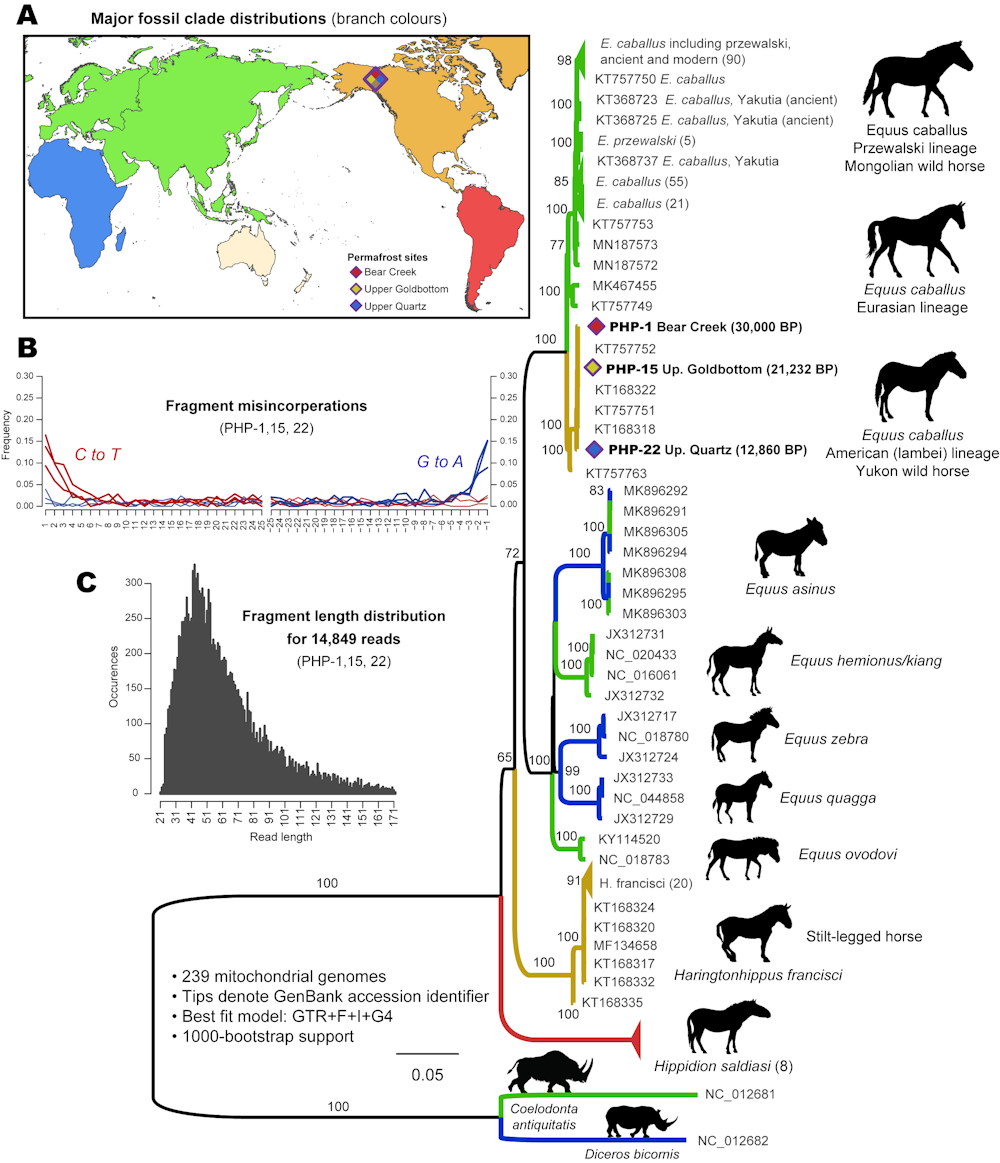
With current technologies, we not only could identify which organisms a set of genetic microfossils came from. But we were also able to reassemble those fragments into genomes to study their evolutionary histories — solely from sediment.

Synthesis of genetic and fossil evidence
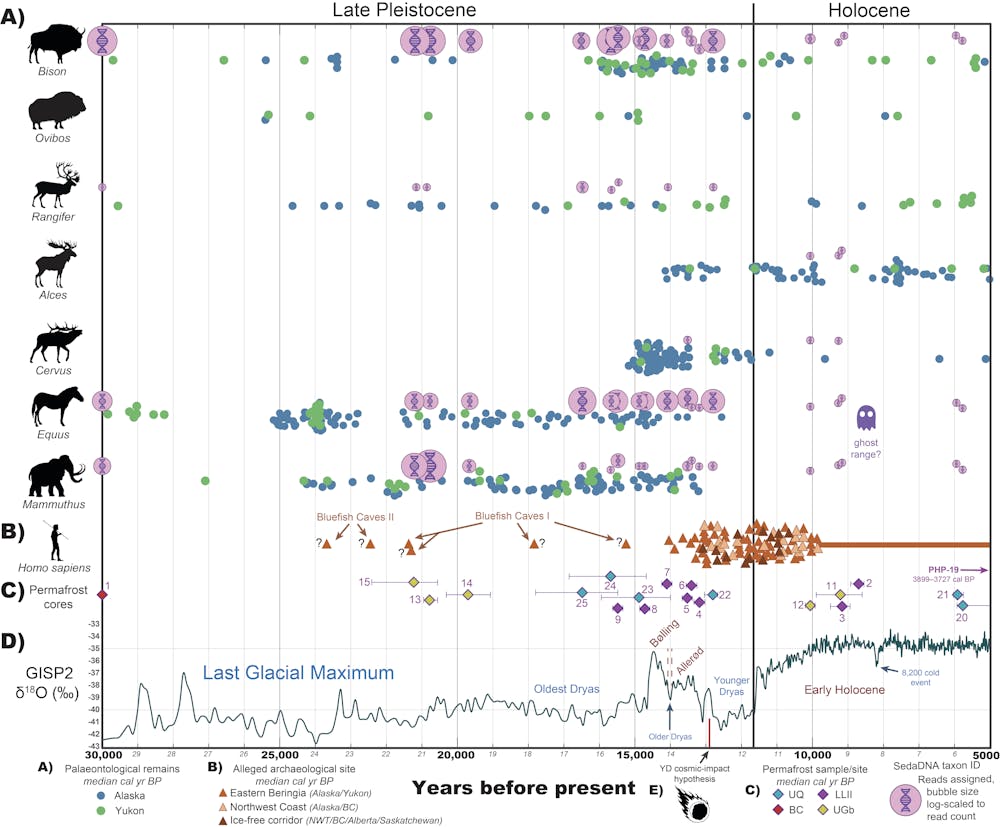
Synthesis of dated bones, ancient environmental DNA and archaeological sites in Yukon and Alaska. (Tyler J. Murchie)

Tremendous environmental change

The Pleistocene-Holocene transition, which occurred about 11,700 years ago, was a period of tremendous change across the globe. In eastern Beringia (the former Eurasian land bridge and unglaciated regions of Yukon and Alaska), this period saw the collapse of the mammoth-steppe biome and its gradual replacement with the boreal forest as we know it today.

This brought about the loss of iconic ice age megaherbivores like the woolly mammoth, Yukon horse, and steppe bison, along with predators such as the American scimitar cat and Beringian lion, among many others.

We found ancient environmental DNA from a diverse spectrum of ancient fauna, including woolly mammoths, horses, steppe bison, caribou, rodents, birds and many other animals.

We were also able to observe how ecosystems shifted with the rise of woody shrubs around 13,500 years ago, and how that correlated with a decline of DNA from woolly mammoths, horses and steppe bison. With this remarkably rich dataset, we observed four main findings.

  1. There was a surprising consistency in the signal between sites, suggesting our data was representative of ecological trends in the region.

  2. Woolly mammoth DNA declines prior to the Bølling–Allerød warming, a warm period at the end of the last ice age, suggesting that megafaunal losses may have been staggered.

  3. Forbs (herbaceous flowering plants) make up a substantial component of the mammoth-steppe ecosystem alongside grasses.

  4. There is a consistent signal of woolly mammoth and Yukon horse persistence into the Holocene, as much as 7,000 years after their disappearance from fossil records.

Comparing equid genomes reconstructed from sediments and bone
An evolutionary tree showing the location and relationship of horses and their relatives with genomes reconstructed from bones and sediment. (Tyler J.Murchie), Author provided

When paired with other records, our genetic reconstructions suggest that the transition out of the last glacial period may have been more drawn out than dated bones alone would suggest.

Mammoths, for example, may have declined in local population abundance thousands of years earlier than other megafauna, which is potentially correlated with the first controversial evidence of humans in the area. Further, grassland grazing animals may have persisted for thousands of years in refugia (habitats that support the existence of an isolated population), despite the environmental shift.

Woolly mammoths alongside humans

Our data suggest that horses and woolly mammoths may have persisted in the Klondike until approximately 9,000 years ago and perhaps as recently as 5,700 years ago, outliving their supposed disappearance from local fossil records by 7,000 years. However, it is possible for ancient environmental DNA to survive erosion and re-deposition, which could mix the genetic signals of different time periods, necessitating a degree of caution in our interpretations.

Until recently, there was no evidence of mammoth survival into the mid-Holocene. But studies have now shown that mammoths survived until 5,500 and 4,000 years ago on Arctic islands.

Researchers at the Centre for GeoGenetics in Copenhagen found evidence for the late survival of horses and mammoths in Alaska until as recently as as 7,900 years ago. They also found evidence of mammoths surviving as recently as 3,900 years ago in Siberia, alongside woolly rhinoceros to at least 9,800 years ago.

Steppe bison, which were thought to have disappeared and been replaced by the American bison during the Pleistocene, have likewise been found to have survived even as recently as perhaps just 400 years ago. We were able to observe the presence of distinct genetic lineages of both woolly mammoths and steppe bison in the same sediment samples, which suggests that there were likely distinct populations of these animals living in the same area.

There is a growing body of evidence that many ice age megafauna probably survived well into recorded human history, roaming the north during the Bronze Age and while builders worked on the pyramids of Egypt.

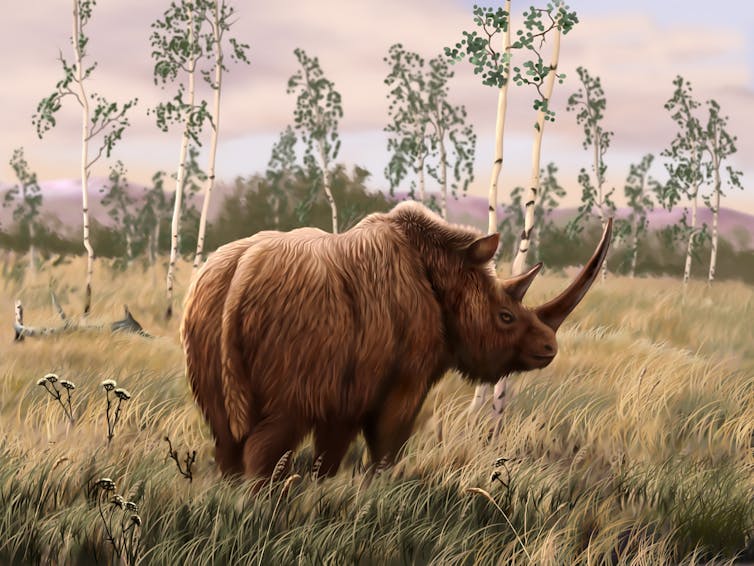
illustration of a woolly rhinoceros
Researchers in Denmark found evidence of woolly rhinoceroses surviving in Siberia at least 9,800 years ago. (Shutterstock)

Genetic archives of our ecological past

The growing sophistication of environmental DNA methods to study ancient genetic microfossils highlights just how much information is buried in sediments.

Permafrost is ideal for preserving ancient DNA, but as this perennially frozen ground thaws and degrades with a warming Arctic, so too will the genetic material preserved within, and the evolutionary mysteries they once held.

Advances in paleogenetics continues to push the boundaries of what was once relegated to science fiction. Who knows what undiscovered evolutionary information remains frozen in ordinary sediments, hidden in microfossils of ancient DNA?

Adblock test (Why?)


https://news.google.com/__i/rss/rd/articles/CBMie2h0dHBzOi8vdGhlY29udmVyc2F0aW9uLmNvbS9hbmNpZW50LWRuYS1zdWdnZXN0cy13b29sbHktbWFtbW90aHMtcm9hbWVkLWNhbmFkYS1tb3JlLXJlY2VudGx5LXRoYW4tcHJldmlvdXNseS10aG91Z2h0LTE0NjA3M9IBf2h0dHBzOi8vdGhlY29udmVyc2F0aW9uLmNvbS9hbXAvYW5jaWVudC1kbmEtc3VnZ2VzdHMtd29vbGx5LW1hbW1vdGhzLXJvYW1lZC1jYW5hZGEtbW9yZS1yZWNlbnRseS10aGFuLXByZXZpb3VzbHktdGhvdWdodC0xNDYwNzM?oc=5

2022-01-23 13:44:19Z
CBMie2h0dHBzOi8vdGhlY29udmVyc2F0aW9uLmNvbS9hbmNpZW50LWRuYS1zdWdnZXN0cy13b29sbHktbWFtbW90aHMtcm9hbWVkLWNhbmFkYS1tb3JlLXJlY2VudGx5LXRoYW4tcHJldmlvdXNseS10aG91Z2h0LTE0NjA3M9IBf2h0dHBzOi8vdGhlY29udmVyc2F0aW9uLmNvbS9hbXAvYW5jaWVudC1kbmEtc3VnZ2VzdHMtd29vbGx5LW1hbW1vdGhzLXJvYW1lZC1jYW5hZGEtbW9yZS1yZWNlbnRseS10aGFuLXByZXZpb3VzbHktdGhvdWdodC0xNDYwNzM

Sabtu, 22 Januari 2022

B.C. researchers uncover mechanism that keeps large whales from drowning while feeding on krill - CTV News Vancouver

Vancouver -

New research from the University of British Columbia is shedding light on the ways that whales feed underwater without flooding their airways with seawater.

The research, published this month in Current Biology, shows that lunge-feeding whales – the type that lunge and gulp at large schools of krill – have a special mechanism in the back of their mouths that stops water from entering their lungs when eating.

“It’s kind of like when a human’s uvula moves backwards to block our nasal passages, and our windpipe closes up while swallowing food,” says lead author Dr. Kelsey Gil, a postdoctoral researcher in the department of zoology, in a statement.

Specifically, a fleshy bulb acts as a plug, to close off upper airways, while a larynx closes to block lower airways.

The humpback whale and the blue whale are both lunge-feeders, but the scientists’ research focused on fin whales, thanks in part to being able to travel to Iceland in 2018 and examine carcass remains at a commercial whaling station.

“We haven’t seen this protective mechanism in any other animals, or in the literature. A lot of our knowledge about whales and dolphins comes from toothed whales, which have completely separated respiratory tracts, so similar assumptions have been made about lunge-feeding whales,” Gil said.

Lunge-feeders are impressive, Gil said, because sometimes the amount of food and water they consume is larger than their bodies. After snapping at krill, and while blocking the water from their airways, the whales then drain the ocean water through their baleen, leaving behind the tasty fish.

The study’s senior author Dr. Robert Shadwick, a professor in the UBC department of zoology, says the efficiency of the whales’ feeding is a key factor in their evolution.

“Bulk filter-feeding on krill swarms is highly efficient and the only way to provide the massive amount of energy needed to support such a large body size. This would not be possible without the special anatomical features we have described,” he said in a statement. 

Adblock test (Why?)


https://news.google.com/__i/rss/rd/articles/CBMifmh0dHBzOi8vYmMuY3R2bmV3cy5jYS9iLWMtcmVzZWFyY2hlcnMtdW5jb3Zlci1tZWNoYW5pc20tdGhhdC1rZWVwcy1sYXJnZS13aGFsZXMtZnJvbS1kcm93bmluZy13aGlsZS1mZWVkaW5nLW9uLWtyaWxsLTEuNTc1MTA1N9IBAA?oc=5

2022-01-23 00:03:49Z
1263511425

NASA's TESS passes huge milestone for exoplanet observations - TweakTown

NASA's Transiting Exoplanet Survey Satellite (TESS) passed the five thousand mark for TESS Objects of Interest (TOIs).

NASA's TESS passes huge milestone for exoplanet observations 01 | TweakTown.com

VIEW GALLERY - 2 IMAGES

TESS's mission began in 2018, and its most recent addition to the TOI catalog comes mostly from the Faint Star Search, led by MIT postdoc Michelle Kunimoto. The objects of interest are exoplanets candidates, potential planets found outside of our solar system. After TESS identifies these candidates, astronomers will confirm whether or not they are real exoplanets. So far, 175 have been confirmed from the TESS TOI catalog.

"This time last year, TESS had found just over 2,400 TOIs. Today, TESS has reached more than twice that number-a huge testament to the mission and all the teams scouring the data for new planets. I'm excited to see thousands more in the years to come!" said Kunimoto.

In its extended mission, TESS is currently observing the Northern Hemisphere and ecliptic plane after re-observing the sky visible from the Earth's Southern Hemisphere, which it first observed at the start of its mission. The TESS mission will likely be extended to 2025 and beyond.

"With data from the first year of the extended mission, we have found dozens of additional candidates to TOIs found during the prime mission. I am excited to see how many multi-planet systems we can find during the rest of the extended mission and in upcoming years with TESS," said TOI manager Katharine Hesse.

NASA's TESS passes huge milestone for exoplanet observations 2 | TweakTown.com

Adblock test (Why?)


https://news.google.com/__i/rss/rd/articles/CBMia2h0dHBzOi8vd3d3LnR3ZWFrdG93bi5jb20vbmV3cy84NDE1Ny9uYXNhcy10ZXNzLXBhc3Nlcy1odWdlLW1pbGVzdG9uZS1mb3ItZXhvcGxhbmV0LW9ic2VydmF0aW9ucy9pbmRleC5odG1s0gEA?oc=5

2022-01-22 10:00:03Z
1263765246

The drifting giant A68 iceberg released billions of tons of fresh water in South Georgia ecosystem - MercoPress

Saturday, January 22nd 2022 - 09:56 UTC
Full article
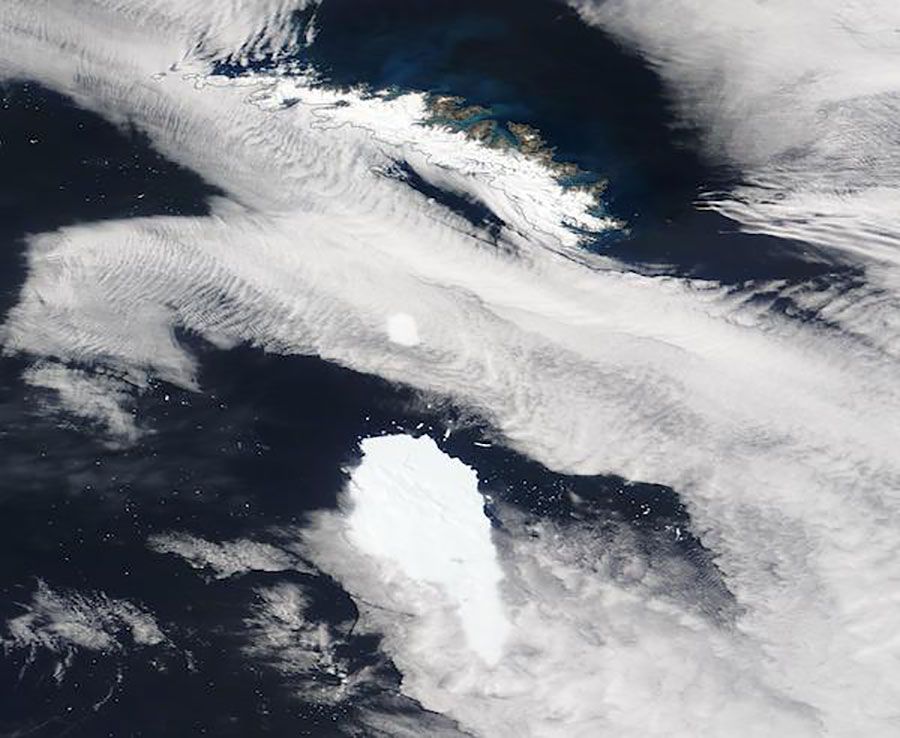
Satellite images shows A68a heading towards the sub-Antarctic island of South Georgia. Credit: MODIS from NASA Worldview Snapshots Satellite images shows A68a heading towards the sub-Antarctic island of South Georgia. Credit: MODIS from NASA Worldview Snapshots

Scientists monitoring the giant A68a iceberg from space reveal that a huge amount of freshwater was released as it melted around the sub-Antarctic island of South Georgia. An estimated 152 billion tons of freshwater – equivalent to 20 x Loch Ness or 61 million Olympic sized swimming pools, entered the seas around the sub-Antarctic island of South Georgia when A68a melted over three months in 2020/2021, according to a new study published this month by the British Antarctic Survey.

In July 2017, A68a calved off the Larsen-C Ice Shelf on the Antarctic Peninsula and began its epic three-and-a-half year, 4.000 km journey across the Southern Ocean. At 5719 square kilometers – about a quarter the size of Wales – it was the biggest iceberg on Earth when it formed and the sixth largest on record. Around Christmas 2020, the berg received widespread attention as it drifted worryingly close to South Georgia, raising concerns it could harm the island’s fragile ecosystem.

A team from Center for Polar Observation and Modeling and BAS used satellite measurements to chart the iceberg’s area and thickness change throughout its life cycle. The authors show that the iceberg had melted enough as it drifted to avoid damaging the sea floor around South Georgia by running aground. However, a side effect of the melting was the release of a colossal 152 billion tons of fresh water in close proximity to the island – a disturbance that could have a profound impact on the island’s marine habitat.

For the first two years of its life, A68a stayed close to Antarctica in the cold waters of the Weddell Sea and experienced little in the way of melting. However, once it began its northwards journey across the Drake Passage it traveled through increasingly warm waters and began to melt. Altogether, the iceberg thinned by 67 meters from its initial 235 m thickness, with the rate of melting rising sharply as the berg drifted around South Georgia.

Laura Gerrish, GIS and mapping specialist at BAS and co-author of the study said, “A68 was an absolutely fascinating iceberg to track all the way from its creation to its end. Frequent measurements allowed us to follow every move and break-up of the berg as it moved slowly northwards through an area called ‘iceberg alley’, a route in the ocean which icebergs often follow, and into the Scotia Sea where it then gained speed and approached the island of South Georgia very closely.”

If an iceberg’s keel is too deep it can become grounded on the sea floor. This can be disruptive in several different ways; the scour marks can destroy fauna, and the berg itself can block ocean currents and predator foraging routes. All of these potential outcomes were feared when A68a approached South Georgia. However, this new study reveals that it collided only briefly with the sea floor and broke apart shortly afterwards, making it less of a risk in terms of blockage. By the time it reached the shallow waters around South Georgia, the iceberg’s keel had reduced to 141 meters below the ocean surface, shallow enough to avoid the seabed which is around 150 meters deep.

Nevertheless, the ecosystem and wildlife around South Georgia will certainly have felt the impact of the colossal iceberg’s visit. When icebergs detach from ice shelves, they drift with the ocean currents and wind while releasing cold fresh melt-water and nutrients as they melt. This process influences the local ocean circulation and fosters biological production around the iceberg. At its peak, the iceberg was melting at a rate of 7 meters per month, and in total it released a staggering 152 billion tons of fresh water and nutrients.

“This is a huge amount of melt water, and the next thing we want to learn is whether it had a positive or negative impact on the ecosystem around South Georgia. Because A68a took a common route across the Drake Passage, we hope to learn more about icebergs taking a similar trajectory, and how they influence the polar oceans,” said Anne Braakmann-Folgmann, a researcher at CPOM and PhD candidate at the University of Leeds’ School of Earth and Environment, and lead author of the study.

The journey of A68a has been charted using observations from five different satellites. The iceberg’s area change was recorded using a combination of Sentinel-1, Sentinel-3, and MODIS imagery. Meanwhile, the iceberg’s thickness change was measured using CryoSat-2 and ICESat-2 altimetry. By combining these measurements, the iceberg’s area, thickness, and volume change were determined.

Tommaso Parrinello, CryoSat Mission Manager at the European Space Agency pointed out that “Our ability to study every move of the iceberg in such detail is thanks to advances in satellite techniques and the use of a variety of measurements. Imaging satellites record the location and shape of the iceberg and data from altimetry missions add a third dimension as they measure the height of surfaces underneath the satellites and can therefore observe how an iceberg melts.”

“Observing the Disintegration of the A68A Iceberg from Space” is published in the journal Remote Sensing of Environment at https://doi.org/10.1016/j.rse.2021.112855.

Adblock test (Why?)


https://news.google.com/__i/rss/rd/articles/CBMihwFodHRwczovL2VuLm1lcmNvcHJlc3MuY29tLzIwMjIvMDEvMjIvdGhlLWRyaWZ0aW5nLWdpYW50LWE2OC1pY2ViZXJnLXJlbGVhc2VkLWJpbGxpb25zLW9mLXRvbnMtb2YtZnJlc2gtd2F0ZXItaW4tc291dGgtZ2VvcmdpYS1lY29zeXN0ZW3SAQA?oc=5

2022-01-22 09:54:11Z
1262393952

Jumat, 21 Januari 2022

Shattered 'alphabet soup' iceberg flushed a lot of fresh water into the ocean - Space.com

A rogue iceberg that drifted dangerously close to an Antarctic penguin population in 2020 and 2021 released billions of tons of fresh water into the ocean during its breakup.

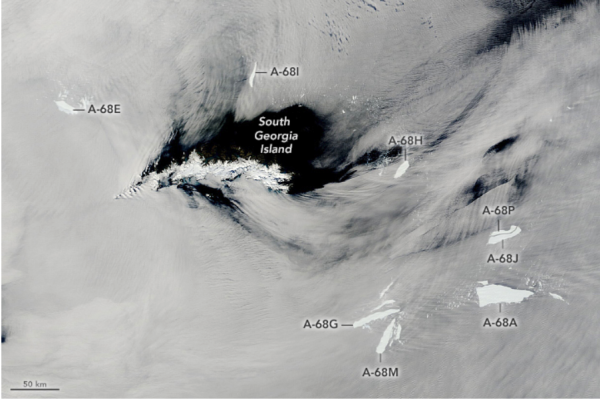
A new study, based on satellite data, tracks the aftermath of the once-mighty iceberg A-68a, which held the title of world's largest iceberg for more than three years before shattering into a dozen pieces. (NASA's Earth Observatory once dubbed the various mini-bergs "alphabet soup.")

For a while, there were worries the iceberg might threaten a penguin-filled island called South Georgia, located about 940 miles (1,500 kilometers) northeast of the Antarctic Peninsula. Happily, that never came to pass, but the new research shows that the iceberg flooded the region with fresh water, potentially affecting the local ecosystem and providing yet another example of the effects of global warming on the oceans.

Related: Watch this giant iceberg break off from Antarctica

The research consulted data gathered by missions including Sentinel-1 (operated by European Space Agency, or ESA), Sentinel-3 (ESA), CryoSat-2 (ESA) and ICESat-2 (NASA), as well as the Moderate Resolution Imaging Spectroradiometer, or MODIS, instrument that flies aboard two NASA satellites, Aqua and Terra.

The satellite data shows that during the iceberg's three-month melting period in late 2020 and early 2021, the former A-68a flushed into the ocean about 162 billion tons (152 billion metric tonnes) of fresh water — equivalent to 61 million Olympic-sized swimming pools, according to a press release from United Kingdom study participant University of Leeds.

"The berg had melted enough as it drifted to avoid damaging the sea floor around South Georgia by running aground," the university stated. "However, a side effect of the melting was the release of a colossal 152 billion tonnes of fresh water in close proximity to the island — a disturbance that could have a profound impact on the island’s marine habitat."

Fresh meltwater and nutrients tend to flow from melting icebergs. The freshwater flooding alters ocean circulation and the ocean ecosystem nearby the glacier fragment, the university noted.

Related stories:

"The next thing we want to learn is whether it had a positive or negative impact on the ecosystem around South Georgia," Leeds lead author and Ph.D. candidate Anne Braakmann-Folgmann said in the same statement. 

She noted the iceberg moved across a common ocean "highway" known as the Drake Passage, so the fate of A68-A may help understand how icebergs in that zone influence the ocean in general.

A study based on the research was published in the forthcoming March 1 issue of Remote Sensing of Environment.

Follow Elizabeth Howell on Twitter @howellspace. Follow us on Twitter @Spacedotcom and on Facebook. 

Adblock test (Why?)


https://news.google.com/__i/rss/rd/articles/CBMiOWh0dHBzOi8vd3d3LnNwYWNlLmNvbS9zaGF0dGVyZWQtaWNlYmVyZy1mcmVzaC13YXRlci1vY2VhbtIBAA?oc=5

2022-01-21 11:00:41Z
1262393952