Sabtu, 19 Maret 2022
3 Russian cosmonauts wear Ukraine colours as they arrive at the International Space Station | WION - WION
https://news.google.com/__i/rss/rd/articles/CBMiK2h0dHBzOi8vd3d3LnlvdXR1YmUuY29tL3dhdGNoP3Y9b18xeWREdXhZV1XSAQA?oc=5
2022-03-19 17:38:23Z
1336471658

NASA's Artemis I Moon Rocket Arrives at Launch Pad for First Time - SciTechDaily

NASA’s Space Launch System (SLS) rocket with the Orion spacecraft aboard is seen illuminated by spotlights atop a mobile launcher at Launch Complex 39B, Friday, March 18, 2022, after being rollout out to the launch pad for the first time at NASA’s Kennedy Space Center in Florida. Credit: NASA/Joel Kowsky
Around 4:15 a.m. ET on March 18, 2022, the Space Launch System rocket and Orion Spacecraft for the Artemis I mission arrived atop Launch Complex 39B after a nearly 11-hour journey from the Vehicle Assembly Building at NASA’s Kennedy Space Center in Florida.

NASA’s Space Launch System (SLS) rocket with the Orion spacecraft aboard is seen illuminated by spotlights atop a mobile launcher at Launch Complex 39B, Friday, March 18, 2022, after being rollout out to the launch pad for the first time at NASA’s Kennedy Space Center in Florida. Ahead of NASA’s Artemis I flight test, the fully stacked and integrated SLS rocket and Orion spacecraft will undergo a wet dress rehearsal at Launch Complex 39B to verify systems and practice countdown procedures for the first launch. Credit: NASA/Joel Kowsky
In the coming days, engineers and technicians will prepare the Artemis I rocket for its final major test – the wet dress rehearsal. The approximately two-day test will demonstrate the team’s ability to load cryogenic, or super-cold, propellants into the rocket, conduct a launch countdown, and practice safely removing propellants at the launch pad. After wet dress rehearsal, engineers will roll the rocket and spacecraft back to the Vehicle Assembly Building for final checkouts before launch.
https://news.google.com/__i/rss/rd/articles/CBMiWWh0dHBzOi8vc2NpdGVjaGRhaWx5LmNvbS9uYXNhLWFydGVtaXMtaS1tb29uLXJvY2tldC1hcnJpdmVzLWF0LWxhdW5jaC1wYWQtZm9yLWZpcnN0LXRpbWUv0gEA?oc=5
2022-03-19 07:51:27Z
1308534003
Jumat, 18 Maret 2022
Scientists may have solved Stephen Hawking's black hole paradox - Phys.org
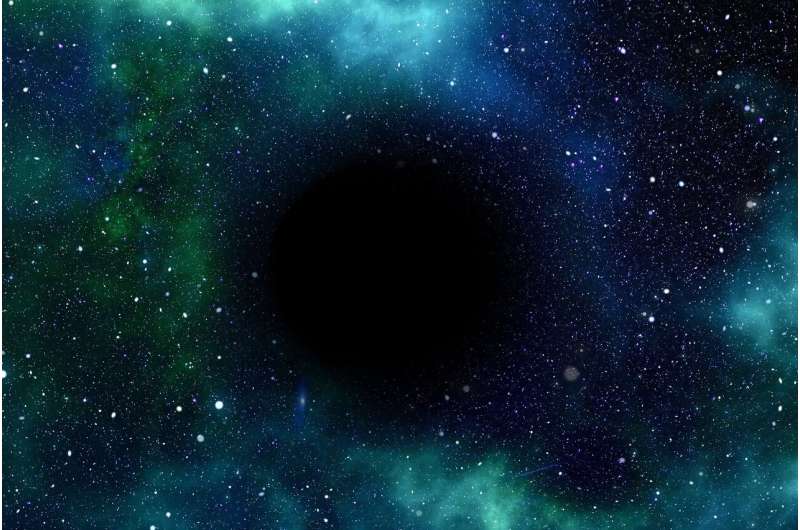
Researchers may have solved Professor Stephen Hawking's famous black hole paradox—a mystery that has puzzled scientists for almost half a century.
According to two new studies, something called "quantum hair" is the answer to the problem.
In the first paper, published in the journal Physical Review Letters, researchers demonstrated that black holes are more complex than originally thought and have gravitational fields that hold information about how they were formed.
The researchers showed that matter collapsing into a black hole leaves a mark in its gravitational field—an imprint referred to as a "quantum hair."
In a follow-up paper, published in a separate journal, Physics Letters B, Professor Xavier Calmet from the University of Sussex's School of Mathematical and Physical Sciences and Professor Stephen Hsu from Michigan State University said quantum hairs resolve Hawking's Black Hole Information Paradox.
In 1976, Hawking suggested that, as black holes evaporate, they destroy information about what had formed them.
That idea goes against a fundamental law of quantum mechanics which states any process in physics can be mathematically reversed.
In the 1960s, physicist John Archibald Wheeler, discussing black holes' lack of observable features beyond their total mass, spin, and charge, coined the phrase "black holes have no hair"—known as the no-hair theorem.
However, the newly discovered "quantum hair" provides a way for information to be preserved as a black hole collapses and, as such, resolves one of modern science's most famous quandaries, experts say.
Prof Calmet said: "Black holes have long been considered the perfect laboratory to study how to merge Einstein's theory of general relativity with quantum mechanics.
"It was generally assumed within the scientific community that resolving this paradox would require a huge paradigm shift in physics, forcing the potential reformulation of either quantum mechanics or general relativity.
"What we found—and I think is particularly exciting—is that this isn't necessary."
Explaining the discovery of the "quantum hair," Roberto Casadio, professor of Theoretical Physics at the University of Bologna, said: "A crucial aspect is that black holes are formed by the collapse of compact objects and then, according to the quantum theory, there is no absolute separation between the interior and the exterior of the black hole.
"In the classical theory, the horizon acts as a perfect one-way membrane which does not let anything out and the exterior is therefore the same for all black holes of a given mass. This is the classical no-hair theorem," Casadio added.
"However, in the quantum theory, the state of the matter that collapses and forms the black hole continues to affect the state of the exterior, albeit in a way that is compatible with present experimental bounds. This is what is known as 'quantum hair.'"
Explore further
More information:
Xavier Calmet et al, Quantum hair and black hole information, Physics Letters B (2022). DOI: 10.1016/j.physletb.2022.136995
Xavier Calmet et al, Quantum Hair from Gravity, Physical Review Letters (2022). DOI: 10.1103/PhysRevLett.128.111301
2022 dpa GmbH.
Distributed by Tribune Content Agency, LLC.
Citation: Scientists may have solved Stephen Hawking's black hole paradox (2022, March 18) retrieved 18 March 2022 from https://phys.org/news/2022-03-scientists-stephen-hawking-black-hole.html
This document is subject to copyright. Apart from any fair dealing for the purpose of private study or research, no part may be reproduced without the written permission. The content is provided for information purposes only.
https://news.google.com/__i/rss/rd/articles/CBMiSGh0dHBzOi8vcGh5cy5vcmcvbmV3cy8yMDIyLTAzLXNjaWVudGlzdHMtc3RlcGhlbi1oYXdraW5nLWJsYWNrLWhvbGUuaHRtbNIBAA?oc=5
2022-03-18 17:21:17Z
1327133639
Nasa's giant new SLS Moon rocket makes its debut - BBC.com
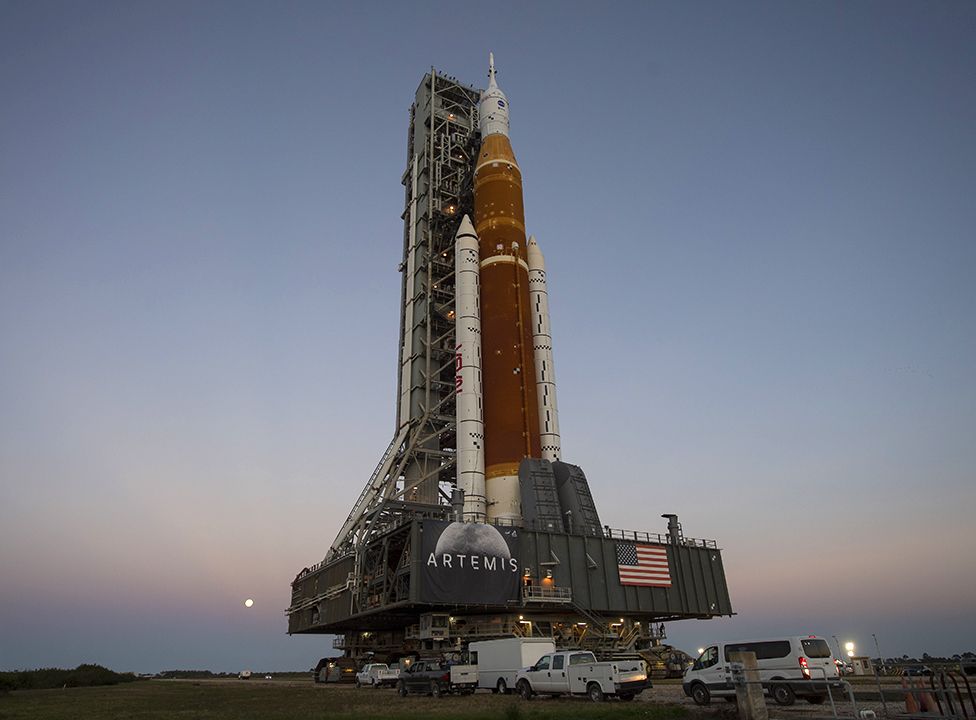
The American space agency has rolled out its new giant Moon rocket for the first time.
The vehicle, known as the Space Launch System (SLS), was taken to the pad at the Kennedy Space Center in Florida to conduct a dummy countdown.
If that goes well, the rocket will be declared ready for a mission in which it will send an uncrewed test capsule around the Moon.
This could happen in the next couple of months.
Ultimately, it's hoped astronauts would climb aboard later SLS rockets to return to the Moon's surface some time in the second half of this decade.
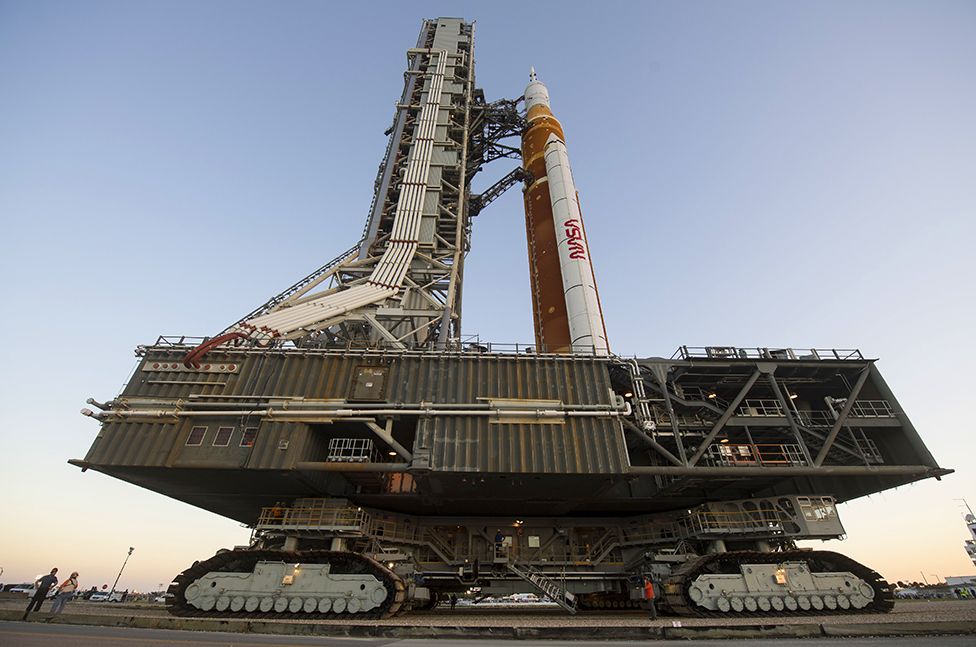
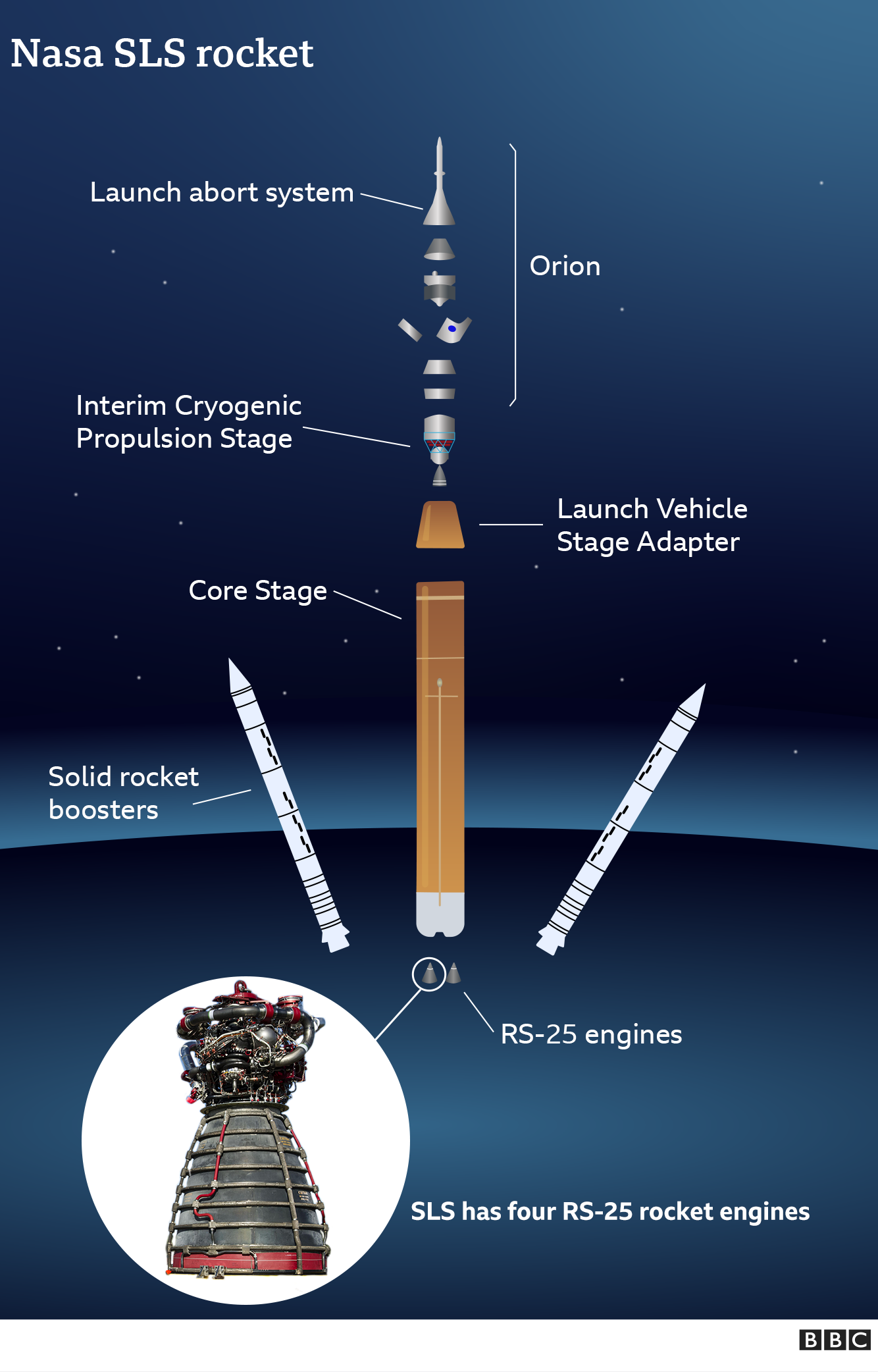
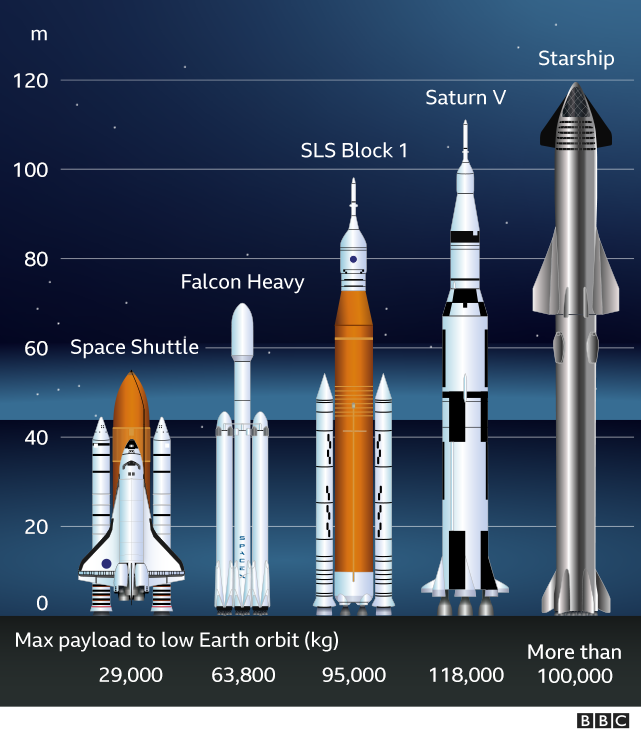
SLS is a colossus. A touch under 100m in height, it was designed to be more powerful than the Apollo Saturn vehicles of the late 1960s and early 1970s.
It will have the thrust to not only send astronauts far beyond Earth but additionally so much equipment and cargo that those crews could stay away for extended periods.
Thursday's rollout from Kennedy's Vehicle Assembly Building (VAB) is the rocket's debut in the sense that it's the very first time everyone has got to see all its different elements fully stacked together.
"The first rolling out of the VAB - that's really an iconic moment for this vehicle," said Tom Whitmeyer, Nasa's associate administrator for exploration systems development. "To be here for a new generation of a super-heavy-lift, exploration-class vehicle is a day to remember."
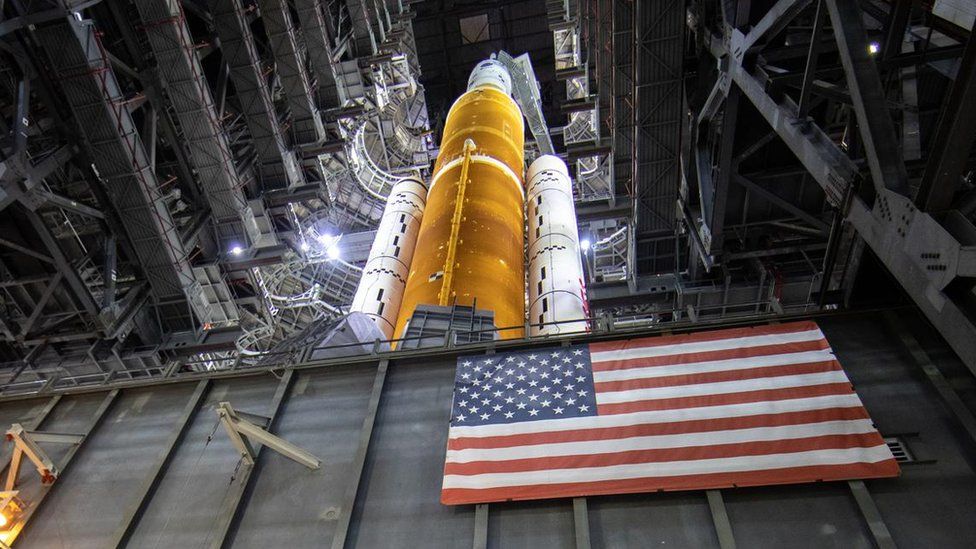
The SLS came out of the VAB just before 18:00 local Florida time.
It was attached to a support gantry known as the Mobile Launcher. This structure, which is itself 120m high and weighs 5,000 tonnes, was sitting atop the same mammoth tractor that used to move the Saturn Vs back in the day, and later the space shuttles.
The Crawler Transporter goes very slowly, with a cruising speed of just over 1km/h (under 1mph), so it was some 11 hours before the rocket arrived at the pad, a distance of 5km from the VAB. Engineers stopped and started the tractor along the way to check everything was as it should be.
SLS will now be prepared for a "wet dress rehearsal", likely to occur on 3 April.
This will see the rocket loaded with propellants and taken through a practice countdown all the way to a mere 9.4 seconds before the moment of lift-off. The "scrub" point is just before they would normally light the four big shuttle-era engines under the rocket.
Assuming everything proceeds to the satisfaction of the engineers, Nasa will then be able to set a flight date.
The end of May remains a possibility, but more likely it will be June or July.
This mission, under what Nasa terms its Artemis programme, will propel the rocket's Orion crew capsule on a 26-day journey that includes an expanded orbit around the Moon. There will be no-one in the capsule for the test flight. This should happen on a second mission in a couple of years' time.
While Nasa is developing the SLS, the American rocket entrepreneur Elon Musk is preparing an even larger vehicle at his R&D facility in Texas.
He calls his giant rocket the Starship. Like SLS it has yet to have a maiden flight. Unlike SLS, Starship has been designed to be totally reusable and ought therefore to be considerably cheaper to operate.
A recent assessment from the Office of Inspector General, which audits Nasa programmes, found that the first four SLS missions would each cost more than $4bn to execute - a sum of money that was described as unsustainable.
https://news.google.com/__i/rss/rd/articles/CBMiNWh0dHBzOi8vd3d3LmJiYy5jb20vbmV3cy9zY2llbmNlLWVudmlyb25tZW50LTYwNzg4NzYx0gE5aHR0cHM6Ly93d3cuYmJjLmNvbS9uZXdzL3NjaWVuY2UtZW52aXJvbm1lbnQtNjA3ODg3NjEuYW1w?oc=5
2022-03-18 07:54:06Z
1308534003
Kamis, 17 Maret 2022
Watch NASA roll out its new mega-rocket, the Space Launch System, for the first time - The Verge
/cdn.vox-cdn.com/uploads/chorus_image/image/70637012/NHQ202203160004_large.0.jpg)
This afternoon, NASA will begin the very slow process of rolling out its brand new rocket, the Space Launch System, transporting the fully stacked vehicle out to its primary launchpad at Kennedy Space Center in Florida. It’s a major moment for the rocket, which has been in development for the last decade, but after numerous delays and hiccups, the vehicle’s launch may finally be on the horizon.
The Space Launch System, or SLS, has spent most of the last year tucked away in NASA’s Vehicle Assembly Building, a massive warehouse structure at KSC used to house and integrate giant rockets. There, the pieces of the vehicle have been stacked together and tested, getting everything ready for this moment.
Now, the vehicle will embark on an 11-hour journey across four miles of KSC terrain on top of NASA’s crawler-transporter, a tank-like platform with massive tracked wheels that will slowly roll the rocket over the ground. On top of the crawler is a specially modified mobile launch platform that SLS will take off from in the future. It includes a platform and a support tower that stands about 355 feet tall. The final destination for SLS is its main launch pad, LC-39B, a historic spot once used to launch an Apollo mission to orbit the Moon and flights of the Space Shuttle.
If all goes well today, NASA plans to conduct what is known as a wet dress rehearsal in early April, a major event where engineers will simulate an actual launch day, filling the vehicle up with propellant and counting down close to the moment of launch. NASA will then roll the SLS back to the VAB and conduct more tests before rolling out the rocket again for its first launch sometime this summer.
Though SLS still has a ways to go before launch, this is the first time the fully stacked vehicle will see the light of day. Don’t expect many theatrics, though. The crawler-transporter moves at roughly a mile per hour, so the SLS will be taking its time getting across KSC.
HOW DO I WATCH?
NASA plans to livestream the SLS rollout on its dedicated channel, NASA TV, with coverage starting at 5PM ET. You can watch the feed on NASA’s website or on YouTube.
WHAT TIME IS ROLLOUT?
SLS will start rolling out of the VAB shortly after 5PM ET on March 17th.
Scheduled start time: New York: 5PM / San Francisco: 2PM / London: 9PM / Berlin: 10PM / Moscow: 12AM / New Delhi: 2:30AM / Beijing: 5AM / Tokyo: 4AM / Melbourne: 8AM
https://news.google.com/__i/rss/rd/articles/CBMiZmh0dHBzOi8vd3d3LnRoZXZlcmdlLmNvbS8yMDIyLzMvMTcvMjI5ODI3OTIvbmFzYS1zbHMtbW9iaWxlLWxhdW5jaC1wbGF0Zm9ybS1yb2xsLW91dC13YXRjaC1saXZlLXN0cmVhbdIBAA?oc=5
2022-03-17 19:03:35Z
1308534003
Watch Live: NASA's SLS Megarocket Heads to the Launch Pad for the First Time Ever - Gizmodo

We’re in for a treat today, as NASA plans to roll out its much-anticipated Space Launch System rocket in anticipation of the wet dress rehearsal and Artemis 1 trip to the Moon and back. You can catch the action live right here.
We’ve seen plenty of photos of the Space Launch System inside NASA’s Vehicle Assembly Building (VAB), but this will be our first opportunity to see the fully stacked, 322-foot-tall rocket out in the open. It’s guaranteed to be an impressive sight, as it’ll be the tallest craft to reach a NASA launch pad since the Saturn rockets of the Apollo era.
Coverage of the first SLS rollout begins at 5:00 p.m. EDT (2:00 p.m. PDT) on Thursday, March 17. A live stream will be available at NASA TV, which you can watch below.
NASA’s Crawler-Transporter 2 (CT-2) will deliver the 5.75-million-pound SLS to Launch Pad 39B at Kennedy Space Center in Florida. Traveling at less than a mile per hour, the 4-mile journey could take anywhere from six to 12 hours to complete. CT-2, which itself weighs 6.6 million pounds, has a loading capacity of 18 million pounds, which is more than 20 fully loaded 777 jumbo jets.
NASA did a cool thing by painting its iconic worm logo onto the sides of the two solid rocket boosters. The SLS side rockets are the “largest, most powerful solid propellant booster ever built for flight,” according to NASA. Standing 17 stories tall, the two boosters provide more than three-quarters of the total SLS thrust at launch. The core stage itself is powered by a quartet of RS-25 engines, which were previously used on the Space Shuttle (each Shuttle used three). A single RS-25 engine provides 512,000 pounds of thrust.
SLS is designed to take NASA astronauts to the Moon and possibly even Mars. The space agency is bullish about the system, but NASA’s inspector general recently said the first four Artemis lunar missions will each cost $4.1 billion per launch, a price tag he described as “unsustainable.”
Today’s rollout is in preparation for the wet dress rehearsal, currently scheduled for April 3. For this trial run, the rocket will be loaded with liquid hydrogen and liquid oxygen propellants and then de-fueled. The rehearsal will also offer an opportunity for NASA teams to practice the countdown.
It’ll be an all-hands-on-deck experience, setting the stage for the exciting Artemis 1 mission. For that 25-day mission, tentatively scheduled for April (but more likely later this summer), SLS will attempt to send an uncrewed Orion capsule to a retrograde orbit around the Moon—a mission that would in turn set the stage for Artemis 2, tentatively set for May 2024, when a human crew will make the same journey. Some time after that will come the big one, Artemis 3, in which a man and a woman will land on the lunar surface.
https://news.google.com/__i/rss/rd/articles/CBMiVWh0dHBzOi8vZ2l6bW9kby5jb20vd2F0Y2gtbGl2ZS1uYXNhcy1zbHMtbWVnYXJvY2tldC1oZWFkcy10by10aGUtbGF1bmNoLXBhLTE4NDg2NjY0MjHSAQA?oc=5
2022-03-17 15:05:00Z
1308534003
Rabu, 16 Maret 2022
NASA's History-Making Mars Ingenuity Helicopter Earns Mission Extension - CNET
The Ingenuity helicopter made aviation history on Mars.
NASA/JPL-CaltechNASA's Ingenuity Mars helicopter was a huge question mark when it was on its way to the red planet. Would it fly at all? It answered that question with a resounding "yes" and then went on to defy expectations by achieving 21 successful flights. Those feats have earned the plucky rotorcraft a mission extension through September.
NASA JPL announced the extension in a statement on Tuesday. "In the months ahead, history's first aircraft to operate from the surface of another world will support the Perseverance rover's upcoming science campaign exploring the ancient river delta of Jezero Crater," NASA said.
Solar-powered Ingenuity's first flight took place in April 2021 and it's been testing its skills against the thin atmosphere and the dusty and windy conditions of Mars ever since. It's navigated technical glitches and received software updates to keep it flying.
After proving that powered, controlled flight is possible on another planet, Ingenuity stepped into the role of scout for its companion, the Perseverance rover. The pair is preparing to explore an important delta region within the crater. It will be challenging for both the rover and the chopper.
NASA Perseverance rover and Ingenuity helicopter explore the wilds of Mars
See all photos"Filled with jagged cliffs, angled surfaces, projecting boulders and sand-filled pockets that could stop a rover in its tracks (or upend a helicopter upon landing), the delta promises to hold numerous geologic revelations -- perhaps even the proof necessary to determine that microscopic life once existed on Mars billions of years ago," NASA said.
Ingenuity will be used to help plan the rover's path and assess potential targets for scientific study. So far, the helicopter has spent over 38 minutes in the air and covered 2.9 miles (4.64 kilometers). That's an exceptional first chapter for an experimental machine that's evolving the way we explore other worlds.

Watch this: Starship, Artemis and the race to low-Earth orbit: What...
9:09
https://news.google.com/__i/rss/rd/articles/CBMiamh0dHBzOi8vd3d3LmNuZXQuY29tL3NjaWVuY2Uvc3BhY2UvbmFzYXMtaGlzdG9yeS1tYWtpbmctbWFycy1pbmdlbnVpdHktaGVsaWNvcHRlci1lYXJucy1taXNzaW9uLWV4dGVuc2lvbi_SAQA?oc=5
2022-03-16 18:19:00Z
1314342155
Langganan:
Postingan (Atom)