Jumat, 24 Mei 2024

ESA Releases Stunning New Images From Euclid Space Telescope - ExtremeTech

The recently de-iced Euclid Space Telescope has shown us what it can do with its crystal clear optics. The European Space Agency (ESA) hopes to use Euclid to gain a better understanding of dark matter and dark energy, which together make up 95% of the universe. After last year's debut, the team has just released the second set of images from the telescope and the first batch of mission data for scientists. The ESA also promises a whopping 10 scientific papers pending publication based on Euclid's early work.

Euclid has a 600-megapixel camera and a sizable 1.2-meter mirror. It's no James Webb Space Telescope, but Euclid has a very specific goal. Over the coming years, the team will use Euclid to chart two billion galaxies, covering about one-third of the sky. This will allow scientists to examine the connection between distance and redshift, which is critical to understanding the expansion of the galaxy and how it's affected by dark matter and dark energy.

Throughout this process, Euclid will take some stunning images of celestial objects, and the ESA has been so good as to release a new batch along with its first major data drop.

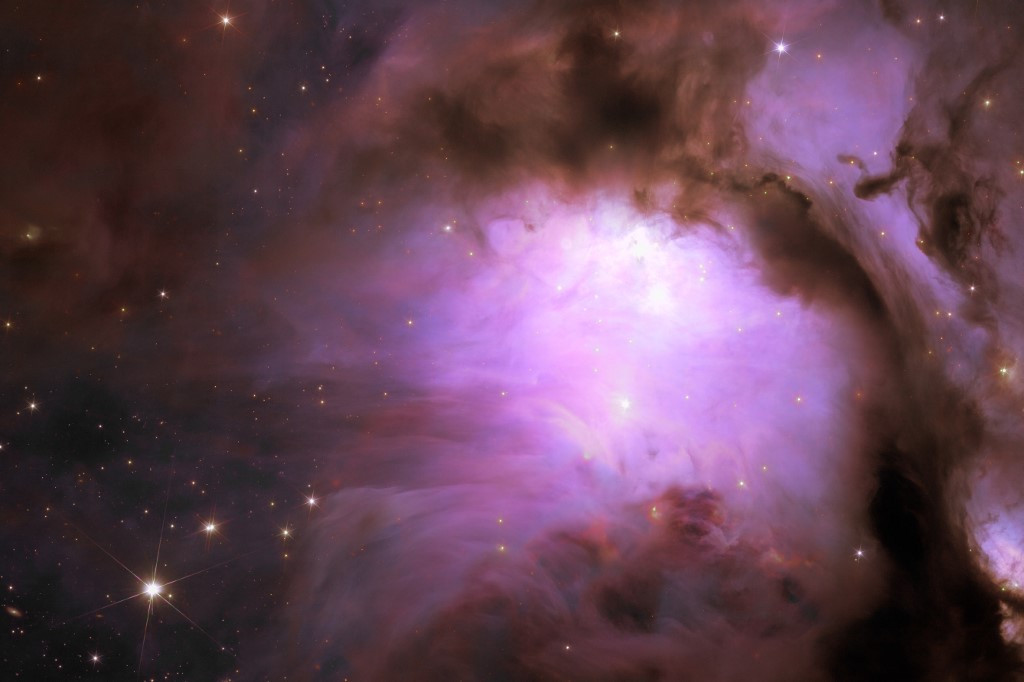
Euclid M78

Credit: ESA/Euclid/Euclid Consortium/NASA

The new shot of Messier 78 (above) is the most visually interesting of the latest images. This is a star-forming region about 1,350 light-years away in the constellation Orion. Euclid's infrared instruments identified 300,000 new objects in this field of view, some of them just a few times larger than the planet Jupiter. This data set is being used to study the ratio of stellar and sub-stellar objects in the molecular cloud.

Euclid Abell 2390

Credit: ESA/Euclid/Euclid Consortium/NASA

This image of the Abell 2390 cluster reveals more than 50,000 galaxies. Toward the center, Euclid also spotted examples of gravitational lensing, where the light from more distant objects is warped by gravity into long arc-like structures. This phenomenon will be a key factor in Euclid's study of dark matter in galaxy clusters.

Euclid Abell 2764

Credit: ESA/Euclid/Euclid Consortium/NASA

Next up is another galaxy cluster known as Abell 2764. It's in the far upper right of this image. The cluster is surrounded by a halo of dark matter. Scientists hope to use Euclid's extremely wide field of view to determine the radius of the cluster and find its borders with other galaxies still in the frame.

Euclid NGC 6744

Credit: ESA/Euclid/Euclid Consortium/NASA

Astronomers are also taking a close look at NGC 6744, thanks to Euclid. This image shows the spiral galaxy within a single frame with numerous foreground and background objects visible. Euclid resolved details in the fine dust lanes that weave through this galaxy. The team is using this data to map the locations of different star types and track how dust and gas contribute to star formation.

Euclid Dorado Group

Credit: ESA/Euclid/Euclid Consortium/NASA

Finally, we have the Dorado Group, a collection of evolving and merging galaxies showing complex interactions. This image shows off Euclid's wide field and sensitivity. The galaxies in this image range from super-bright to so dim they would not be visible to most telescopes. This data will help the team understand how galaxies form within halos of dark matter.

Euclid is at the beginning of a six-year mission. The team analyzing this telescope's data includes more than 2,000 scientists from around the globe. The mission's public data release and high-resolution versions of the new images can be accessed on the Euclid Consortium website.

Adblock test (Why?)


https://news.google.com/rss/articles/CBMiYGh0dHBzOi8vd3d3LmV4dHJlbWV0ZWNoLmNvbS9zY2llbmNlL2VzYS1yZWxlYXNlcy1zdHVubmluZy1uZXctaW1hZ2VzLWZyb20tZXVjbGlkLXNwYWNlLXRlbGVzY29wZdIBAA?oc=5

2024-05-24 11:00:00Z
CBMiYGh0dHBzOi8vd3d3LmV4dHJlbWV0ZWNoLmNvbS9zY2llbmNlL2VzYS1yZWxlYXNlcy1zdHVubmluZy1uZXctaW1hZ2VzLWZyb20tZXVjbGlkLXNwYWNlLXRlbGVzY29wZdIBAA

More than a dozen vases stolen from graves in Cedar - Times Colonist

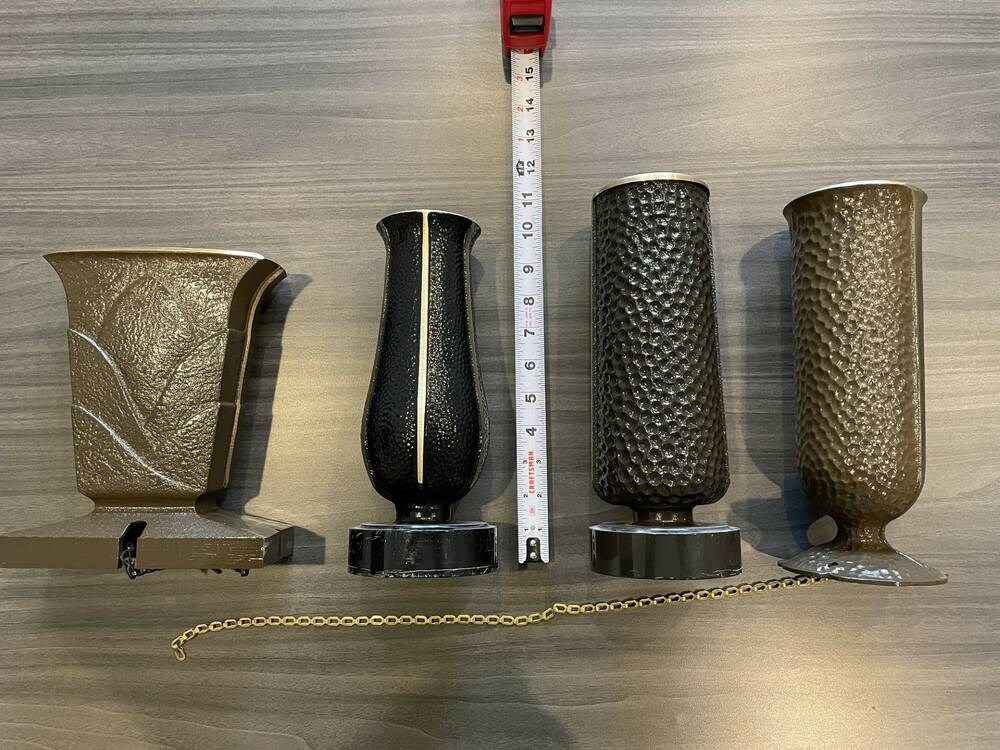
Nanaimo police are investigating the theft of up to 14 bronze vases over the past two weeks from grave sites at Cedar Valley Memorial Gardens in Cedar.

The first theft was reported May 12 and the most recent on May 17.

“These thefts are extremely disturbing,” said Reserve Const. Gary O’Brien. “First and foremost, the families who purchased the vases then placed them next to their loved ones are simply outraged that someone would resort to stealing something as personal as this.”

He said bronze has no real commercial value, so the thieves won’t profit from taking the vases.

The vases, which are nine to 12 inches tall and weigh about two pounds, are set beside the graves and filled with flowers or other items.

No suspects have been identified in the thefts.

Anyone with information on the thefts is asked to call Nanaimo RCMP at 250-754-2345.

[email protected]

Adblock test (Why?)


https://news.google.com/rss/articles/CBMiZGh0dHBzOi8vd3d3LnRpbWVzY29sb25pc3QuY29tL2xvY2FsLW5ld3MvbW9yZS10aGFuLWEtZG96ZW4tdmFzZXMtc3RvbGVuLWZyb20tZ3JhdmVzLWluLWNlZGFyLTg4MDc0NDXSAQA?oc=5

2024-05-23 23:01:30Z
CBMiZGh0dHBzOi8vd3d3LnRpbWVzY29sb25pc3QuY29tL2xvY2FsLW5ld3MvbW9yZS10aGFuLWEtZG96ZW4tdmFzZXMtc3RvbGVuLWZyb20tZ3JhdmVzLWluLWNlZGFyLTg4MDc0NDXSAQA

Euclid space telescope unveils new images of the cosmos - Science & Tech - The Jakarta Post

mind-boggling number of shining galaxies, a purple and orange star nursery and a spiral galaxy similar to our Milky Way: new images were revealed from Europe's Euclid space telescope on Thursday.

It is the second set of images released by the European Space Agency since Euclid launched last year on the first-ever mission to investigate the mysteries of dark matter and dark energy.

Scientific results were also published for the first time in the six-year mission, which aims to use its wide view to chart two billion galaxies across a third of the sky. 

Euclid project scientist Rene Laureijs told AFP that he was "personally most excited" about the image of a massive cluster of galaxies called Abell 2390.

The image of the cluster, which is 2.7 billion light years away from Earth, encompasses more than 50,000 galaxies.

Just one galaxy -- such as our own -- can be home to hundreds of billions or even trillions of stars.

Abell 2390 alone contains the mass of around 10 trillion suns, Jason Rhodes of NASA's Jet Propulsion Laboratory told an online press conference.

The image also pointed towards traces of dark matter, whose invisible presence can only be detected by looking at how its gravity distorts light. 

"There's so much dark matter in this cluster that it severely bends the light from some of these background galaxies," making them appear curved, Rhodes said.

Dark matter and dark energy are thought to make up 95 percent of the universe -- but we know almost nothing about them.

Another way the Abell 2390 image hinted at dark matter was by revealing the faint light of "orphan stars" drifting between the galaxy clusters.

These stars are ejected from the galaxies, "creating a kind of cloud which surrounds the entire cluster," French scientist Jean-Charles Cuillandre told AFP.

Astronomers believe this strange phenomenon indicates the presence of dark matter between the galaxies.

A star is born 

Euclid also captured the deepest-ever image of the Messier 78, a nursery where stars are born 1,300 light years from Earth in the Orion constellation.

Stars are still in the process of forming in the bluish centre of the image. After gestating for millions of years, they emerge from the purple and orange clouds at the bottom of the image.

Laureijs emphasised that "only Euclid can show this in one shot."

That is because Euclid has a very wide field view, in contrast to far-seeing fellow space telescope the James Webb, its neighbour at a stable hovering spot 1.5 million kilometres (930,000 miles) from Earth.

Another image, of the huge galaxy cluster Abell 2764, depicts a black expanse in which one yellow star stands out. 

Cuillandre admitted this was the result of an error in pointing the telescope. But he said the image demonstrated "Euclid's absolutely unique ability to concentrate light," because it was still able to pick up very faint objects next to the bright star.

Euclid's image of the young Dorado cluster contained a surprise. Though the cluster was already well studied, Euclid discovered a never-before-seen dwarf galaxy, the scientists said.

"I've never seen anything like it," Cuillandre said.

In the fifth new image, the spiral galaxy NGC 6744 -- which bears a striking resemblance to the Milky Way -- fans out against a backdrop of shining stars.

On the trail of dark matter 

It is still early days for the mission, and the five new images were captured in just one day.

In the years ahead, scientists plan to sift through Euclid's data in the hopes of spotting all manner of celestial bodies such as "rogue" planets, which float freely through the universe unconnected to a star.

But researchers have already been analysing Euclid's first batch of images, which were released in November.

In one of 10 pre-print studies published on Thursday, scientists looked into orphan stars in the Perseus cluster.

These lost stars "are now trapped in the gravity of the dark matter," Laureijs said.

This remains only "indirect detection of dark matter," he emphasised, adding that it was too early "to say something about dark energy".

The mission has not been entirely smooth sailing. 

In March, a delicate operation successfully melted a thin layer of ice that had been slowly clouding the telescope's sight by warming one of the telescope's mirrors.

There are signs that the ice is building up again, Laureijs said, adding that the team has time to investigate what to do next.

Adblock test (Why?)


https://news.google.com/rss/articles/CBMibmh0dHBzOi8vd3d3LnRoZWpha2FydGFwb3N0LmNvbS9jdWx0dXJlLzIwMjQvMDUvMjQvZXVjbGlkLXNwYWNlLXRlbGVzY29wZS11bnZlaWxzLW5ldy1pbWFnZXMtb2YtdGhlLWNvc21vcy5odG1s0gEA?oc=5

2024-05-24 04:49:58Z
CBMibmh0dHBzOi8vd3d3LnRoZWpha2FydGFwb3N0LmNvbS9jdWx0dXJlLzIwMjQvMDUvMjQvZXVjbGlkLXNwYWNlLXRlbGVzY29wZS11bnZlaWxzLW5ldy1pbWFnZXMtb2YtdGhlLWNvc21vcy5odG1s0gEA

Kamis, 23 Mei 2024

Massive Cradle of Baby Stars Revealed in New Space Telescope Images - Asharq Al-awsat - English

Female White House Chef Duo Has Dished up Culinary Diplomacy at State Dinners for Nearly a Decade

A house-cured smoked salmon, red grapefruit, avocado and cucumber starter. Dry-aged rib eye beef in a sesame sabayon sauce. Salted caramel pistachio cake under a layer of matcha ganache.

While President Joe Biden and his guest of honor at a White House state dinner chew over foreign policy, the female chef duo of Cris Comerford and Susie Morrison take care of the culinary diplomacy. They pulled off the above menu for Japan's leader in April, and they'll have a new array of delicacies for Kenya's president on Thursday night.

Comerford, the White House executive chef, and Morrison, the executive pastry chef, are the first women to hold those posts, forming a duo that has tantalized the taste buds of guests at 1600 Pennsylvania Ave. with their culinary creations for nearly a decade. Comerford is also the first person of color to be executive chef.

“Both are just exceptional examples of success in their field,” said Bill Yosses, who was the executive pastry chef for seven years before his departure in 2014 cleared the way for Morrison to be promoted. “They excel at what they do.”

Comerford and Morrison get to do it again Thursday when Biden and his wife, first lady Jill Biden, host the administration's sixth state dinner, for Kenyan President William Ruto and his wife, Rachel. It will be the first such honor for an African head of state since 2008 and the first for Kenya since 2003.

A lavish state dinner is a tool of US diplomacy, a high honor reserved for America's longstanding and closest allies. In the case of Kenya, Biden wants to elevate a relationship that he sees as critical to security in Africa and far beyond.

Jill Biden planned to preview the dinner setup for the news media on Wednesday afternoon.

State dinner planning is done by the first lady's staff and the White House social office, and starts months in advance. Ideas are kicked around before the chefs propose a few different menus. The meals are prepared, plated as they would be served and tasted by the social secretary and the first lady, who makes the final call on what will be served.

The menus change, but the overarching goal has stayed the same, The AP reported.

“We're trying to showcase American food, American regions, American farmers,” while incorporating small tributes to the guest of honor, Yosses said. “It would be rare that we would really try to imitate something from the guest's country.”

Ingredients for April's state dinner for Japanese Prime Minister Fumio Kishida and his wife, Yuko, came from California, Maryland, Oregon and Ohio. The wines were from Oregon and Washington state.

At the media preview for that glitzy event, Comerford explained that the diets of the Bidens and the visiting dignitaries are factored into the preparations, along with those of other guests.

“When we formulate and we create the state dinner menu, we take into consideration all the principals and most of our guests,” she said. “We also take into consideration the season because this is the perfect time for some beautiful bounties right now, with the spring coming up, with all the morels and the mushrooms, and Susie's cherries and all the stuff she has on her plate.”

The chefs contact their regular purveyors to find out what's in season, and go from there.

The salmon appetizer served in April was inspired by the California roll, which Comerford said was invented by a Japanese chef.

Morrison's dessert highlighted Japan's gift of cherry trees to the United States, many of which are planted in Washington, and its matcha tea. She decorated the pistachio cake with sugary mini cherry blossoms.

“We wanted to bring a little bit of the cherry blossoms that are here on the Tidal Basin right here to our dessert in order for everyone to enjoy the cherry blossoms that we enjoy every year,” she said.

Serving dinner to hundreds of guests at once comes down to timing. Thursday's event will be held in an expansive pavilion put up on the South Grounds of the White House.

Sam Kass, who was an assistant chef during President Barack Obama's administration, said tradition holds that the president is the first one served and that plates are cleared away when he is finished eating.

“You have to have a service that is so efficient and quick to get those plates out so that the last table has a chance to eat,” he said.

Comerford, 61, sharpened her culinary skills while working at hotels in Chicago and restaurants in Washington before the White House brought her on in 1995 as an assistant chef. A naturalized US citizen and Filipino native, she was named executive chef in 2005. Her responsibilities include designing and executing menus for state dinners, social events, holiday functions, receptions and official luncheons.

Morrison, 57, started at the executive mansion as a contract pastry employee in 1995 while she was working at a hotel in northern Virginia. She was named an assistant pastry chef in 2002 and became the executive pastry chef in November 2014 — just in time to sweat over the details of that year's gingerbread White House for the holiday season.

The pair has worked together at the White House for nearly 30 years.

Yosses recalled at least one instance where the honoree's wishes dictated the menu selections.

In 2015, China's Xi Jinping wanted a very American menu, “which I think was a polite way for him to say that he didn't think we could do Chinese food very well," Yosses said.

The Chinese leader was served butter-poached Maine lobster and grilled Colorado lamb.

Adblock test (Why?)


https://news.google.com/rss/articles/CBMiamh0dHBzOi8vZW5nbGlzaC5hYXdzYXQuY29tL3ZhcmlldGllcy81MDIzNzc5LW1hc3NpdmUtY3JhZGxlLWJhYnktc3RhcnMtcmV2ZWFsZWQtbmV3LXNwYWNlLXRlbGVzY29wZS1pbWFnZXPSAQA?oc=5

2024-05-23 17:16:22Z
CBMiamh0dHBzOi8vZW5nbGlzaC5hYXdzYXQuY29tL3ZhcmlldGllcy81MDIzNzc5LW1hc3NpdmUtY3JhZGxlLWJhYnktc3RhcnMtcmV2ZWFsZWQtbmV3LXNwYWNlLXRlbGVzY29wZS1pbWFnZXPSAQA

1st astronaut launch of Boeing's Starliner capsule now targeted for June 1 - Space.com

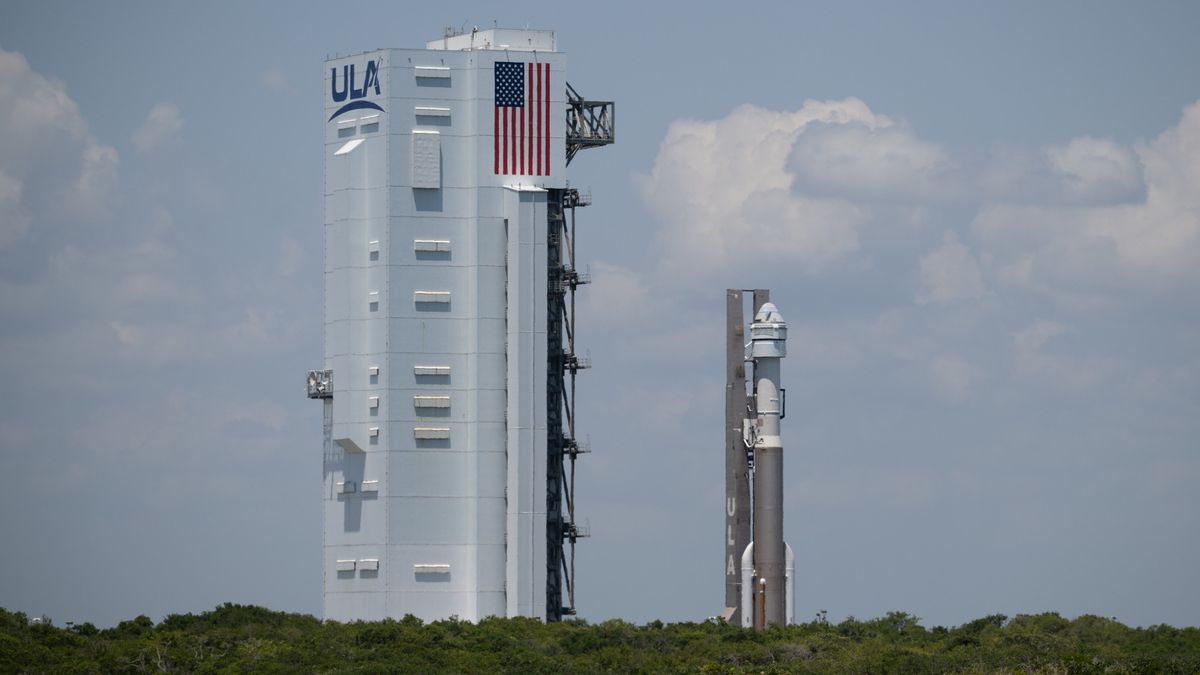
Boeing is now targeting June 1 for the first crewed launch of its Starliner capsule, though that date is far from set in stone.

The flight date for the mission, called Crew Flight Test (CFT), has been in considerable flux recently. It had been scheduled to lift off on May 6 atop a United Launch Alliance (ULA) Atlas V rocket from Cape Canaveral Space Force Station in Florida, but that try was called off about two hours before launch due to a misbehaving valve in the rocket's upper stage. 

ULA decided to replace the valve, which required rolling the Starliner-Atlas V stack off the pad — a move that pushed the planned liftoff back to May 17. That target was soon shifted to May 21, however, after a small helium leak was detected in Starliner's service module.

Related: 2 astronaut taxis: Why NASA wants both Boeing's Starliner and SpaceX's Dragon

But the launch team soon adjusted the target again, to May 25, explaining that more time was needed to assess the leak. Then, on Tuesday (May 21), NASA announced that May 25 was no longer an option for CFT but did not give a new target launch date.

In an update on Wednesday evening (May 22), the agency provided one: June 1, at 12:25 p.m. EDT (1625 GMT). There are backup opportunities on June 2, June 5 and June 6, NASA officials added.

These dates are very preliminary, however; team members continue to analyze data and map out potential paths forward.

"Work continues to assess Starliner performance and redundancy following the discovery of a small helium leak in the spacecraft’s service module," NASA officials wrote in the Wednesday update.

"As part of this work, and unrelated to the current leak, which remains stable, teams are in the process of completing a follow-on propulsion system assessment to understand potential helium system impacts on some Starliner return scenarios," they added. "NASA also will conduct a Delta-Agency Flight Test Readiness Review to discuss the work that was performed since the last CFT launch attempt on May 6, and to evaluate issue closure and flight rationale ahead of the next attempt, as part of NASA’s process for assessing readiness. The date of the upcoming Flight Test Readiness Review is under consideration and will be announced once selected."

We should get more details soon: Representatives from NASA, Boeing and ULA will hold a press conference about the current CFT situation on Friday (May 24) at 11 a.m. EDT (1500 GMT).

RELATED STORIES:

CFT will send NASA astronauts Butch Wilmore and Suni Williams to the International Space Station (ISS) for a roughly weeklong stay. The mission is Boeing's version of SpaceX's Demo-2 test flight, which the company aced in 2020. Thanks to that success, Dragon was certified to fly operational six-month crewed missions to and from the orbiting lab for NASA. Elon Musk's company is in the middle of its eighth such flight.

CFT will be the third flight for Starliner, following uncrewed test missions to the ISS in December 2019 and May 2022. Starliner failed to meet up with the station as planned on that first flight but succeeded on the second.  

Adblock test (Why?)


https://news.google.com/rss/articles/CBMiP2h0dHBzOi8vd3d3LnNwYWNlLmNvbS9ib2Vpbmctc3RhcmxpbmVyLWNmdC1sYXVuY2gtdGFyZ2V0LWp1bmUtMdIBAA?oc=5

2024-05-23 12:00:40Z
CBMiP2h0dHBzOi8vd3d3LnNwYWNlLmNvbS9ib2Vpbmctc3RhcmxpbmVyLWNmdC1sYXVuY2gtdGFyZ2V0LWp1bmUtMdIBAA

Spring rain could boost wheat midge population later this year - CJWW

[unable to retrieve full-text content]

Spring rain could boost wheat midge population later this year  CJWW
https://news.google.com/rss/articles/CBMiZGh0dHBzOi8vd3d3LmNqd3dyYWRpby5jb20vMjAyNC8wNS8yMi9zcHJpbmctcmFpbi1jb3VsZC1ib29zdC13aGVhdC1taWRnZS1wb3B1bGF0aW9uLWxhdGVyLXRoaXMteWVhci_SAQA?oc=5

2024-05-23 05:00:15Z
CBMiZGh0dHBzOi8vd3d3LmNqd3dyYWRpby5jb20vMjAyNC8wNS8yMi9zcHJpbmctcmFpbi1jb3VsZC1ib29zdC13aGVhdC1taWRnZS1wb3B1bGF0aW9uLWxhdGVyLXRoaXMteWVhci_SAQA

The Largest Camera Ever Built Arrives at the Vera C. Rubin Observatory - Universe Today

It’s been 20 years in the making, but a 3200-megapixel camera built especially for astrophysics discoveries has finally arrived at its home. The Legacy of Space and Time (LSST) camera was delivered to the Vera C. Rubin Observatory in Chile in mid-May, 2024.

The camera traveled from its construction lab at the SLAC National Accelerator Laboratory. The technical crew outfitted it with specialized data loggers, monitors, and GPS attached to track the conditions of its trip. Then they put it into a specially built container and the whole assemblage made the trip from San Francisco airport to Santiago on the 14th of May via a chartered flight. Once in Chile, it traveled up to the site for five hours up a 35-kilometer dirt road. It arrived on the 16th, completing a huge step toward opening the Rubin Observatory, according to construction project manager. “Getting the camera to the summit was the last major piece in the puzzle,” he said. “With all Rubin’s components physically on-site, we’re on the home stretch towards transformative science with the LSST.”

This video documents the journey of the LSST Camera from SLAC National Accelerator Laboratory in California to Rubin Observatory on the summit of Cerro Pachón in Chile. The camera arrived on the summit on 16 May 2024. Credit:RubinObs/NSF/AURA/S. Deppe/O. Bonin, T. Lange, M. Lopez, J. Orrell (SLAC National Lab)

The LSST Camera is the final major component of Rubin Observatory’s Simonyi Survey Telescope to arrive at the summit. It’s about the size of a small car. Inside, its focal plane contains 189 CCD sensors arranged on an array of “rafts”. The sensors deliver a combined 3200-megapixel view.

Now that it has arrived, the camera undergoes several months of testing in the observatory’s white room. After that, it goes on the Simonyi Survey Telescope, with its newly-coated 8.4-meter mirror and 3.4-meter secondary mirror.

About the Vera Rubin Observatory

This unique observatory is named after astronomer Vera C. Rubin. Her work focused on the mysterious “dark matter” that seems to permeate the Universe. Along with her team, she studied dozens of galaxies to understand what was influencing their motions. It turned out to be dark matter. The search for dark matter and its existence throughout the Universe is one of the main goals of the observatory that now bears her name.

Understanding the distribution of dark matter is where the LSST Camera will come in handy. For one thing, it will spend a decade taking images of the sky each night, performing a massive survey that will provide a complete image of the visible sky every 3-4 mights. Each area it images will be about the size of 40 full moons and the survey will take advantage of the 8.4-meter telescope moving quickly between imaging positions. In full operation, the Observatory will deliver a 500-petabyte set of images and data products about the sky.

The complete focal plane of the future LSST Camera is more than 2 feet wide and contains 189 individual sensors that will produce 3,200-megapixel images. Crews at SLAC have now taken the first images with it. (Jacqueline Orrell/SLAC National Accelerator Laboratory)

Not only will the Rubin Observatory perform this unprecedented survey in very high resolution, but will also track objects that change in brightness—called “transients.” That includes supernovae, variable stars, mergers of dense objects such as neutron stars or black holes, and other quickly changing events and objects. In addition, it will track asteroids and other objects that wander through the Solar System.

The formation and evolution of the Milky Way Galaxy is another research area for telescope users. Rubin should be able to track stellar streams throughout the Galaxy and chart their paths. That information could give precious insight into just how our Galaxy formed and how stars from cannibalized galaxies move through it.

What’s Next for Vera Rubin Observatory and the LSST Camera

Once the LSST Camera got delivered to the Cerro Pachón site, technicians moved it into an immense white room. That’s a controlled environment that protects the instrument while they work to get it ready for installation on the telescope. They inspected the camera and downloaded data about the “ride” from the U.S. to Chile from all the instruments attached to it. “Our goal was to make sure the camera not only survived, but arrived in perfect condition,” said Kevin Reil, Observatory Scientist at Rubin. “Initial indications—including the data collected by the data loggers, accelerometers, and shock sensors—suggest we were successful.”

View of Rubin Observatory at sunset in December 2023. The 8.4-meter telescope at Rubin Observatory, equipped with the highest-resolution digital camera in the world, will take enormous images of the southern hemisphere sky, covering the entire sky every few nights. Rubin will do this over and over for 10 years, creating a timelapse view of the Universe that’s unlike anything we’ve seen before. What new Solar System exploration missions will of these observations inspire? Image Credit: RubinObs/NSF/AURA/H. Stockebrand
View of Rubin Observatory at sunset in December 2023. The 8.4-meter telescope at Rubin Observatory, equipped with the highest-resolution digital camera in the world, will take enormous images of the southern hemisphere sky, covering the entire sky every few nights. Rubin will do this over and over for 10 years, creating a timelapse view of the Universe. Image Credit: RubinObs/NSF/AURA/H. Stockebrand

The observatory is still in the final stages of construction. The telescope is in place, and other instruments and infrastructure are being finalized. It should all be ready for “first light” and the beginning of science operations sometime in 2025. Between now and then, more parts of the telescope and its mirrors should be installed, and there will be tests of various other instruments both on and off the sky as scientists get ready to start using Rubin next year. Once observations begin, astronomers using Rubin could discover around 17 billion stars and ~20 billion galaxies in the distant Universe.

For More Information

LSST Camera Arrives at Rubin Observatory in Chile, Paving the Way for Cosmic Exploration
Vera C. Rubin Observatory

Adblock test (Why?)


https://news.google.com/rss/articles/CBMia2h0dHBzOi8vd3d3LnVuaXZlcnNldG9kYXkuY29tLzE2NzA5MC90aGUtbGFyZ2VzdC1jYW1lcmEtZXZlci1idWlsdC1hcnJpdmVzLWF0LXRoZS12ZXJhLWMtcnViaW4tb2JzZXJ2YXRvcnkv0gEA?oc=5

2024-05-23 04:15:46Z
CBMia2h0dHBzOi8vd3d3LnVuaXZlcnNldG9kYXkuY29tLzE2NzA5MC90aGUtbGFyZ2VzdC1jYW1lcmEtZXZlci1idWlsdC1hcnJpdmVzLWF0LXRoZS12ZXJhLWMtcnViaW4tb2JzZXJ2YXRvcnkv0gEA