Jumat, 07 Oktober 2022
Ads Taking Over Night Sky // DART Aftermath // Best JWST Image - Fraser Cain
https://news.google.com/__i/rss/rd/articles/CBMiK2h0dHBzOi8vd3d3LnlvdXR1YmUuY29tL3dhdGNoP3Y9UE55UjBLXzVHR1nSAQA?oc=5
2022-10-07 20:24:53Z
CCAiC1BOeVIwS181R0dZmAEB

SpaceX delivers Russian, Native American women to International Space Station - The Globe and Mail

Russian Cosmonaut Anna Kikina enters the International Space Station from a SpaceX Crew Dragon capsule on Oct. 6.The Associated Press
A Russian cosmonaut who caught a U.S. lift to the International Space Station arrived at her new home Thursday for a five-month stay, accompanied by a Japanese astronaut and two from NASA, including the first Native American woman in space.
The SpaceX capsule pulled up to the station a day after launching into orbit. The linkup occurred 260 miles (420 kilometers) above the Atlantic, just off the west coast of Africa.
It was the first time in 20 years that a Russian hitched a ride from NASA’s Kennedy Space Center, the result of a new agreement reached despite friction over the war in Ukraine.
Opinion: Will the International Space Station survive the war in Ukraine?
Cosmonaut Anna Kikina joins two Russians already at the orbiting outpost. She’ll live and work on the Russian side until March, before returning to Earth in the same SpaceX capsule.
Riding along with Kikina: Marine Col. Nicole Mann, a member of the Wailacki of the Round Valley Indian Tribes in California, Navy Capt. Josh Cassada and Japan’s Koichi Wakata, the only experienced space flier of the bunch with five missions.
A four-member SpaceX Crew Dragon team, including the first Native American woman sent to orbit Nicole Mann, safely docked with the International Space Station on Oct. 6 and moved aboard to begin a five-month science mission.
Reuters
As the capsule closed in, the space station residents promised the new arrivals that their bunks were ready and the outside light was on.
“You guys are the best,” replied Mann, the capsule’s commander.
Mann and her crew will replace three Americans and one Italian who will return in their own SpaceX capsule next week after almost half a year up there. Until then, 11 people will share the orbiting lab.
NASA astronaut Frank Rubio arrived two weeks ago. He launched on a Soyuz rocket from Kazakhstan, kicking off the cash-free crew swapping between NASA and the Russian Space Agency. They agreed to the plan last summer in order to always have an American and Russian at the station.
Until Elon Musk’s SpaceX started launching astronauts two years ago, NASA was forced to spend tens of millions of dollars every time an astronaut flew up on a Soyuz.
https://news.google.com/__i/rss/rd/articles/CBMic2h0dHBzOi8vd3d3LnRoZWdsb2JlYW5kbWFpbC5jb20vd29ybGQvYXJ0aWNsZS1zcGFjZXgtZGVsaXZlcnMtcnVzc2lhbi1uYXRpdmUtYW1lcmljYW4td29tZW4tdG8taW50ZXJuYXRpb25hbC1zcGFjZS_SAQA?oc=5
2022-10-07 16:56:09Z
1586516912
Scientists discover they can pull water molecules apart using graphene electrodes - Phys.org
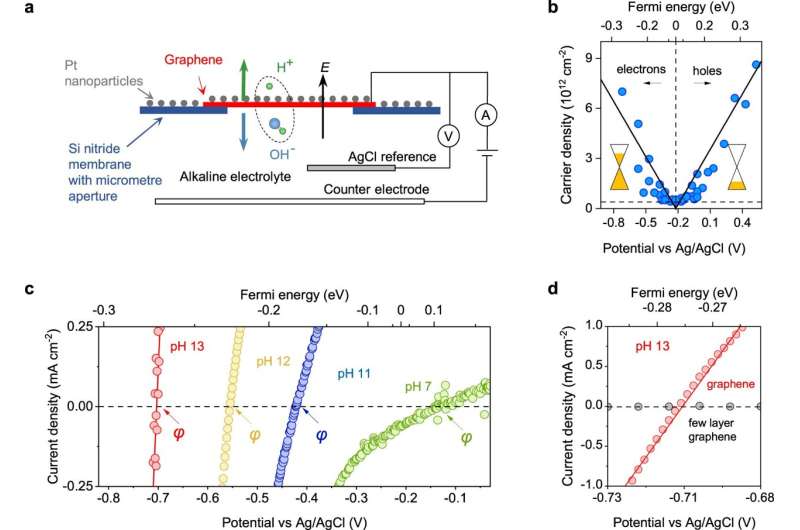
Writing in Nature Communications, a team led by Dr. Marcelo Lozada-Hidalgo based at the National Graphene Institute (NGI) used graphene as an electrode to measure both the electrical force applied on water molecules and the rate at which these break in response to such force. The researchers found that water breaks exponentially faster in response to stronger electrical forces.
The researchers believe that this fundamental understanding of interfacial water could be used to design better catalysts to generate hydrogen fuel from water. This is an important part of the U.K.'s strategy towards achieving a net zero economy. Dr. Marcelo Lozada-Hidalgo said, "We hope that the insights from this work will be of use to various communities, including physics, catalysis, and interfacial science and that it can help design better catalysts for green hydrogen production."
A water molecule consists of a proton and a hydroxide ion. Dissociating it involves pulling these two constituent ions apart with an electrical force. In principle, the stronger one pulls the water molecule apart, the faster it should break. This important point has not been demonstrated quantitatively in experiments.
Electrical forces are well known to break water molecules, but stronger forces do not always lead to faster water dissociation, which has puzzled scientists for a long time. A key difference with graphene electrodes is that these are permeable only to protons. The researchers found that this allows separating the resulting proton from the hydroxide ion across graphene, which is a one-atom-thick barrier that prevents their recombination. This charge separation is essential to observe the electric field acceleration of water dissociation. Another key advantage of graphene is that it allows evaluating the electric field at the graphene-water interface experimentally, which allows for quantitative characterization of the field effect.
The results can be explained using the classical Onsager theory, which had remained unverified experimentally in the important case of water. Junhao Cai, a Ph.D. student and co-first author of the work said, "We were surprised to find how well the Onsager theory fitted our data. This theory provides insights into interfacial water, including an independent estimate of its dielectric constant, which remains poorly understood."
The authors are excited about the possibilities offered by their experimental setup. Eoin Griffin, Ph.D. student and co-first author of the work said, "Graphene electrodes combine three properties that, as far as we know, are never found together in a single system: only protons permeate through the crystal, it is one-atom-thick and it can sustain very strong electrical forces. This combination allows us to essentially pull apart the first layer of water molecules on the graphene surface."
Explore further
More information:
J. Cai et al, Wien effect in interfacial water dissociation through proton-permeable graphene electrodes, Nature Communications (2022). DOI: 10.1038/s41467-022-33451-1
Provided by
University of Manchester
Citation: Scientists discover they can pull water molecules apart using graphene electrodes (2022, October 7) retrieved 7 October 2022 from https://phys.org/news/2022-10-scientists-molecules-graphene-electrodes.html
This document is subject to copyright. Apart from any fair dealing for the purpose of private study or research, no part may be reproduced without the written permission. The content is provided for information purposes only.
https://news.google.com/__i/rss/rd/articles/CBMiS2h0dHBzOi8vcGh5cy5vcmcvbmV3cy8yMDIyLTEwLXNjaWVudGlzdHMtbW9sZWN1bGVzLWdyYXBoZW5lLWVsZWN0cm9kZXMuaHRtbNIBAA?oc=5
2022-10-07 13:39:33Z
CAIiEEGIzVm8mgvH_ZzI6cXEohQqGAgEKg8IACoHCAowpbDpAzCm_hwwgPDGBg
SpaceX delivers Russian, Native American women to station - CTV News

A Russian cosmonaut who caught a U.S. lift to the International Space Station arrived at her new home Thursday for a five-month stay, accompanied by a Japanese astronaut and two from NASA, including the first Native American woman in space.
The SpaceX capsule pulled up to the station a day after launching into orbit. The linkup occurred 260 miles (420 kilometers) above the Atlantic, just off the west coast of Africa.
It was the first time in 20 years that a Russian hitched a ride from NASA's Kennedy Space Center, the result of a new agreement reached despite friction over the war in Ukraine.
Cosmonaut Anna Kikina joins two Russians already at the orbiting outpost. She'll live and work on the Russian side until March, before returning to Earth in the same SpaceX capsule.
Riding along with Kikina: Marine Col. Nicole Mann, a member of the Wailacki of the Round Valley Indian Tribes in California, Navy Capt. Josh Cassada and Japan's Koichi Wakata, the only experienced space flier of the bunch with five missions.
As the capsule closed in, the space station residents promised the new arrivals that their bunks were ready and the outside light was on.
"You guys are the best," replied Mann, the capsule's commander.
Mann and her crew will replace three Americans and one Italian who will return in their own SpaceX capsule next week after almost half a year up there. Until then, 11 people will share the orbiting lab.
NASA astronaut Frank Rubio arrived two weeks ago. He launched on a Soyuz rocket from Kazakhstan, kicking off the cash-free crew swapping between NASA and the Russian Space Agency. They agreed to the plan last summer in order to always have an American and Russian at the station.
Until Elon Musk's SpaceX started launching astronauts two years ago, NASA was forced to spend tens of millions of dollars every time an astronaut flew up on a Soyuz.
------
The Associated Press Health and Science Department receives support from the Howard Hughes Medical Institute's Department of Science Education. The AP is solely responsible for all content.
https://news.google.com/__i/rss/rd/articles/CBMiYmh0dHBzOi8vd3d3LmN0dm5ld3MuY2Evc2NpLXRlY2gvc3BhY2V4LWRlbGl2ZXJzLXJ1c3NpYW4tbmF0aXZlLWFtZXJpY2FuLXdvbWVuLXRvLXN0YXRpb24tMS42MTAwMjAz0gEA?oc=5
2022-10-07 12:09:29Z
1586516912
Kamis, 06 Oktober 2022
Laughing gas in space could mean life - Tech Explorist
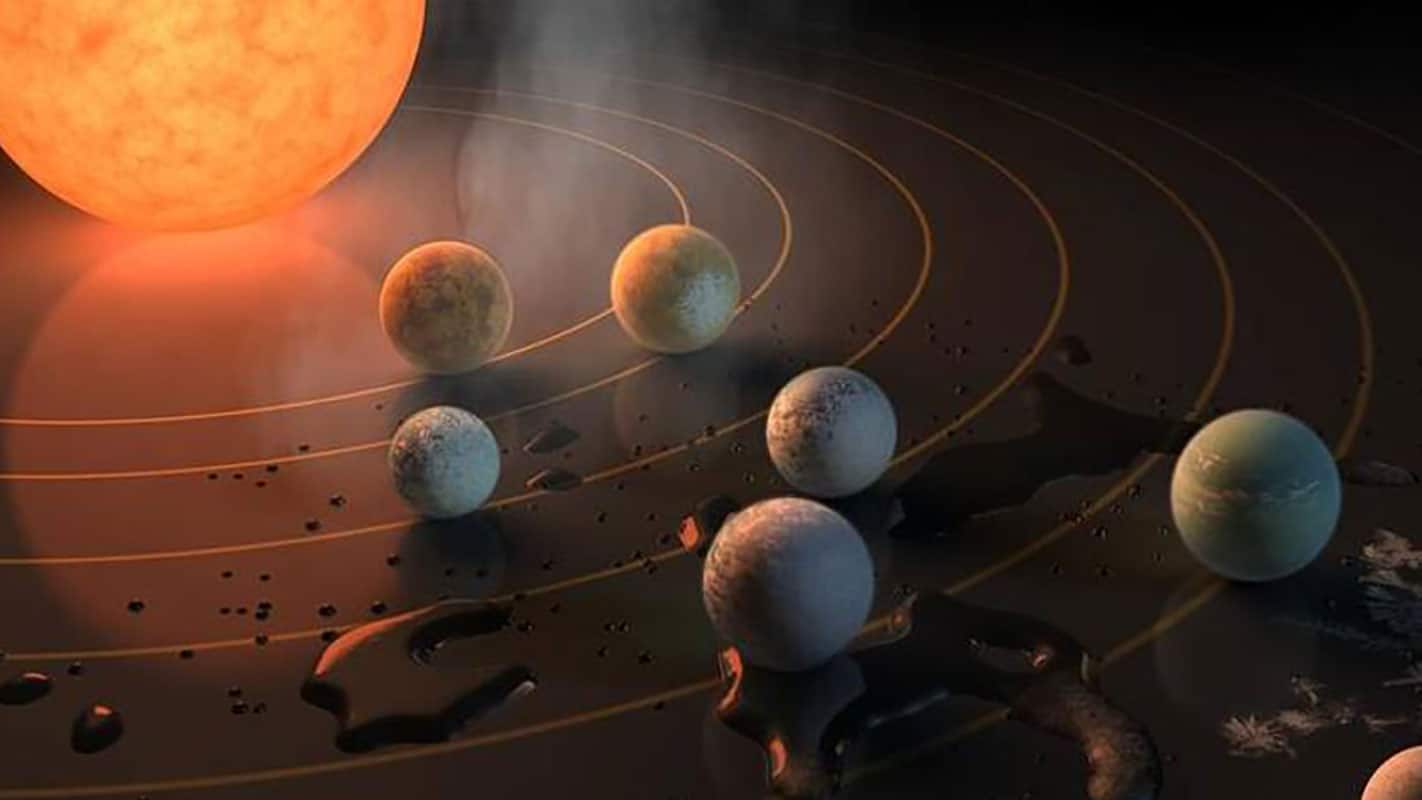
To date, over 5000 exoplanetary systems have been discovered. Biosignatures are chemical components in a planet’s atmosphere that may indicate life, and they frequently include abundant gases in our planet’s atmosphere.
Scientists at UC Riverside suggest something is missing from the typical roster of chemicals astrobiologists use to search for life on planets around other stars — laughing gas.
Eddie Schwieterman, an astrobiologist in UCR’s Department of Earth and Planetary Sciences, said, “There’s been a lot of thought put into oxygen and methane as biosignatures. Fewer researchers have seriously considered nitrous oxide, but we think that may be a mistake.”
To reach this conclusion, scientists determined how much nitrous oxide a planet like Earth could conceivably produce. After that, they created simulations of that planet orbiting various types of stars and calculated the amounts of N2O that could be captured by a telescope like the James Webb Space Telescope.
Nitrous oxide, or N2O, is a gas produced in various ways by living things. Microorganisms continuously convert other nitrogen molecules into N2O through a metabolic process that can produce useful cellular energy.
Schwieterman said, “Life generates nitrogen waste products that are converted by some microorganisms into nitrates. In a fish tank, these nitrates build-up, which is why you have to change the water. However, under the right conditions in the ocean, certain bacteria can convert those nitrates into N2O. The gas then leaks into the atmosphere.”
N2O can be found in an environment and still not be an indication of life in some situations. This was considered in the new modeling. For instance, lightning can produce a small amount of nitrous oxide. However, lightning also produces nitrogen dioxide, giving astrobiologists a hint that non-living meteorological or geological processes produced the gas.
Others who have considered N2O as a biosignature gas often conclude it would be difficult to detect from so far away. Schwieterman explained that this conclusion is based on N2O concentrations in Earth’s atmosphere today. Because there isn’t much of it on this planet, which is teeming with life, some believe it would also be hard to detect elsewhere.
Schwieterman said, “This conclusion doesn’t account for periods in Earth’s history where ocean conditions would have allowed for the much greater biological release of N2O. Conditions in those periods might mirror where an exoplanet is a today.”
“Common stars like K and M dwarfs produce a light spectrum that is less effective at breaking up the N2O molecule than our sun is. These two effects combined could greatly increase the predicted amount of this biosignature gas on an inhabited world.”
The study was conducted in collaboration with Purdue University, the Georgia Institute of Technology, American University, and the NASA Goddard Space Flight Center.
Journal Reference:
- Edward W. Schwieterman, Stephanie L. Olson et al. Evaluating the Plausible Range of N2O Biosignatures on Exo-Earths: An Integrated Biogeochemical, Photochemical, and Spectral Modeling Approach. The Astrophysical Journal. DOI: 10.3847/1538-4357/ac8cfb
https://news.google.com/__i/rss/rd/articles/CBMiQWh0dHBzOi8vd3d3LnRlY2hleHBsb3Jpc3QuY29tL2xhdWdoaW5nLWdhcy1zcGFjZS1tZWFuLWxpZmUvNTQxNDMv0gEA?oc=5
2022-10-06 10:22:38Z
1586268591
Rabu, 05 Oktober 2022
NASA's asteroid crash mission has created a 10000 km debris trail - Euronews

The NASA mission to crash a spacecraft into an asteroid to nudge it off course has created a 10,000 kilometre trail of debris across space.
The SOAR Telescope in Chile has been tracking the course of Dimorphos - the asteroid moonlet targeted by the mission - since it was impacted during NASA’s Double Asteroid Redirection Test (DART) last week.
Dimorphos forms part of the double-asteroid system of Didymos, which was the target of DART, the first planetary defence test that tried to modify the orbit of an asteroid.
The goal of DART is to gather data to see whether nudging an asteroid off course is a viable way to deal with a potential future asteroid hurtling towards Earth.
The spacecraft was travelling at 22,500 km/h as it smashed into the asteroid some 11.3 million km away from Earth on September 26.
And while it will take some time to gather the necessary data, the impact of such a forceful collision is already clear to see.
The SOAR Telescope has imaged a 10,000 km-long tail coming from the asteroid, two days after the impact.
“It is amazing how clearly we were able to capture the structure and extent of the aftermath in the days following the impact,” said astronomer Teddy Kareta, who works at the Lowell Observatory in the US, and used SOAR to capture the debris.
“Now begins the next phase of work for the DART team as they analyse their data and observations by our team and other observers around the world who shared in studying this exciting event,” added astronomer Matthew Knight from the US Naval Academy.
“We plan to use SOAR to monitor the ejecta in the coming weeks and months”.
The team operating SOAR said these observations will give insight into the nature of the surface of Dimophos, how much material was ejected, how fast it was ejected, and the size of the particles ejected.
Hubble and Webb capture impact
The mission was hailed as a success by NASA, with Mission Control's Elena Adams telling a news conference following the collision: "As far as we can tell, our first planetary defence test was a success…I think Earthlings should sleep better. Definitely, I will".
The impact was captured by both the Hubble space telescope, and the newly-launched James Webb Space Telescope.
The $325 million (€333 million) mission is the first attempt by a space agency to nudge the position of an asteroid or any other natural object in space.
Launched in November last year, DART took 10 months to reach its target, which has been orbiting the sun for aeons without threatening Earth.
Scientists insisted DART would not shatter the moonlet, with the spacecraft weighing in at 570 kg, compared to the asteroid’s 5 billion kg.
But they are confident it should reduce its 11-hour 55-minute orbit around Didymos, which they stress amounts to a significant change over the course of years.
https://news.google.com/__i/rss/rd/articles/CBMiygFodHRwczovL3d3dy5ldXJvbmV3cy5jb20vbmV4dC8yMDIyLzEwLzA1L25hc2FzLWRhcnQtbWlzc2lvbi10by1jcmFzaC1hLXNwYWNlY3JhZnQtaW50by1hbi1hc3Rlcm9pZC1oYXMtY3JlYXRlZC1hLTEwMDAwLWttLWRlYnJpcy10cj91dG1fc291cmNlPW5ld3MuZ29vZ2xlLmNvbSZ1dG1fY2FtcGFpZ249ZmVlZHNfbmV4dCZ1dG1fbWVkaXVtPXJlZmVycmFs0gEA?oc=5
2022-10-05 14:52:09Z
1591965161
Selasa, 04 Oktober 2022
After DART crash, asteroid Dimorphos sports a tail of debris thousands of miles long - Space.com
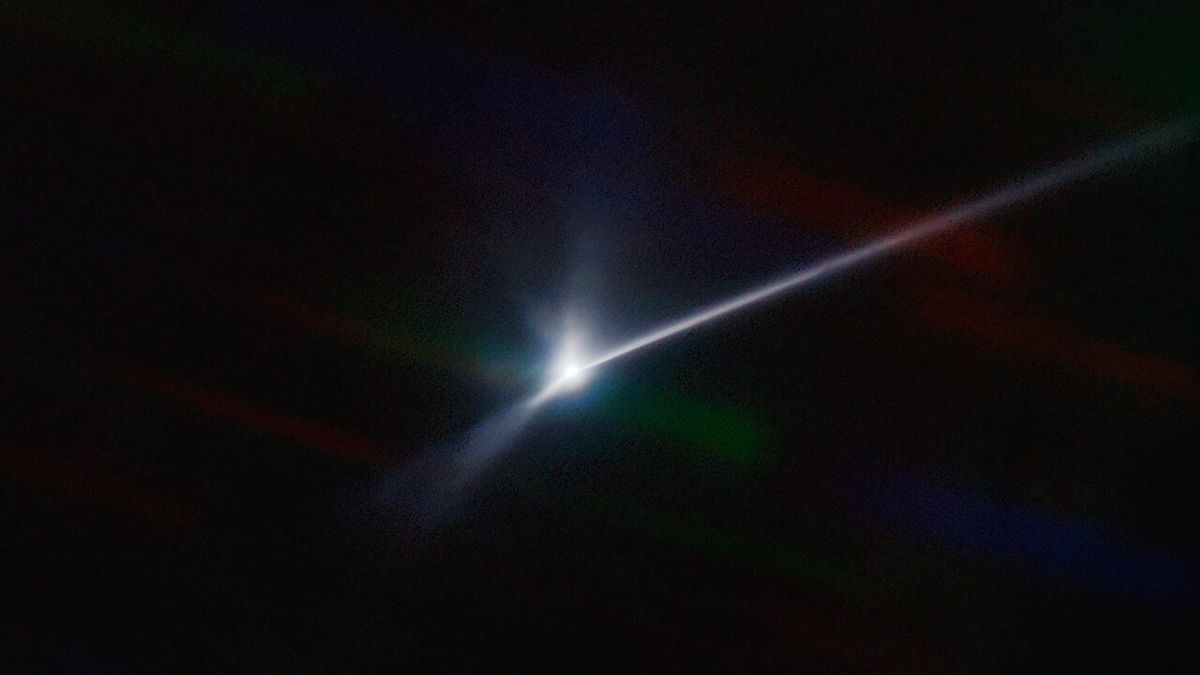
A new stunning image shows that two days after NASA's Double Asteroid Redirection Test (DART) spacecraft slammed into the asteroid Dimorphos, the space rock had grown a tail of glowing debris extending thousands of miles.
The comet-like tail is made of dust and debris was blasted from the surface of Dimorphos, part of a double asteroid system, by the intentional impact of DART, the first mission designed to test whether such a collision could divert a hypothetical asteroid threatening to hit Earth. Dimorphos' new tail was imaged by astronomers Teddy Kareta from the Lowell Observatory and Matthew Knight from the U.S. Naval Academy using the 4.1-meter Southern Astrophysical Research (SOAR) Telescope, at the National Science Foundation-funded NOIRLab's Cerro Tololo Inter-American Observatory in Chile.
"It is amazing how clearly we were able to capture the structure and extent of the aftermath in the days following the impact," Kareta said in a statement (opens in new tab).
Related: Here's the last thing NASA's DART spacecraft saw before it crashed
Observing the ejected material could allow scientists to better determine the nature of the surface of Dimorphos by revealing just how much material the collision with DART ejected, the speed at which the material was launched and the size of the ejected particles. This knowledge could ultimately help space agencies like NASA protect Earth from asteroid impacts because a better understanding of asteroid structure and composition helps scientists model how best to divert them.
The material in the dust trail was initially ejected on Sept. 26 when DART hit Dimorphos, forming a cloud around the asteroid. The tail-like structure formed when radiation pressure from the sun pushed the debris away from the body of the asteroid, just as happens with the tails of comets as they approach the sun from the distant reaches of the solar system.
The SOAR image shows Dimorphos' new feature extending from the center of the image to the right-hand edge of the image. Using Dimorphos' distance from Earth at the time the image was captured, the astronomers estimated the tail was around 6,200 miles (10,000 kilometers) long. (Before the impact, scientists estimated that Dimorphos itself was about 525 feet, or 160 meters, wide.)
Related stories:
SOAR will continue to observe the aftermath of the DART impact, collecting data that will help researchers assess how successful this attempt to modify the orbit of an asteroid has been. SOAR is a key member of the Astronomical Event Observatory Network (AEON) of telescopes, which is dedicated to nimbly following up on reports of new astronomical phenomena.
"Now begins the next phase of work for the DART team as they analyze their data and observations by our team and other observers around the world who shared in studying this exciting event," Knight said. "We plan to use SOAR to monitor the ejecta in the coming weeks and months. The combination of SOAR and AEON is just what we need for efficient follow-up of evolving events like this one."
Follow us on Twitter @Spacedotcom and on Facebook.
https://news.google.com/__i/rss/rd/articles/CBMiPGh0dHBzOi8vd3d3LnNwYWNlLmNvbS9kYXJ0LWFzdGVyb2lkLWltcGFjdC1kZWJyaXMtdGFpbC1waG90b9IBAA?oc=5
2022-10-04 15:00:08Z
CAIiEKRufgceo0dotY7cw51H4gAqMwgEKioIACIQiaYKTaVj4jekEifjHCx8jCoUCAoiEImmCk2lY-I3pBIn4xwsfIww37rKBg
Langganan:
Postingan (Atom)